VN fisheries industry sees strong wave of exports

An unusually strong performance in the first two months and Japan's easing of its seafood import restrictions has raised expectations that Vietnam's fisheries industry will meet its annual export target with relative ease.
An unusually strong performance in the first two months and Japan'seasing of its seafood import restrictions has raised expectations thatVietnam's fisheries industry will meet its annual export target withrelative ease.

According to the Ministry of Agriculture and RuralDevelopment, seafood exports in January and February increased 23.5percent year-on-year to reach 919 million USD, including 335 million USDin February.

This has been a welcome surprise for the industrybecause seafood exports are usually slow in the first few months of theyear, especially after the Tet holiday, the ministry said.

Exportsto the US, still the largest market for Vietnamese seafood, increased89 percent year-on-year, accounting for 26.67 percent of the totalfisheries export value.

The value of seafood exports to Japanincreased by 17.85 percent, to the Republic of Korea by 29.27 percentand to Australia by 31.45 percent, while it fell by 37.8 percent toChina and by 7 percent to Thailand.

The Vietnam Association ofSeafood Exporters and Producers (VASEP) Association said it expects thegood start at the beginning of the year to help the industry achieve itsannual exports target of between 6.8 and 6.9 billion USD –3 billion USDfrom shrimp, 1.6 billion USD from tra fish and 2.2 billion USD fromother seafood products.

The ministry said shrimp would continueto be a major export item this year because Japan, a major market, haseased its strict standards for Vietnamese seafood imports.

Trafish exports are also expected to improve over last year because sometraditional buyers will reopen their markets, VASEP officials said.

Forinstance, Ukraine, a traditional buyer, has given licences to 10Vietnamese seafood processors to export their tra fish products.

Theagriculture ministry has said that as a key export item for the nation,it would pay even more attention this year to improving product qualityas well as food hygiene and safety.

They would also work onbuilding a trademark for Vietnamese seafood, that would enable localfirms to expand their export markets, ministry officials said.-VNA

See more

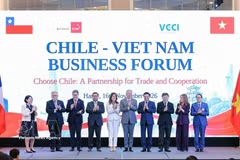
Delegates pose for a photo at the Chile-Vietnam Business Forum in Hanoi on November 16 (Photo: VNA)

Vietnam, Chile seek to expand trade ties

Chilean President José Antonio Kast pointed to potential for cooperation in agriculture and food, and called for stronger technical cooperation, better market access and closer links in innovation, technology, services and sustainable development.

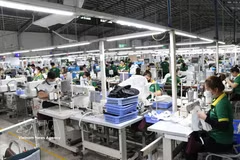
Production of footwear for export at Lefaso Tra Vinh Industrial Investment and Production Joint Stock Company, Tra Cu commune, Vinh Long province (Illustrative image. Source: VNA)

VEFTA implementation requires exporters to restructure supply chains: Experts

Under VEFTA, tariff reductions to zero will be meaningless for Vietnam’s key export sectors, including textiles and garments, footwear, and agricultural and aquatic products, if goods are found to contain banned chemicals, violate rules of origin or lack transparency regarding their carbon footprints.

Deputy Prime Minister Nguyen Van Thang meets with Martin Sommer, head of the IMF’s Article IV consultation mission team to Vietnam, in Hanoi on November 13, 2026. (Photo: VNA)

IMF sees positive growth prospects for Vietnam, urges cautious monetary policy

Martin Sommer, head of the IMF’s Article IV consultation mission team to Vietnam, noted that inflation risks in Vietnam remain under control, but several factors could add to price pressures. He therefore called for cautious monetary policy management and readiness to respond promptly if inflationary pressures increased.

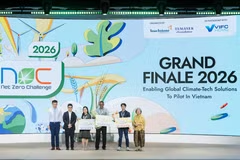
Representatives of the three first-prize-winning startups receive their awards at the event. (Photo: SGGP)

Seven green-tech startups secure 770,000 USD at Net Zero Challenge 2026

In its fourth year, the competition attracted more than 1,100 applications from 80 countries and territories, making it the most competitive edition since its launch in 2023. Nine finalists presented solutions in three categories, namely renewable energy and carbon removal; food systems and sustainable agriculture; and circular economy and waste management.

Vietnamese and Malaysian businesses connect at the event (Photo: VNA)

Vietnam, Malaysia connect businesses to boost bilateral trade cooperation

It centred on a business-to-business (B2B) matchmaking session, bringing Vietnamese and Malaysian companies together to discuss import-export needs, seek partners and explore cooperation. Vietnamese businesses aimed to connect with Malaysian importers, distributors and retailers, while expanding access for their products to Malaysia and other markets.