Many Japanese investors have recently said that they will choose Vietnam as a destination for their investments within the next 1-3 years, although there remains some concerns over the quality of the workforce and the country’s infrastructure.
The Investment Review, a local newspaper, cited a recent survey conducted this July by the Japanese financial group Shokochukin, saying that Vietnam is the second choice in Asia for Japanese investors. Twenty-one percent of 700 Japanese small and medium sized enterprises surveyed voted for Vietnam while 30 percent opted for China .
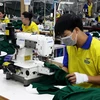
For Japanese businesses, the country’s socio-politic stability, abundant and cost effective labour force, tax incentives and the potential for economic development give Vietnam a very competitive edge.
These factors, said the paper, help investors feel secure when they decide to inject capital into this market and expand their businesses.
According to the 2010 Vietnam Business Climate Report, 58 percent of Japanese enterprises currently doing business in Vietnam said they would increase their investment, 40 percent would maintain their operations while 1.4 percent would scale down and only 0.7 percent plan to withdraw from the country.
At a meeting with representatives of the Ministry of Planning and Investment in early July, the Executive Director of the Investment and Tourism Division of Aichi province in Japan, Masanori Ito, said that many companies in his province had drawn up plans to invest in Vietnam .
Aichi, one of the largest economic and industrial centres in central Japan, has more than 70 investors operating in Vietnam, including Toyota, Honda, Suzuki and Yamaha.
However, some Japanese investors are concerned about electricity cuts and the quality of the workforce in Vietnam .
To become more attractive as an investment haven, the Japanese External Trade Organisation (JETRO) said that Vietnam needs to ensure stable and reliable electricity supplies, improve its workforce and re-adjust cost-related factors such as property taxes, transport costs and electricity, water and communications fees.
The Foreign Investment Agency (FIA) said that by the first half of this year, Japan ranked third among 39 countries and territories having invested in Vietnam with a total registered capital of 1.22 billion USD, accounting for 14.5 percent of all foreign direct investment in the country./.
The Investment Review, a local newspaper, cited a recent survey conducted this July by the Japanese financial group Shokochukin, saying that Vietnam is the second choice in Asia for Japanese investors. Twenty-one percent of 700 Japanese small and medium sized enterprises surveyed voted for Vietnam while 30 percent opted for China .
For Japanese businesses, the country’s socio-politic stability, abundant and cost effective labour force, tax incentives and the potential for economic development give Vietnam a very competitive edge.
These factors, said the paper, help investors feel secure when they decide to inject capital into this market and expand their businesses.
According to the 2010 Vietnam Business Climate Report, 58 percent of Japanese enterprises currently doing business in Vietnam said they would increase their investment, 40 percent would maintain their operations while 1.4 percent would scale down and only 0.7 percent plan to withdraw from the country.
At a meeting with representatives of the Ministry of Planning and Investment in early July, the Executive Director of the Investment and Tourism Division of Aichi province in Japan, Masanori Ito, said that many companies in his province had drawn up plans to invest in Vietnam .
Aichi, one of the largest economic and industrial centres in central Japan, has more than 70 investors operating in Vietnam, including Toyota, Honda, Suzuki and Yamaha.
However, some Japanese investors are concerned about electricity cuts and the quality of the workforce in Vietnam .
To become more attractive as an investment haven, the Japanese External Trade Organisation (JETRO) said that Vietnam needs to ensure stable and reliable electricity supplies, improve its workforce and re-adjust cost-related factors such as property taxes, transport costs and electricity, water and communications fees.
The Foreign Investment Agency (FIA) said that by the first half of this year, Japan ranked third among 39 countries and territories having invested in Vietnam with a total registered capital of 1.22 billion USD, accounting for 14.5 percent of all foreign direct investment in the country./.