A woman works at a farm. (Source: VNA)
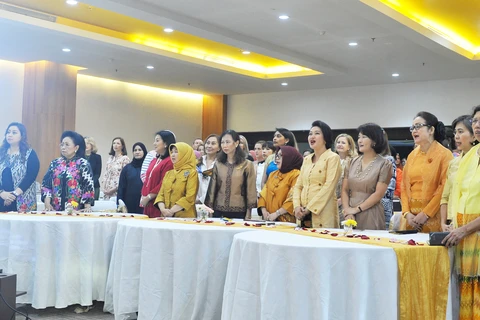
Hanoi (VNA) – Women’s economic empowerment in the changing world of work was the focus of a round-table discussion held in Hanoi on March 3 by the UN in collaboration with the Ministry of Labour, Invalids and Social Affairs (MoLISA).
The event, timed to mark the International Women’s Day March 8, brought together nearly 100 delegates from ministries and government agencies, social-political organisations, civil social organisations and UN agencies in Vietnam.
Minister of Labour, Invalids and Social Affairs Dao Ngoc Dung, who is also the chairman of the National Committee for Women’s Advancement, said Vietnam currently has 53.27 million labourers employed, of which women account for 48 percent.
However, according to Minister Dung, the quality of jobs for women remains low and unstable; the rate of women working in the informal economy remains relatively high and 62.4 percent of women do unpaid domestic work.
According to Kamal Malhotra, UN Resident Coordinator in Vietnam, empowering women economically and ensuring the rights of women at the workplace is crucial to successfully implement the 1995 Beijing Platform for Action, the 2030 Agenda for Sustainable Development and the Convention on the Elimination of All Forms of Discrimination against Women (CEDAW), to which Vietnam is a member.
In order to promote gender equality in the changing world of work, Dao Quang Vinh, Director of the Institute of Labour Science and Social Affairs under the MoLISA, recommended that Vietnam needs to revise laws and remove regulations unfavourable for women human resources development.
He urged measures to help groups of disadvantaged women labourers access and benefit from human resources development policies.
Deputy Minister of MOLISA Nguyen Trong Dam said it is necessary to revise and complete laws and policies relating to gender equality and women’s advancement. He also urged efforts to eliminate gender prejudices and stereotypes, noting that women themselves should become more proactive in building their own capability and actively participate in the building, enforcement and supervision of policies.-VNA