With the newly-adopted decisions at the 47th session of the World Heritage Committee, Vietnam now has a total of nine World Heritage sites. Among them are two inter-provincial World Heritage sites: Ha Long Bay – Cat Ba Archipelago (Quang Ninh province and Hai Phong city) and the Complex of Monuments and Landscapes of Yen Tu – Vinh Nghiem – Con Son, Kiep Bac (Quang Ninh, Bac Ninh provinces and Hai Phong city). Additionally, Vietnam now has its first transboundary World Heritage site: Phong Nha – Ke Bang National Park (Quang Tri province) – Hin Nam No National Park (Khammouane province, Laos).
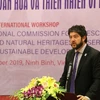
The Foreign Ministry – Vietnam National Commission for UNESCO – in partnership with the UNESCO Office in Vietnam, the Ministry of Culture, Sports and Tourism, and the Hanoi People’s Committee, held an international scientific seminar at the Thang Long Imperial Citadel World Heritage Site in Hanoi on May 21.
Cambodia currently boasts four World Heritage Sites: the Angkor Archaeological Park, the Temple of Preah Vihear, the Sambor Prei Kuk Archaeological Site, and the Koh Ker Temple complex.
The Department of Cultural Heritage under the Ministry of Culture, Sports, and Tourism confirmed on December 24 that Ha Long Bay is not among the 56 entries in the List of World Heritage in Danger.
An exhibition displaying archaeological artifacts unearthed at Thang Long Imperial Citadel in Hanoi was inaugurated on December 6 in the French city of Provins.
As the host of the National Tourism Year 2022, the central province of Quang Nam welcomed over 4.4 million domestic tourists and nearly 465,000 international visitors over the past 10 months.
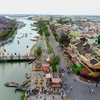
A workshop on preserving and promoting the value of world heritage sites in Vietnam in the post-COVID-19 period is scheduled to take place in Hoi An, central Quang Nam province, this month, according to the Ministry of Culture, Sports and Tourism.
Vietnam was ranked seventh among the world’s 20 fastest growing travel destinations in 2019, according to the United Nations World Tourism Organisation (UNWTO).
Among nearly 1 million Japanese tourists to Vietnam, 60-70 percent of whom come to Hoi An ancient city in the central province of Quang Nam, according to Vietnamese Ambassador to Japan Vu Hong Nam.
A delegation of Lao reporters on November 6 visited the central province of Quang Nam to learn from the province’s experience in promoting cultural heritage.
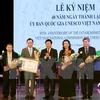
Numerous activities will take place in central Quang Nam province to celebrate the 20th anniversary of UNESCO’s recognition of the ancient town of Hoi Ann and My Son Sanctuary as world heritage sites, the 10th anniversary of UNESCO’s recognition of Cu Lao Cham as a world biosphere reserve.
A kaleidoscope of Vietnamese cultures, traditional practices and breathtaking world heritage sites are featured at the “Vietnam-Cultural Colours” exhibition, which is scheduled for August 18-21 in the south central province of Phu Yen.
Quang Ninh, Ninh Binh and Thanh Hoa provinces have many advantages to develop tourism as they are blessed with beautiful natural landscapes and numerous historical and cultural relic sites.
Sichuan is looking for more tourists from Vietnam in the near future, according to Dou Wei Ping, vice director of the Sichuan Department of Culture and Tourism.
The central province of Quang Nam, home to two world heritage sites and hundreds of national historical and cultural relic sites, has focused on international cooperation in personnel training for the restoration and management of the sites.
Up to 683,436 Chinese tourists visited Cambodia in the first quarter of 2019, up 35.1 percent over the same period last year, according to a report of Cambodia's Tourism Ministry.