11 UNESCO-Recognized World Biosphere Reserves in Vietnam
Vietnam has a system of 11 UNESCO-recognized World Biosphere Reserves, a designation awarded by UNESCO to areas of exceptional natural value and biodiversity.
The Dong Chau - Khe Nuoc Trong Biosphere Reserve, in Le Thuy district in the central province of Quang Binh, is one of the most valuable areas for biodiversity in Vietnam and home to numerous rare flora and fauna species in need of protection.
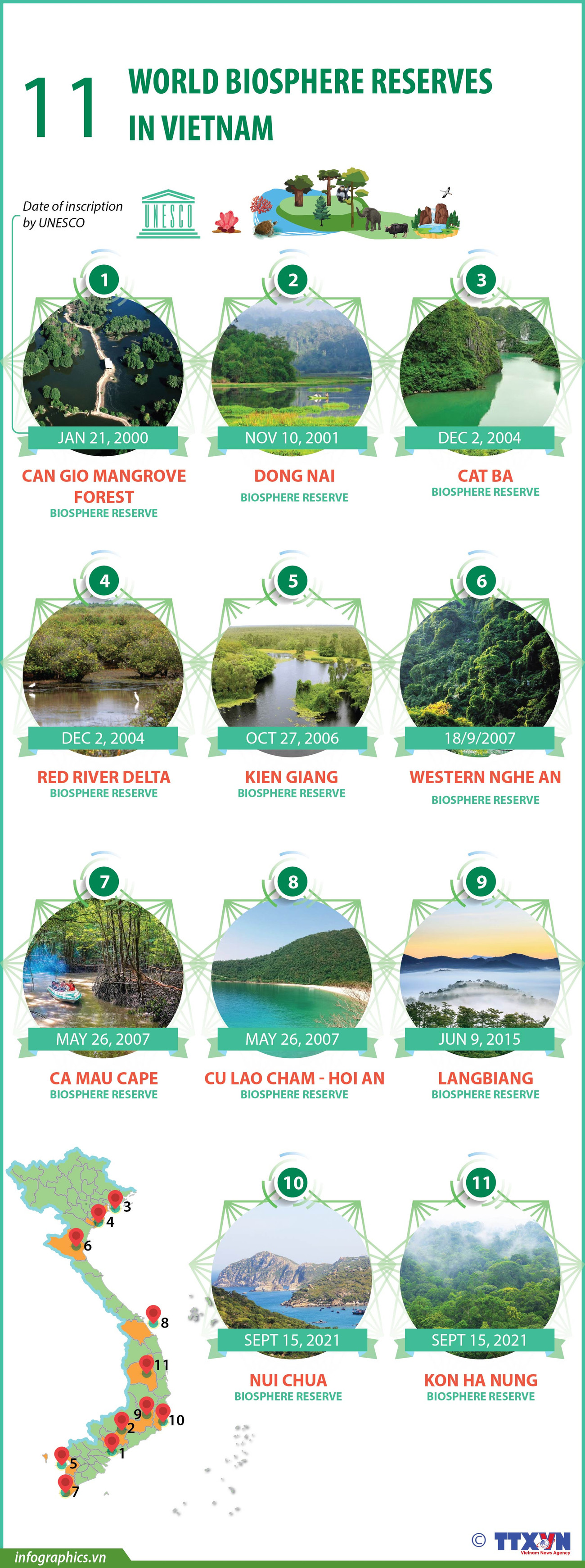
Covering a total area of more than 106,600 hectares, the Nui Chua World Biosphere Reserve in the south-central province of Ninh Thuan has become a popular tourist attraction thanks to its rich and diverse ecosystems.
The Nui Chua World Biosphere Reserve in the south-central province of Ninh Thuan, on an area of 106,646 hectares, is considered a standard for the most typical forest ecosystem in Vietnam and Southeast Asia. The reserve attracts crowds of tourists keen to explore and experience eco-tourism activities.
Ho Chi Minh City has nominated the Can Gio Biosphere Reserve in Can Gio district as a Ramsar site - a wetland of international importance under the Ramsar Convention.
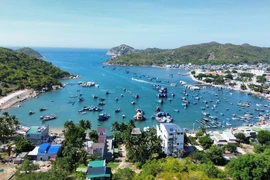
Kon Ha Nung plateau in the Central Highlands’ province of Gia Lai, which has been recognised by UNESCO as a global biosphere reserve, boasts pristine landscapes and rich biodiversity.
Kon Ha Nung Plateau in the Central Highlands province of Gia Lai, recognised as a world biosphere reserve by UNESCO at the 33rd session of its International Coordinating Council of the Man and the Biosphere Programme (MAB-ICC) in Nigeria in September, is expected to create more opportunities to attract both domestic and international organisations to invest in conservation and development project.
Nui Chua Biosphere Reserve in the central province of Ninh Thuan is a typical ecosystem in Southeast Asia, with a natural area of 29,8 hectares. Its core area of Nui Chua National Park is the place where three natural areas of forest, sea and semi-desert converge, creating rich and diverse ecosystems.
Authorities in the south-central province of Ninh Thuan held a ceremony on April 14 to receive a UNESCO certificate recognising Nui Chua area as a world biosphere reserve.
Prime Minister’s Decision No. 2629/QD-TTg dated December 1, 2025, approving the Digital Government Development Programme, affirms that the programme is guided by the principle of expanding inclusive and widespread digital services, with people and businesses placed at the centre as key actors, beneficiaries and co-creators of digital services.
Prime Minister’s Decision No. 2629/QD-TTg dated December 1, 2025, approving the Digital Government Development Programme, affirms that the programme is guided by the principle of expanding inclusive and widespread digital services, with people and businesses placed at the centre as key actors, beneficiaries and co-creators of digital services.
Foreign direct investment (FDI) inflows into Vietnam maintained strong growth momentum over the past 11 months. The National Statistics Office (NSO) under the Ministry of Finance reported that total registered foreign investment during the period reached 33.69 billion USD, rising 7.4% from a year earlier.
Hanoi’s pioneering pilot of public electric bicycles is seen as a fitting step in its drive to build a civilised, modern, green and sustainable capital, improving quality of life, creating a more people-friendly urban environment and promoting the green-transport trend the city is pursuing.
Hanoi is set to activate more than 1,800 AI-powered cameras from 10 December 2025 as part of a major push to modernise traffic management, improve enforcement and build a more civilised urban environment. The upgraded system will automate violation detection, adjust traffic signals in real time, and support fully digital “cold penalty” procedures, marking a significant step in the capital’s digital-transformation drive.
Resolution No. 244/2025/QH15, adopted at the 10th session of the 15th National Assembly on November 13, 2025, sets the key socio-economic development targets for 2026, including a GDP growth rate of 10% or higher, and a per capita GDP of 5,400–5,500 USD.
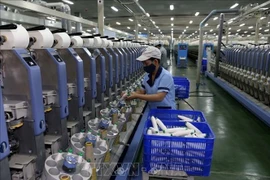
November's PMI stands at 53.8, slightly below October’s 54.5 but still well above the 50-point threshold, signalling continued improvement in business conditions in Vietnam and a fifth month of manufacturing recovery despite weather-related supply disruptions.
The Vietnam News Agency (VNA) respectfully presents the list of 34 provincial and municipal Party Secretaries for the 2025–2030 tenure, updated as of December 3, 2025.
Vietnam’s logistics sector is advancing rapidly, achieving average annual growth of 14–16%, contributing 4.5–5% to GDP, and ranking among the Top 5 in ASEAN. With modernised infrastructure, over 34,000 enterprises, and deeper integration into global supply chains, the sector is becoming a key driver of national efficiency and innovation.
Prime Minister Pham Minh Chinh has issued Official Dispatch No. 234/CD-TTg to launch and implement the “Quang Trung Campaign” for the rapid reconstruction and repair of homes for families whose houses were damaged by recent natural disasters in the central provinces.
From 2015 to 2025, Vietnam’s hospitals have made significant progress towards modern, internationally aligned quality standards, with most facilities achieving over 90% compliance in key quality-improvement and patient-safety activities.
Party General Secretary To Lam’s state visit to Laos is one of Vietnam’s most significant foreign affairs activities in 2025. The visit reaffirms the strong resolve of the two countries’ leaders to continue preserving, nurturing, and promoting the great friendship, special solidarity, and comprehensive cooperation between Vietnam and Laos.
The ongoing visit to Vietnam by Sultan of Brunei Haji Hassanal Bolkiah further deepens political trust and advances multifaceted cooperation, making bilateral ties increasingly substantive and effective.
Paralympic powerlifter Le Van Cong has been awarded the Gold Medal of the French Ministry of National Education, Youth and Sports, a prestigious honour recognising his remarkable contributions and outstanding achievements over nearly a decade of top-level competition.
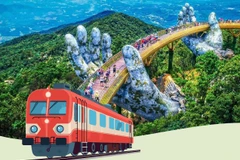
Vietnam Railway Equipment Development Co., Ltd., a subsidiary of Jinxin Group (Jinxin Vietnam), has officially launched a 13-car high-quality train on the Hanoi–Da Nang railway line, operating under codes JSE17/JSE18 in both directions, to meet the rising travel demand of local residents and tourists. This is a new-generation passenger train applying advanced technology, and the first of its kind to be manufactured and assembled in Vietnam.
In the first ten months of 2025, Vietnam recorded 162,900 newly registered enterprises, up 19.7%, and 92,900 firms returning to operation, up 40.3%. This brought the total number of newly established and returning enterprises to 255,900, a 26.5% increase compared with the same period in 2024.
“Mua do” (Red Rain), directed by Dang Thai Huyen, has won the Golden Lotus Award for feature film – the most prestigious category of the Vietnam Film Festival, at the 24th edition of the event, which closed in Ho Chi Minh City on November 25.
The Autumn Economic Forum 2025, themed “Green Transition in the Digital Era,” took place from November 25–27, 2025, in Ho Chi Minh City. The event offered a valuable opportunity to showcase the beauty and cultural richness of Vietnam to international friends.
The 2025 Action Month for gender equality, and gender-based violence prevention and response has been launched in Hanoi under the theme 'Gender equality and safety for women and girls in the digital era.'
Vietnam and South Africa have officially upgraded ties to a Strategic Partnership. The announcement was made during a meeting between Prime Minister Pham Minh Chinh and South African President Cyril Ramaphosa in Johannesburg on 21 November, as part of the former’s visit to the African country to attend the G20 Summit and engage in bilateral activities.