Incense offering honours Hung Kings at festival opening
The Hung Kings Temple complex, located atop Nghia Linh mountain in Hy Cuong commune, is the sacred centre dedicated to the Hung Kings – the legendary founders of the Vietnamese nation.
Historically known as Ngoc Tran Son Tu, the temple was renamed Hue Nam during the reign of King Dong Khanh in the late 19th century, symbolising royal gratitude to the Mother Goddess. It is also the only temple in Hue that harmoniously combines royal ceremonial elements with folk religious practices, creating a distinctive blend of court ritual and popular belief.
Running until April 26, the exhibition features a collection of paintings that reflect a subtle fusion of European artistic spirit and Eastern emotional depth, reinterpreted through the lens of a French–Vietnamese cultural identity.
The national TV station will televise all key events including the opening ceremony, matches, and the closing ceremony.
This year’s festival drew the participation of 15 representatives from embassies in Russia, along with a large number of students from countries, including Vietnam, Kazakhstan, Uzbekistan, Tajikistan, Kyrgyzstan and Haiti.
In the 10km event, she made a strong impression by finishing first with the same time as a male competitor, clocking 2 hours 30 minutes and 22 seconds.
Nguyen Thien Thuat, Editor-in-Chief of the The Thao & Van Hoa newspaper and Head of the organising board of the awards, said, noting that their achievements reflect the spirit of the Politburo’s Resolution No. 80, which emphasises preserving national cultural values while selectively absorbing the essence of world culture.
Guided by Resolution No. 80-NQ/TW on the development of Vietnamese culture, discussions highlighted institutional reform, a shift from administrative management to development-oriented governance, and strengthening the State’s facilitating role.
The lady expressed her appreciation for the centre, describing Soong Ching Ling as an eminent figure who dedicated her life to revolution, peace, international friendship and the well-being of children.
Beyond cultural value, well-organised festival programmes linked with tourism and media can contribute to the development of cultural industries and enhance Vietnam’s cultural soft power, positioning heritage-based events as distinctive national cultural brands in the international arena.
As suggested by UNESCO experts, heritage should be approached as an integrated system encompassing space, people and everyday life. This perspective can inform urban planning, cultural tourism development and the creation of clear economic drivers.
In his speech, Vice Chairman of the municipal People’s Committee Nguyen Manh Cuong said the municipal Party organisation, authorities and people always value the close ties and solidarity among Vietnam, Laos and Cambodia. He described the three nations’ longstanding ties, forged through shared hardships, as an invaluable spiritual asset and a bedrock for sustainable development.
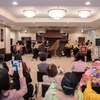
At the event, 30 local artists from both sides took part in boat performances, singing traditional folk duets along the border river in the area.
According to Vu Duc Thinh, President of the Vietnam Kickboxing Federation, the strong results reflected careful preparation by local training centres and the determination of Vietnamese fighters. The team’s participation, funded largely through socialised and local resources, also demonstrated growing support for the development of kickboxing in Vietnam.
Many localities have adopted flexible and systematic approaches to preserving and promoting the value of historical and cultural sites, bringing heritage closer to communities and visitors.
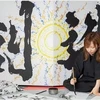
Following the success of the first exhibition held in Ho Chi Minh City in May last year, this year’s edition brings together 25 female painters from several countries and territories, presenting 38 artworks.
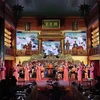
The opening night was combined with an artistic programme titled “sounds of the new era,” drawing around 50,000 spectators. The programme was structured in three chapters: Origins of Sound, Heritage Sound, and Sound of the New Era.
At renowned sites such as Ban Gioc Waterfall, Pac Bo relic site, and Mat Than Mountain, visitors not only admire the scenery but also engage in cultural activities organised by locals.
People’s Artist Nguyen Hoang Tuan, Chairman of the Hanoi Theatre Association, noted that while northern Vietnam had 27 puppetry guilds in 1986, only 14 remain today. Many traditional plays and original scripts have been lost, hurting restoration and preservation efforts.
In 2025, Malaysia welcomed more than 331,000 Vietnamese visitors. This number placed Vietnam in the country's top 15 markets. Vietnam, in turn, received more than 573,000 visitors from the other Southeast Asian nation.