According to Avison Young Vietnam, domestic investors emerged as the primary acquirers, accounting for a major in transactions valued above 100 million USD.
The projection reflects Vietnam’s increasingly prominent role in regional supply chains, as well as the effectiveness of FDI inflows into manufacturing, technology, and export-oriented services.
Vietnam-Hong Kong trade hit 62.3 billion USD in the first 11 months of 2025, soaring 73.1% annually. Vietnamese exports to Hong Kong amounted to 36.8 billion USD, a 90.6% hike, ranking fourth among Hong Kong’s import sources, while imports from Hong Kong stood at 25.5 billion USD, up 52.9% and ranking third.
In 2026, venture capital inflows into Vietnam’s start-up ecosystem are expected to recover gradually, though in a more selective manner. VinVentures forecasts that capital will focus on start-ups that have survived the rigorous screening of 2024–2025, possess clear business models, strong commercialisation capacity, and the ability to generate real cash flows.
With a strong production base and support from industry associations and trade promotion agencies, Vietnamese leather and footwear firms are expected to gradually expand their presence in the Canadian market in the time to come
The US–ASEAN Business Council expects the congress to outline a clear strategic direction that will guide the country into a new era of strong, sustainable growth - economically, socially, and in its global integration - particularly as Vietnam pursues its 10% GDP growth
Sun PhuQuoc Airways will officially commence operations on the direct Phu Quoc – Taipei route from March 29, 2026.
Exports of timber and wood products reached nearly 1.7 billion USD in December 2025 alone, bringing total export value for the year to 17.2 billion USD – an increase of nearly 6% compared with 2024.
Regarding the practical foundations for achieving the economic growth goal, Vice Chairman of the Party Central Committee’s Commission for Policies and Strategies Nguyen Anh Tuan noted that, built on existing achievements and the nation’s aspiration for renewal and advancement, Vietnam possesses sufficient conditions, potential, and policy space to realise this goal.
The State Bank of Vietnam set the daily reference exchange rate at 25,124 VND/USD on January 21, down 6 VND from the previous day.
For the year as a whole, Vietnam retained its position as Singapore’s 10th largest trading partner. Bilateral trade reached a record high of nearly 40 billion SGD, up 26.2% from the previous peak of 31.67 billion SGD recorded in 2024.
Vietnam should move from a growth model based mainly on expanding capital and labour to one driven by productivity improvements. He said that this requires enhancing the quality of the workforce, particularly engineers, technicians, and managers in industrial sectors.
By the end of 2026, Vietnam aims to rank among the world’s top 50 performers in the United Nations Sustainable Development Goals, advance at least three places in the International Property Rights Index, and climb at least one position in the Global Innovation Index.
In Vietnam, Ho Chi Minh City is increasingly emerging as a frontrunner for this new wave of Global Capability Centres (GCCs), underpinned by its advantages in human capital, cost efficiency and high-quality office infrastructure.
The city hopes the Dutch Consulate General and enterprises will help promote bilateral import-export activities and strengthen connections to encourage Dutch investors to explore priority sectors in Can Tho, said a local official.
The 2025-2027 period will be a critical turning point, as exporters to the European market will be required to strictly comply with ESG standards, including net-zero emissions roadmaps, labour standards, corporate governance and transparency requirements. As a key export sector, the electronics industry is being directly and strongly affected by this shift.
The People’s Committee of Phu Quoc Special Zone in the Mekong Delta province of An Giang is accelerating the implementation of projects serving the APEC Economic Leaders’ Week in 2027 (APEC 2027).
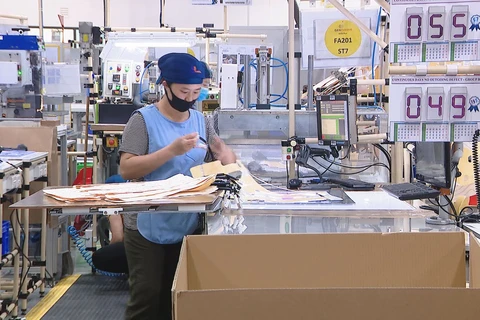
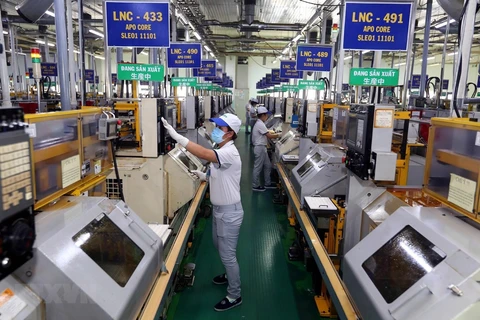
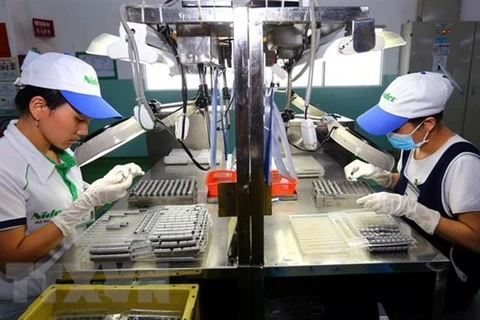
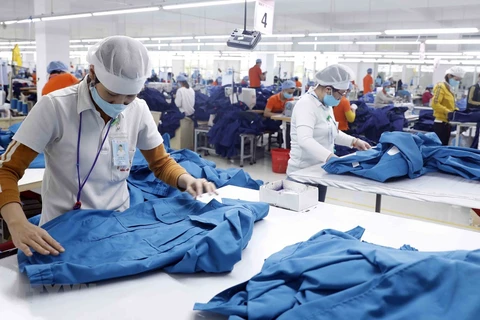
Vietnam’s competitive edge is no longer driven primarily by expanding production capacity, but by structural upgrading. High-tech manufacturing of electronics, semiconductors, precision engineering, and advanced components now accounts for more than 30% of total manufacturing output.
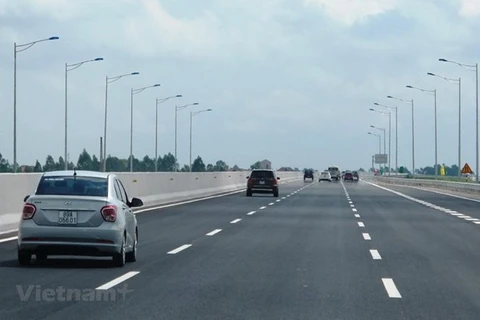
Projects slated for commencement include Ho Chi Minh City's Ring Road 4; Metro Line No.2 (Ben Thanh–Tham Luong section); a sea-crossing bridge linking Can Gio with Ba Ria–Vung Tau; and major bridges such as Can Gio, Phu My 2, Thu Thiem 4 and Cat Lai.
To ensure that science and technology truly act as a powerful growth engine, experts emphasised the need for the Government to put in place supportive mechanisms and policies that encourage enterprises to invest in research and development, while strengthening cooperation among the State, research institutions and the business sector.