2024 Land Law to draw real estate investment, increase social housing supply

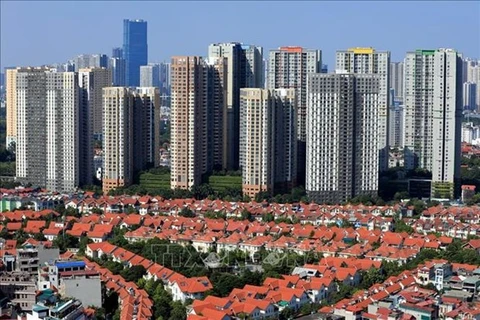
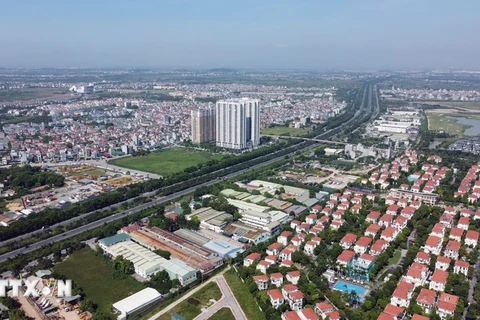
The real estate market is expected to flourish as the 2024 Land Law comes into effect. (Photo: VietnamPlus)

Hanoi (VNA) - Expediting the enforcement of the 2024 Land Law would stimulate the supply of social housing and encourage enterprises to be more assertive in participating in the development of this segment, experts predict.

The law is due to take effect on January 1, 2025. However, the Prime Minister has instructed ministries and agencies to complete assigned tasks to propose the National Assembly for permission to enforce it from July 1 this year.

According to experts, the law coming into effect will have a significant impact, with the two groups benefiting the most being overseas Vietnamese and resettled individuals who are compensated. The supply of social housing is also expected to shoot up due to preferential policies and new support packages.

Attracting remittances

According to Associate Professor - Doctor Nguyen Lu Phuong, from Ho Chi Minh City University of Natural Resources and Environment, foreigners or overseas Vietnamese were previously not eligible to purchase houses attached to land use rights in Vietnam. However, the 2024 Land Law stipulates that Vietnamese expatriates are allowed to enter Vietnam, purchase or lease-purchase houses attached to land use rights and receive land use rights in housing development projects.

With this provision, Troy Griffiths, Deputy Managing Director of Savills Vietnam, expressed his belief that the new land law will bring about more investment opportunities for the real estate buyer group of overseas Vietnamese. This change also creates significant potential for the market thanks to direct investment capital from the group.

2.jpg
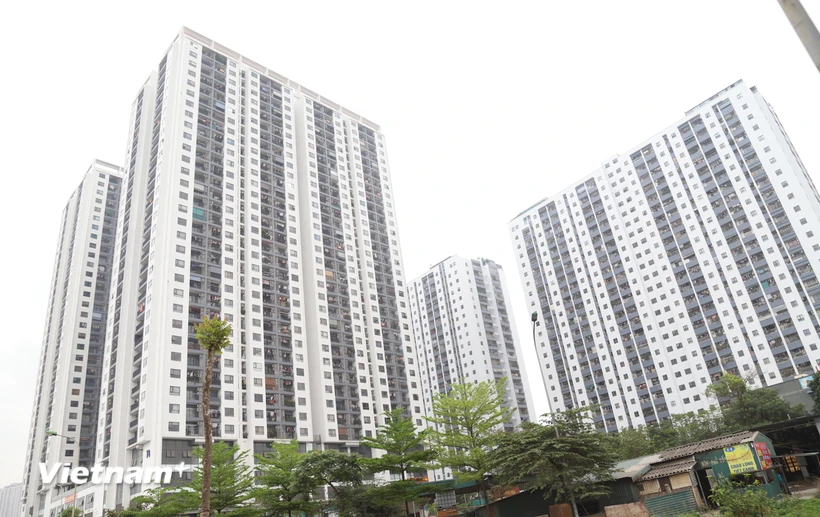
The supply of social housing is anticipated to improve after the 2024 Land Law comes into force. (Photo: VietnamPlus)

In addition, the new law stipulates that resettlement areas must complete conditions regarding technical and social infrastructure, while ensuring the livelihoods of residents.

Improving social housing supply

Experts believe that from the time of adoption until July 1, there is enough time to bring the law's provisions to people, businesses, and state agencies. If the new enforcement date is passed, it will help the supply of social housing "boom" in the coming time, particularly in major cities like Hanoi and Ho Chi Minh City.

According to Le Bao Long, the strategy director of the site Batdongsan.com.vn, the supply of social housing is expected to improve with preferential policies, new support packages, and regulations stipulating that provincial people's committees must allocate sufficient land funds for social housing.

The 2024 Land Law and the 2023 Housing Law add more forms of social housing development, including foreign capital, foreign organisations, and union financial resources for workers renting social housing.

Long forecasts that the quality of real estate projects will also improve due to stricter regulations on handover standards and progress.

With these adjustments, in Resolution No. 01/NQ-CP dated January 5, 2024 regarding key solutions for implementing the socioeconomic development plan and state budget estimate this year, the Prime Minister set a target of completing about 130,000 units of social housing.

Currently, the Ministry of Construction, the Ministry of Natural Resources and Environment, and the Ministry of Finance are focusing on studying draft decrees guiding the 2023 Housing Law and the 2023 Real Estate Business Law, the 2024 Land Law, and the 2024 Law on Credit Institutions. They will then submit to the Government for consideration and issuance in May. The work serves as a basis for the Government to seek the National Assembly’s permission for the 2024 Land Law to take effect earlier./.

VNA

See more

The proportion of Vietnamese goods remains high at supermarkets. (Photo: VNA)

Vietnamese brands win over domestic consumers to go global

Amid increasingly fierce global competition, the goal is no longer simply to increase domestic consumption of Vietnamese goods, but to develop strong Vietnamese brands capable of winning consumers through quality, innovation and added value, thereby creating a stepping stone for expansion into international markets.

Illustrative image (Photo: VNA)

Automated VAT refunds to be rolled out from December

As of August 11, VAT refunds rose 32% from a year earlier, reaching 64.4% of the full-year estimate. Tax authorities issued 11,627 refund decisions totaling 111.726 trillion VND (4.26 billion USD), up 9% by volume. The payouts improved cash flow for companies and supported production, trade and exports.

ST25 rice is the centrepiece of the Vietnam Goods Week at Selgros. (Photo: VNA)

ST25 rice officially enters Selgros wholesale supermarket chain in Germany

The placement of ST25 rice on Selgros shelves not only creates an additional opportunity for German consumers to access Vietnamese rice products, but also contributes to efforts to increase the added value of Vietnamese agricultural products by shifting the focus from volume to quality, branding and value.

Trains on the elevated section of the Cau Giay – Nhon route in Hanoi provide convenient transportation for local residents. (Photo: VNA)

Multimodal connectivity to drive Vietnam’s transport infrastructure

Under the proposed approach, roads would serve mainly as connectors and for first- and last-mile transport; railways would handle large volumes over long distances; maritime transport would serve import and export cargo; inland waterways would carry large volumes at low cost; and air transport would focus on fast delivery and high-value goods.

Amata Industrial Park in Dong Nai city (Photo: VNA)

Green shift powers investment in southeast Vietnam

The Amata Industrial Park in Dong Nai City, established 32 years ago and covering more than 500ha, is home to over 160 domestic and foreign businesses. Selected in 2020 as one of three national pilot sites for conversion into an eco-industrial park, Amata has raised its compliance with the international eco-industrial park framework from 41% to 86% in 2024, and is working towards becoming Dong Nai's first certified eco-industrial park.

At a port in Ho Chi Minh City (Photo: VNA)

Multi-channel capital mobilisation needed to achieve double-digit growth

The Ministry of Finance estimates development investment for 2026-2030 at a minimum of 38.5 quadrillion VND (1.48 trillion USD), or about 40% of GDP. The state budget is expected to provide only about 20%, or more than 7.7 quadrillion VND, leaving over 80%, or more than 30 quadrillion VND, to be raised from the broader economy. That makes expanding capital mobilisation channels beyond bank credit essential.

An aerial view of the Nhieu Loc – Thi Nghe area in Ho Chi Minh City. The southern metropolis is home to the Vietnam International Financial Centre. (Photo: VNA)

Vietnam International Financial Centre launches membership registration system

Integrated into the official Vietnam International Financial Centre portal at vifc.gov.vn, the online system for registering and recognising members provides a unified online service channel through which investors, organisations and businesses can complete procedures related to membership, from new registration and recognition to information updates and termination of membership.

At a tax office in Hung Yen province (Photo: VNA)

Finance ministry moves to cut business costs, spur growth

Tax policy is among the solutions with the most direct impact on companies. Rather than prioritising near-term revenue collection, fiscal policy is being run to help them preserve cash flow, expand production and build more sustainable revenue sources.

In the Kim Long Motor Hue factory (Photo: VNA)

Hue courts capital to turn industrial zones into growth engine

The economic and industrial zones in Hue city host more than 200 active investment projects worth over 152 trillion VND (5.84 billion USD), with 139 already operational. Since the start of 2026, they have generated about 32 trillion VND, contributed 4.2 trillion VND to the state budget and brought in 730 million USD in exports, while employing more than 46,000 workers.