Aerospace technology to have stronger role in national development

The Government has set the goal to enhance the role the aerospace technology sector plays in the country’s general development.
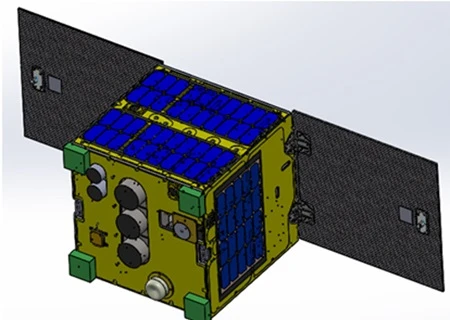
Aerospace technology to have stronger role in national development ảnh 1Researchers of Vietnam National Satellite Center (VNSC) and the MicroDragon, the first 50-kg satellite developed by VNSC, a member of theVietnam Academy of Science and Technology. (Source: vnsc.org.vn)

Hanoi (VNA) – The Government has set the goal to enhance the role the aerospace technology sector plays in the country’s general development.

The Aerospace Technology Research Strategy and Application to 2020 approved by the Government clearly state that space technology should practically and effectively serves social-economic development tasks, the management of natural resources and environment and the monitoring of natural disasters, as well as national defence missions, contributing to enhancing Vietnam’s international position and the country’s scientific and technological capabilities.

Towards those goals, the Vietnam National Satellite Centre (VNSC) was formed to take charge of the Vietnam Aerospace Centre project, one of the largest-ever scientific and technological projects funded by Japanese official development assistance (ODA) capital.

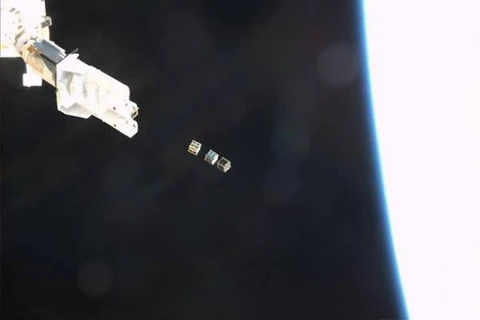
Associate Prof. Dr. Pham Anh Tuan, Director of the VNSC, said besides building infrastructure and facilities as well as training personnel for the space centre, the VNSC has been involved in satellite development technology transfer. The VNSC scientists have successfully manufactured a micro satellite - the Pico Dragon, marking the first step forward in the centre’s satellite making plan.

The VNSC plans to launch the first 50-kg satellite developed by Vietnamese engineers, the Micro Dragon, in 2018.

The centre now has 117 members of staff, many of whom graduated from prestigious Japanese universities including the Tokyo University, Keio University and Kyushu Technology Institute.

According to the space technology sector’s development roadmap, the facilities for the Space Centre in Hoa Lac Hi-Tech Park will be completed as of 2018, while a Centre for Space Technology Application in HCM City should be set up in 2020. In addition, the Nha Trang observatory in the south central province of Khanh Hoa is slated to be completed in 2017.

By 2021, the country’s aerospace industry should master the technologies to manufacture small Earth observation satellites and become able to manufacture satellites by 2025.

By 2030, the industry will be able to design some parts of a satellite and begin studies of carrier rockets, with the hope of mastering carrier rocket technology and begin building rocket launch platform by 2040 towards the goal of launching Earth observation satellites by locally-made rockets.

Tuan said the centre will send 51 engineers to Japan to take part in designing and manufacturing satellites, and 32 others to be trained on the application of aerospace technology.

The VNSC is applying to host the International Aerospace Congress, the world aerospace industry’s largest and most important event, Tuan said.-VNA
VNA

See more

Hoang Nguyen Dinh, Vice Chairman of the People’s Committee of Ho Chi Minh City, speaks at the event (Photo: VNA)

Vietnam promotes On-chain financial infrastructure cooperation at Davos 2026

Jointly organised by the municipal People’s Committee, the Centre for the Fourth Industrial Revolution (C4IR) in the city (HCMC C4IR) and the Vietnam International Financial Centre in Ho Chi Minh City (VIFC-HCMC), the event was part of a series of activities showcasing the vision for building VIFC-HCMC, while expanding cooperation with global partners in finance, technology and innovation.

Trio of core drivers of new growth model highlighted at 14th National Party Congress

Trio of core drivers of new growth model highlighted at 14th National Party Congress

Member of the Party Central Committee and Minister of Science and Technology Nguyen Manh Hung emphasised that in moving from middle-income to high-income status, Vietnam must rely on science and technology, innovation, and digital transformation. These three drivers have been expanded and redefined by the Party under a new approach, creating broader development space and unlocking new resources for growth. With this trio, Vietnam has the potential to achieve double-digit growth.

A view of the site where the Ninh Thuan 1 Nuclear Power Plant is located in Phuoc Dinh commune, Khanh Hoa province (Photo: VNA)

Gov’t rolls out communication scheme for nuclear energy development

By 2027 around 60% of leaders, managers, civil servants and public employees in relevant ministries and localities will acquire basic knowledge of nuclear energy development and application. In parallel, the professional capacity of reporters, editors and information officers covering the sector will be strengthened.

According to Minister of Science and Technology Nguyen Manh Hung, Vietnam has established a new framework in which science, technology, innovation and digital transformation are judged by outcomes, with socio-economic effectiveness as the core benchmark. (Photo: baochinhphu.vn)

Science, technology and innovation elevate Vietnam’s standing in new era

The most significant achievement in recent years has not been a single technological success, but a fundamental shift in awareness, mindset and ways of doing. Vietnam has established a new framework in which science, technology, innovation and digital transformation are judged by outcomes, with socio-economic effectiveness as the core benchmark.

Dr. Heng LiHong, Permanent Vice Chairman and Secretary-General of the Vietnam-Cambodia Business Association. (Photo: VNA)

New growth model helps position Vietnam on global technology map: expert

Heng LiHong, who is also a member of the Standing Board of the Business Association of Overseas Vietnamese (BAOOV), expressed his confidence that this new growth model will help Vietnam move beyond a development path reliant on low-cost labour and resource extraction, enabling the country to gradually climb to higher levels in the global value chain.

Deputy Prime Minister Nguyen Chi Dung receives a delegation of Seoul Semiconductor Co., Ltd. led by its CEO Lee Chung-hoon in Hanoi on January 16. (Photo: Government Portal)

Vietnam seeks stronger sci-tech cooperation with international partners

Informing the UN official about some of Vietnam’s achievements in sci-tech development, innovation, and digital transformation, Deputy PM Nguyen Chi Dung highlighted that the country and the UN have recorded progress in their sci-tech relations, with cooperation in strategic areas matching global trends and bilateral cooperation demand.

The ASEAN Digital Awards 2025 ceremony is held in Hanoi on January 15 (Photo: VietnamPlus)

Vietnam wins three awards at ASEAN Digital Awards 2026

In the digital startup category, MedCAT’s Idus platform, developed by MedCAT, won the gold award. Designed for reading, classifying and structuring documents, the platform has been applied in banking, public administration and healthcare, supporting automated insurance claims processing, smart healthcare services and the development of personal electronic health records.

Illustration of part of the digital technology and mixed-use park project in Hanoi Tay Tuu and Phu Dien wards. (Photo: FPT)

Hanoi breaks ground on digital technology, mixed-use park

The digital technology and mixed-use park in Hanoi is envisioned as a key nucleus of the capital’s innovation ecosystem, aligned with its goal of becoming a major national hub for science, technology and the digital economy.

Illustrative photo (Photo: Ampshireflag)

Promoting cooperation aligned with ASEAN digital priorities

The sixth ASEAN Digital Senior Officials’ Meeting (ADGSOM) and related meetings took place from January 12 to 14 in Hanoi. Delegations exchanged views and reviewed progress in priority cooperation areas, focusing on enhancing coordination and harmonisation of digital policies across ASEAN.