Agro-forestry-fishery exports to US, EU hit by COVID-19

With Vietnam’s main agro-forestry-fishery export markets after China such as the US and Europe being hit by the new coronavirus-caused acute respiratory disease (COVID-19), Vietnamese exporters are suffering.
Agro-forestry-fishery exports to US, EU hit by COVID-19 ảnh 1Processing Tra fish for export (Source: VNA)

HCM City (VNS/VNA) -
WithVietnam’s main agro-forestry-fishery export markets after China such as the USand Europe being hit by the new coronavirus-caused acute respiratory disease (COVID-19),Vietnamese exporters are suffering.

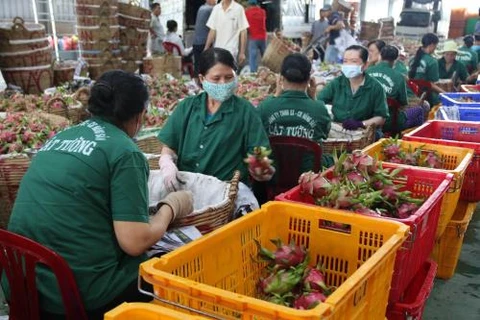
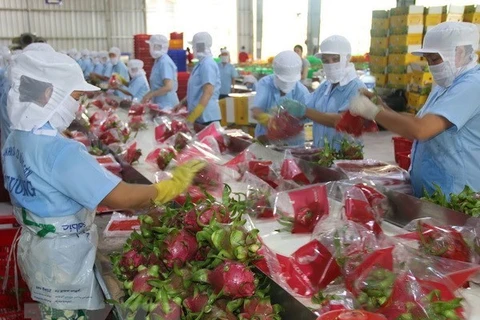
Nguyen Dinh Tung, Chairman andCEO of Vina T&T Group, which exports fresh fruits to several demandingmarkets, said fruit exports by air to the US and EU were down 70-80 percentsince many airlines had stopped flights.

"Shipments by sea arerelatively stable but customs clearance in importing countries is expected tobe prolonged because workers and officials are absent from work due to thepandemic, which could affect the goods quality.

“Therefore, at least in thenext one month, vegetable and fruit exports to these markets will dropsharply."

After that the export situationwould depend entirely on how the countries control the pandemic, he said.

His company now exports onlythree items, coconut, longan and durian, because they last long, and temporarystops exporting other fruits.

Dang Phuc Nguyen, General Secretaryof the Vietnam Fruits and Vegetable Association, said most fruits andvegetables were exported in fresh form and by air.

The sector must improve storageand packaging technologies to enable the products to last over 30 days so thatthey could be shipped to Europe and the US by sea, he added.

Truong Dinh Hoe, General Secretaryof the Vietnam Association of Seafood Exporters and Producers (VASEP), said themain seafood export markets such as China, the US, the EU, Japan, and the Republicof Korea had all been hit by COVID-19.

In the first two months of theyear seafood exports were worth nearly 935 million USD, down 15.9 percent fromthe same period in 2019, with exports to China down by 46.8 percent to 80million USD, and to the EU by 17.4 percent to 106 million USD and to theRepublic of Korea by 16 percent to 90 million USD.

According to VASEP, shrimpexporters expect the China market to recover in April and will focus onshipping by sea.

Pangasius exports to China areexpected to recover by 70 percent in May and fully recover in June.

Exporters will restrict exportsto China through intermediaries and outsourcing to avoid oversupply.

In the case of non-essentialitems such as wood and wood products, demand could slump at a time like this.According to the Vietnam Timber and Forest Products Association (VIFOREST),exports of timber and timber products will plummet in the next three months,especially to the country’s five key export markets that are severely affectedby the pandemic.

The five are the US, EU, China,Japan and the Republic of Korea, which buy nearly 90 percent of the country’stotal exports.

Importers in these markets haveinformed suppliers in Vietnam they would delay or stop buying or defer payment.

According to insiders,agricultural exports in the first two months of the year were estimated at 5.34billion USD, down 2.8 percent year-on-year.

If the Government and relatedministries did not provide timely support, the sector’s export prospects werevery gloomy, they said./.
VNA

See more

Ahmad Haikal Hasan, Head of the Halal Product Assurance Organising Agency (BPJPH) of Indonesia, speaks at the seminar (Photo: VNA)

Indonesia ready to cooperate with Vietnam in halal sector

Ahmad Haikal Hasan, Head of the Halal Product Assurance Organising Agency (BPJPH) of Indonesia, described Vietnam as a “potential supplier” of halal products with the capacity to play a larger role in the market, particularly in the fast-moving consumer goods (FMCG) sector. He revealed a plan to visit Vietnam next week to discuss the country’s progress in the global halal industry.

Delegates perform the opening ceremony. (Photo: VNA)

Thailand Week 2026 opens in Hanoi

The event brings together more than 100 companies, including Thai enterprises and Vietnamese importers, across about 120 booths. It features a wide range of Thai products aligned with consumer trends in Vietnam, including food and beverages, health and beauty, mother-and-baby and pet products, fashion and jewellery, household goods and tourism services.

Illustrative image (Photo: VNA)

Vietnam remains Singapore’s third-largest seafood supplier in 2025

Data released by the Accounting and Corporate Regulatory Authority of Singapore (ACRA) show that Singapore spent 125.5 million SGD (97.7 million USD) importing seafood from Vietnam last year, up 10.7% year on year, accounting for 10.3% of the city-state’s total seafood import market.

Workers assemble mobile phone components at Diem Thuy Industrial Park in the northern province of Thai Nguyen. (Photo: VNA)

Electronics exports surpass 107 billion USD in 2025

With an export turnover of 107.75 billion USD in 2025, computers, electronic products and components not only maintained their position as Vietnam’s largest export by value, but also contributed more than half of the overall increase in the country’s export turnover in 2025.

Experts said that Vietnam’s economic outlook continues to be underpinned by stable foreign direct investment inflows and public investment, which is playing an important role in driving growth. (Photo: thoibaotaichinh.vn)

Foreign investors maintain strong confidence in Vietnam’s market

Looking ahead to 2026, prospects remain bright as manufacturing, economic growth and foreign investment in Vietnam are expected to stay robust, with the country forecast to post the highest growth rate in the region this year, according to Adam Sitkoff, Executive Director of the American Chamber of Commerce (AmCham) in Vietnam.

Toy production at a Hong Kong-invested factory (Photo: VNA)

Vietnam targets deeper market penetration in Hong Kong in 2026

Vietnam-Hong Kong trade hit 62.3 billion USD in the first 11 months of 2025, soaring 73.1% annually. Vietnamese exports to Hong Kong amounted to 36.8 billion USD, a 90.6% hike, ranking fourth among Hong Kong’s import sources, while imports from Hong Kong stood at 25.5 billion USD, up 52.9% and ranking third.

Vietnam’s start-up market enters restructuring phase

Vietnam’s start-up market enters restructuring phase

In 2026, venture capital inflows into Vietnam’s start-up ecosystem are expected to recover gradually, though in a more selective manner. VinVentures forecasts that capital will focus on start-ups that have survived the rigorous screening of 2024–2025, possess clear business models, strong commercialisation capacity, and the ability to generate real cash flows.