An Giang's festival recognised by UNESCO as Intangible Cultural Heritage of Humanity

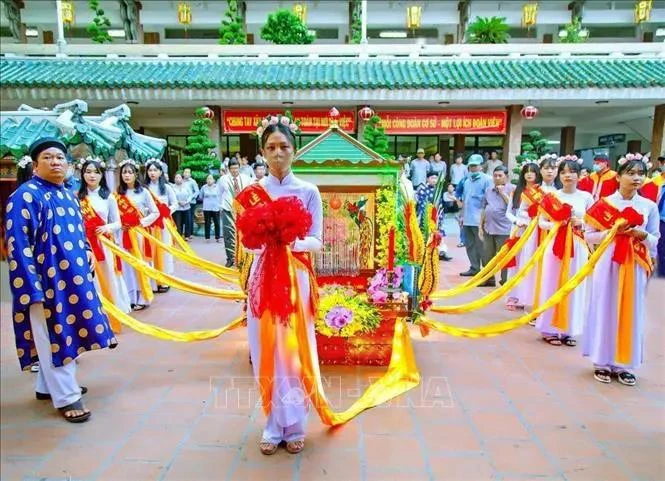
The Ba Chua Xu (Holy Mother of the Realm) Festival on Mount Sam in the Mekong Delta province of An Giang was officially recognised by UNESCO as Intangible Cultural Heritage of Humanity, at the 19th session of the Intergovernmental Committee for the Safeguarding of the Intangible Cultural Heritage in Paraguay on December 4.

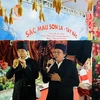
The Ba Chua Xu (Holy Mother of the Realm) Festival on Mount Sam in the Mekong Delta province of An Giang. (Photo: VNA)

Paris (VNA) - The Ba Chua Xu (Holy Mother of the Realm) Festival on Mount Sam in the Mekong Delta province of An Giang was officially recognised by UNESCO as Intangible Cultural Heritage of Humanity, at the 19th session of the Intergovernmental Committee for the Safeguarding of the Intangible Cultural Heritage in Paraguay on December 4.

The festival has been preserved and practised for generations in Chau Doc of An Giang province. It is held from the 22nd to the 27th of the fourth lunar month, at the Ba Chua Xu Temple on Mount Sam and the stone pedestal on the mountain to worship the Holy Mother.

It reflects the culture of Vietnam’s southerners as well as cultural exchange and blending with the Khmer, Chinese, and Cham communities. The festival honours Ba Chua Xu and serves as a time for local residents to express their gratitude and respect for those who have rendered service to the nation. In 2014, it was recognised as National Intangible Cultural Heritage by the Vietnamese Ministry of Culture, Sports, and Tourism.

Speaking at the session, Permanent Deputy Minister of Foreign Affairs Nguyen Minh Vu, who is also Chairman of the Vietnam National Commission for UNESCO, noted that the UNESCO recognition highlights Vietnam’s diverse and long-standing culture.

Vu.webp
Permanent Deputy Minister of Foreign Affairs and Chairman of the Vietnam National Commission for UNESCO Nguyen Minh Vu speaks at the session. (Photo: VNA)

This acknowledgment significantly contributes to efforts in preserving and promoting cultural heritage at both national and international levels, he said, stressing as Vice-Chair of the General Assembly of the State Parties to the 2003 Convention for the Safeguarding of the Intangible Cultural Heritage, Vietnam is committed to preserving and promoting this heritage and other heritages for future generations.

Le Hong Quang, Secretary of the An Giang provincial Party Committee, pledged to work with local people to protect and enhance the cultural values of this heritage, ensuring its alignment with sustainable development goals.

With this recognition, the festival has become the 16th intangible cultural heritage of Vietnam recognised by UNESCO. It is the second intangible cultural heritage in the southern region, following the Don Ca Tai Tu (southern amateur traditional music), and the first traditional festival in the South to receive this honour.

The recognition is the result of concerted efforts and close collaboration among the An Giang provincial authorities, heritage experts, and the Ministry of Culture, Sports and Tourism. The Vietnam National Commission for UNESCO, along with the Ministry of Foreign Affairs and the Permanent Mission of Vietnam to UNESCO, played a crucial role in proposing, refining, and advocating for this nomination.

The 19th session of the Inter-Governmental Committee for the 2003 Convention for the Safeguarding of Intangible Cultural Heritage of UNESCO is scheduled to last until December 7 in Asunción, Paraguay. It gathers nearly 1,000 delegates from 120 member countries to discuss key issues related to intangible cultural heritage. It plans to add 63 new entries to the global list of intangible cultural heritages./.
VNA

See more

Visitors to the booth of the Vietnamese Embassy at the Embassies Food and Culture Festival held in Prague, the Czech Republic, on June 6 (Photo: VNA)

Vietnamese culture, cuisine leave lasting impression in Czech Republic

Featuring more than 100 booths representing diverse cultures from around the world, the festival transformed the heart of Prague into a vibrant multicultural space where visitors could sample traditional dishes, enjoy folk performances, listen to traditional music and experience unique cultural showcases from different continents.

Vietnamese artists play traditional musical instruments at the festival held in Karlovy Vary city, the Czech Republic, on June 5. (Photo: VNA)

Vietnam culture, cuisine showcased in Czech Republic

The festival featured more than 20 booths offering traditional Vietnamese dishes, including "pho" and spring rolls, alongside activities promoting Ao Dai (Vietnamese traditonal long dress). One of the highlights was the presentation of complimentary Ao Dai to Czech residents and international visitors.

The Nguyen Dynasty (1802-1945) imperial throne, a recognised national treasure of Vietnam, officially returns to public display at Thai Hoa Palace in Hue Imperial Citadel on June 4 (Photo: VNA)

Nguyen Dynasty throne returns to Hue Imperial Citadel after restoration

The throne has been reinstated at its original central position inside Thai Hoa Palace, the ceremonial heart of the former imperial court. Its return has attracted significant interest from visitors and heritage enthusiasts eager to see one of Vietnam’s most important royal artefacts back on display.

People join the “Ho Van Lantern Festival Night” programme at the special national relic site of the Van Mieu–Quoc Tu Giam (Temple of Literature) in Hanoi. (Photo: VNA)

Night-time economy drives growth of Hanoi’s cultural industries

Under the Politburo’s Resolution No. 80-NQ/TW on the development of Vietnamese culture, Hanoi has been given fresh opportunities to leverage its cultural, historical, tourism and creative assets. The city’s recently approved project on developing the night-time economy for 2026–2030, with a vision to 2045, is expected to create momentum for cultural industry growth while enhancing Hanoi’s standing as a creative and modern city with a distinctive identity.

Efforts made to preserve, promote values of Non Nuoc Cao Bang Global Geopark

Efforts made to preserve, promote values of Non Nuoc Cao Bang Global Geopark

First recognised by UNESCO on April 12, 2018, the Non Nuoc Cao Bang Global Geopark in the northern province of Cao Bang is a land shaped by more than 500 million years of geological history. Covering over 3,683 sq.km and encompassing all or part of 36 communes and wards, the geopark is home to numerous scenic landscapes, as well as historical and cultural sites of exceptional value.

Scenic views of Da Nang featured in the film "Love in Vietnam" (Photo: VNA)

Da Nang Asian Film Festival 2026 set to launch with expanded international focus

Through this coordinated effort, Da Nang aims to establish DANAFF not only as an annual film event but also as a distinctive cultural landmark, helping position the city as a reputable destination for regional film and cultural events and enhancing its international profile, Vice Chairwoman of the municipal People’s Committee Nguyen Thi Anh Thi, said.

Co Bo Temple in Thanh Hoa province (Photo: nhandan.vn)

Thanh Hoa taps spiritual heritage to boost cultural tourism

Experts have called for stronger implementation of heritage management regulations under the Cultural Heritage Law, clearer responsibilities for site management boards and stricter action against activities that distort cultural traditions.

Ambassador Do Hung Viet, Vietnam's Permanent Representative to the United Nations, and his spouse introduce Vietnamese dishes to visitors at the 2026 UN International Bazaar in New York on June 3. (Photo: VNA)

Vietnam leaves strong impression at 2026 UN International Bazaar

A wide range of traditional handicrafts reflecting Vietnam’s rich cultural heritage, including ceramics, lacquerware, silk products, brocade textiles and other items, attracted considerable attention from visitors. Many products sold out early in the day.