APEC economies to boost tourism collaboration

Tourism ministers from Asia-Pacific Economic Cooperation (APEC) economies have agreed to develop strategies that will allow about 800 million tourists to travel across the region in 2025.
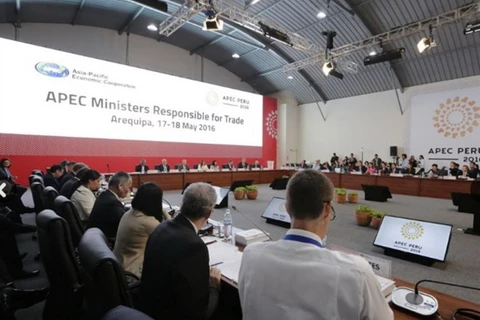
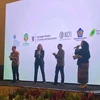
APEC economies to boost tourism collaboration ảnh 1 The 9th APEC Tourism Ministerial Meeting took place in Lima, the capital city of Peru, on May 28-29.

Mexico City (VNA) – Tourism ministers from Asia-Pacific Economic Cooperation (APEC) economies have agreed to develop strategies that will allow about 800 million tourists to travel across the region in 2025.

Peru’s Foreign Trade and Tourism Minister Magali Silva made the statement at the 9th APEC Tourism Ministerial Meeting held in Lima, the capital city of Peru, on May 28-29.

Peru and other APEC economies, including Vietnam, jointly issued the Declaration of Lima on the occasion.

The declaration recognised that tourism contributed 1.2 trillion USD to GDP, created 48 million jobs and accounted for 5.5 percent of APEC exports last year.

Silva said Asia-Pacific is the world’s largest air transport market with the flow of people – whether for business or tourism – crucial to boosting economic growth, trade and integration within the bloc.

The APEC tourism ministers agreed to enhance air connectivity and travel facilitation as well as to cut costs. They also plan to develop tourism programmes and share information.

Tourism growth will not only stimulate trade, investment and job generation but also pave the way for the expansion of micro, small and medium-sized enterprises and help them gain access to global markets and value chains.

Founded in 1989, APEC comprises of 21 member economies, including Australia, Brunei, Canada, Chile, China, Hong Kong, Indonesia, Japan, Malaysia, Mexico, New Zealand, Papua New Guinea, Peru, the Philippines, Russia, Singapore, the Republic of Korea, Chinese Taipei, Thailand, the United States and Vietnam.

It represents a market of 2.5 billion consumers and accounts for 47 percent of global trade.-VNA

VNA

See more

The Singapore Maritime Technology & Research Roadmap is aimed at advancing the sector’s efficiency and sustainability. (Photo: businesstimes.com.sg)

Singapore unveils new roadmap to boost innovation in maritime sector

The Singapore Maritime Technology & Research Roadmap is aimed at advancing the sector’s efficiency and sustainability. It highlights priorities – including digital technologies, decarbonisation and operational integration – to boost resilience, productivity and innovation in Singapore’s maritime ecosystem. It also addresses structural issues such as manpower, land and sea space limitations.

Malaysia considers establishing strategic petroleum reserve

Malaysia considers establishing strategic petroleum reserve

Malaysia, which was previously a net exporter, has now become a net importer due to declining domestic production and rising consumption, with demand estimated at around 800,000 barrels per day compared to production of about 400,000 barrels per day.

Indonesia to halt diesel imports from July

Indonesia to halt diesel imports from July

The move is part of the Indonesian Government’s efforts to strengthen national energy independence by utilising palm oil as an alternative fuel, said Agriculture Minister Andi Amran Sulaiman.

Malaysia’s growing microplastics crisis is largely self-inflicted, driven by domestic waste, weak recycling practices and everyday plastic use, said experts. (Photo: New Straits Times)

Malaysia seeks solutions to microplastic crisis

Microplastics originating from domestic waste and wastewater are increasingly entering the food chain, posing serious threats to seafood safety and the livelihoods of coastal communities.

The new mass emergency alert system SG Alert, which will be used during emergencies such as major fires, chemical or terror incidents, seen on an Apple and Android device on Apr 17, 2026. (Photo: CNA)

Singapore launches new national emergency alert system

SG Alert in Singapore uses cell broadcast technology, enabling alerts to be delivered within seconds without requiring mobile data or collecting personal information. Unlike conventional SMS, which may be delayed during network congestion or depend on internet connectivity, the system ensures fast and reliable message delivery. Alerts can be sent islandwide or targeted to specific affected areas.