Aquaculture waste proves profitable for seafood producers

As nearly one million tonnes of aquaculture waste are discarded annually, some firms have begun to seek ways to reclaim the waste and prevent it from posing a risk to the environment.
Aquaculture waste proves profitable for seafood producers ảnh 1A VNF's chitosan product. Chitosan and its derivatives provide huge profits for the firm thanks to its strong bioactivity effects and diverse applications. (Photo vnfoods.vn)
Hanoi (VNS/VNA) - As nearly one million tonnes of aquaculture waste arediscarded annually, some firms have begun to seek ways to reclaim the waste andprevent it from posing a risk to the environment.

Vinh HoanCorporation extracts proteins from fish waste for use in cosmetics andpharmaceuticals.

"Ourcompany isolates collagen and gelatin from fish skin, two proteins that areused in cosmetics and pharmaceuticals", said Vinh Hoan's General DirectorNguyen Ngo Vi Tam.

About 19% ofits revenues come from aquacultural byproducts and 7% from the recovery ofcollagen/gelatin.

Tam said hercompany launched its first collagen/gelatin plant in 2015 with an annualcapacity of 2,000 tonnes. The plant was the first of its kind in Vietnam.

In 2021, VinhHoan's aquacultural byproducts and collagen/gelatin products raked in over 2.2trillion VND, of which the latter contributed 642 billion VND.

Nam Viet JSChas recently followed suit with a plant of 780 tonnes. As a result, insidersestimate that the market of collagen products will grow by 6% annually,reaching roughly 8 billion USD by 2027.

Vietnam FoodJSC (VNF) is profiting from the re-utilisation of shrimp waste.

Phan Thanh Loc,Vietnam Food CEO, revealed that the biopolymers derived from shrimp heads, suchas chitosan, are highly profitable as they are integral to anti-obesity andanti-fibrinolytic medications.

"Weprocess shrimp heads into various products, including chitosan and hydrolysedliquid. Our shrimp-derived hydrolysed liquid is unique", Loc said.

In hisestimation, shrimps' value would rise about five times should they be reclaimedinto animal feed, twenty times into functional foods and thirty times intopharmaceuticals.

Unfortunately,most shrimp producers opt for animal feed because of the costs of investing inhigh-tech equipment.

Sao MaiGroup JSC is another big name that has successfully turned pangasius fat intohigh-valued products, including cooking oil, shortening and margarine.

The processis lucrative as fish fat is sold at 16,000 VND per kilo, whereas cooking oilsells at 46,000 VND per litre and the two substances at 30,000 VND per kilo.

"We usethe proteins concentrated in hydrolysed liquid to make broth mix. We reclaimeverything", said Truong Vinh Thanh, Sao Mai's Deputy General Manager.

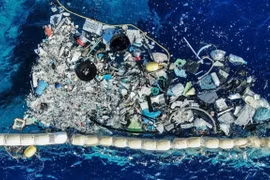
Expertsestimated annual aquaculture waste at approximately one million tonnes. Such anamount of waste, if left untapped, would cause severe damage to theenvironment.

"If wecan employ technology to turn 320,000 tonnes of annual shrimp waste, it wouldyield tens of billions of dollars", said Tran Van Tung, Deputy Minister ofScience and Technology.

However,there is still ample room for improvement. Reclaimed agricultural waste in Vietnamstood at just 275 million USD in 2020, far lower than the above figure.

Insidersunderscored the inaccessibility of bank loans as the main reason for the slowpace.

"Firmshave proclaimed for years that they do not need government financial support.Instead, they need readily-accessible bank loans and land slots", said BuiBa Bong, former Deputy Minister of Agriculture and Rural Development.

Firms needbank loans to fund their research and development of new reclamation methodsand obtain high-tech equipment that can put the methods into use.Unfortunately, bank loans are generally difficult to obtain as most banks arecautious about financing such ventures.

Thesituation is no better for firms seeking government financial support, asaccess to the money involves a lengthy administrative process.

"It isnot easy to get hands-on financial support because of cumbersomeprocedures", said Vo Quan Huy, Director of Huy Long An Co. Ltd.

Le Hang,Communication Director of the Vietnam Association of Seafood Exporters andProducers, estimated annual seafood output at 8 million tonnes, of whichaquaculture byproducts and waste account for nearly half.

She calledfor favourable policies to develop aquaculture byproducts and waste reclamationinto an independent industry to fully unlock their economic potential.

"Ministriesshould put aquaculture byproducts and waste high on its agenda and regard theirreclamation as an independent industry", she said.

She alsocalled for a mechanism to encourage firms to invest heavily in the industry forthe good of the environment.

According tothe Department of Science, Technology and Environment under the Ministry ofAgriculture and Rural Development, up to 90% of aquaculture waste is reclaimedannually but predominantly into animal feed, a low-valued product.

Thedepartment believed that the waste would become a money-spinner for firmsshould they pour sufficient finance into high-tech equipment, which allows forthe manufacturing of higher-valued products./.
VNA
See more

At Nestlé Vietnam factory in Hung Yen province (Photo: VNA)

Vietnam seeks to build stronger ecosystem for FDI

The World Bank has stressed the need to connect global companies with domestic suppliers, improve the business climate and develop supply-chain finance solutions. Those steps will let domestic firms gradually meet requirements on quality, technology, costs and delivery times, and position them to become suppliers to multinational corporations.

Construction of technical infrastructure facilities serving APEC 2027 in Phu Quoc Special Zone, An Giang province. (Illustrative photo: VNA)

Vietnam enters investment grade credit rating category for first time

Vietnam has maintained robust growth, outperforming other Southeast Asian economies. Its ongoing government reforms aimed at streamlining the state apparatus, promoting the private sector, improving the institutional framework and developing capital markets will strengthen the country’s growth potential and economic resilience.

Vietnamese Prime Minister Le Minh Hung and Lao Prime Minister Saleumxay Kommasith witness the presentation of investment certificates and investment cooperation agreements between businesses of the two countries. (Photo: VNA)

Vietnam, Laos strengthen “strategic cohesion” in economic sector

The great friendship, special solidarity, comprehensive cooperation and strategic cohesion between Vietnam and Laos, and between Laos and Vietnam, are an invaluable asset of the Vietnamese and Lao Parties, States and people. It is the responsibility of today's generation to transform this invaluable political asset into new resources for the development of the two countries’ people.

West Food Hau Giang JSC’s factory at the Nam Song Hau Industrial Park – Phase 1, Can Tho city (Photo: VNA)

Southern industrial property market enters new phase of competition

Industrial site selection was previously driven largely by land prices, location and access to markets. However, as supply chains become more complex and manufacturing projects face higher technical requirements, businesses are increasingly assessing sites based on their long-term operational capabilities.

Members of the RoK delegation visit booths showcasing signature agricultural products of Da Lat – Lam Dong. (Photo: VNA)

Lam Dong seeks stronger economic, tourism links with RoK

Lam Dong is particularly interested in sectors in which Korean businesses have strengths, including agriculture, green energy, the circular economy, high-quality tourism, healthcare, education, human resources training and digital transformation, an official said.

Illustrative image (Photo: EVNNPT)

EVNNPT seeks over 224 mln USD in bank loans for grid expansion

Three projects account for part of the financing need, including 13.3 million EUR for the 220kV Ung Hoa substation and connection lines, 18.6 million EUR for the 220kV Tan Viet substation and the 220kV Tan Viet–Gia Loc–Pho Noi line, and 35.3 million EUR for the 220kV substation connecting the Dong Anh–Van Tri transmission line.

At a farm produce supermarket in Hue city (Photo: VNA)

Inflation control key to maintaining growth momentum

Average consumer price index (CPI) rose 4.52% in the first nine months, roughly in line with the National Assembly (NA)'s full-year target, while core inflation climbed 4.26%, the National Statistics Office (NSO) reported. CPI in some localities ran above the national average, including economic hubs Hanoi and Ho Chi Minh City.

According to experts, Vietnam’s relatively attractive valuation could help draw active investors. (Photo: VNA)

Capital-market channels widened after FTSE upgrade: expert

Vietnam officially entered FTSE Russell’s Secondary Emerging Market category on September 21 after reforms to trading, settlement and foreign-investor access. The reclassification gives Vietnamese equities access to a much larger pool of international capital, but also puts them in direct competition with other emerging markets.

Lao products are promoted at a trade fair in Dien Bien province in September 2026. (Photo: VNA)

Vietnam, Laos seek to expand room for trade, investment cooperation

Vietnam and Laos aim to boost bilateral trade in 2026 towards the milestone of 10 billion USD by 2030, a target said to be challenging but feasible as both Governments work to remove trade barriers, improve border-trade mechanisms, and strengthen transport and logistics connectivity.

At a garment company in Bac Ninh city. (Photo: VNA)

Bac Ninh maintains its lead nationwide in import-export scale

Exports totaled almost 87.5 billion USD while imports hit 90.3 billion USD. The figures show output at the electronics manufacturing hub is still expanding. They also underscore the need for local companies to build capacity and capture more value in supply chains.