ASEAN nations agree to jointly bid for World Cup 2034

Foreign ministers of ASEAN member countries agreed to launch a joint bid to host the World Cup 2034 - the biggest sporting event on the planet.
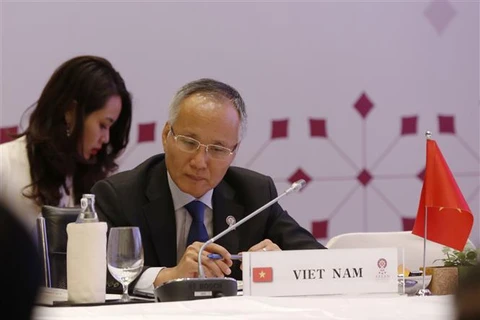
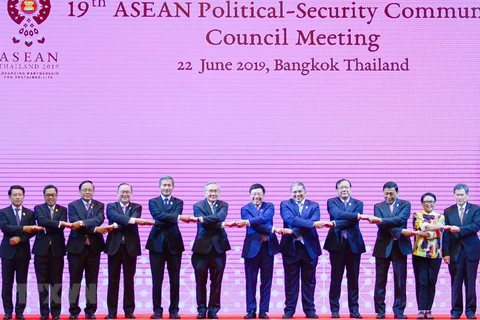
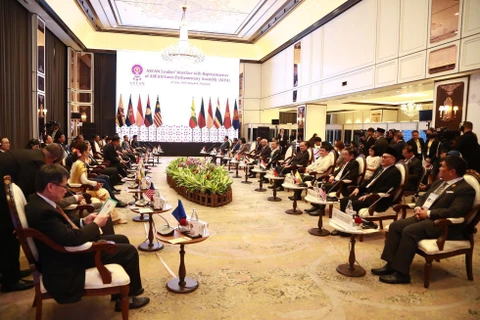
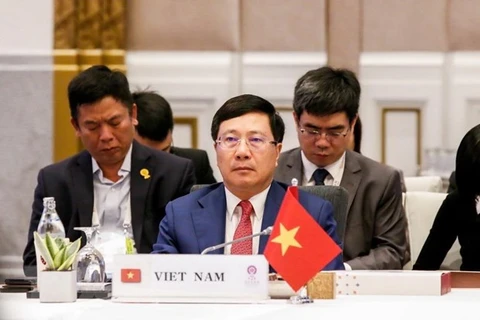
ASEAN nations agree to jointly bid for World Cup 2034 ảnh 1The ASEAN foreign ministers meet in Bangkok on the occasion of the 34th ASEAN Summit (Photo: VNA)

Bangkok (VNA) –
Foreign ministers ofASEAN member countries agreed to launch a joint bid to host the World Cup 2034- the biggest sporting event on the planet, according to Thailand’s ForeignMinister Don Pramudwinai.

He revealed the information after a meeting withhis counterparts from member states of the Association of Southeast AsianNations (ASEAN) in Bangkok on June 22.

The proposal was made by the ASEAN foreign ministersand submitted to the 34th ASEAN Summit held in Bangkok from June 22 to 23, hesaid.

The idea of co-hosting the World Cup 2034 wasinitiated by Somyot Poompanmoang, President of the Football Association ofThailand.

Somyot initially suggested that Thailand andIndonesia would try to enter a bid for the 2034 football tournament. Egyptreportedly is also keen to host the event in 2034.

Japan and the Republic of Korea successfullyco-hosted the World Cup finals in 2002. The 2026 World Cup will be jointlystaged by the US, Canada and Mexico.-VNA

VNA
See more

Illustrative photo (Photo: VNA)

Tet gifts, chung cake made for disadvantaged people

Beyond its charitable significance, the programme also aims to introduce domestic and international visitors to the unique cultural values of Vietnam’s traditional Tet, while raising public awareness, particularly among younger generations, of the responsibility to preserve and promote the cultural identities of Vietnam’s ethnic groups.

The Hoa Lai stele, a national treasure, is currently on display at the Khanh Hoa provincial Museum's Branch 2 in Phan Rang ward. (Photo: VNA)

Breathing new life into Cham cultural heritage in Khanh Hoa

With its ancient temple towers, lively festivals, craft villages, and rich cultural heritage, both tangible and intangible, Cham culture in the south central province of Khanh Hoa is not only a long-standing historical treasure but is also being actively promoted alongside tourism and community livelihoods, bringing fresh energy to Cham heritage in modern life.

Visitors take part in a night tour at the Temple of Literature (Van Mieu – Quoc Tu Giam) in Hanoi. (Photo: nhandan.vn)

Heritage seen as economic driver through tourist attractions

Technology has opened up new approaches to heritage preservation and promotion. At sites such as the Temple of Literature, Hanoi’s Old Quarter and the Thang Long Imperial Citadel, night tours featuring creative lighting, immersive storytelling and extended reality (XR) applications have expanded visitors’ experiences and reimagined how heritage can be explored.