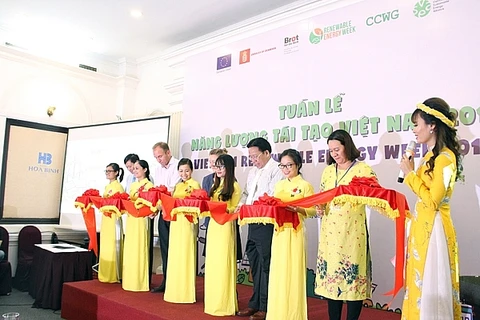
At the event (Source: VNA)
 Hanoi (VNA) – ASEAN countries will step up cooperation and share resources to ensure energy security through expanding power grid connectivity and developing renewable energies.
The commitment was made by ministers and deputy ministers in charge of energy of the ten member states of the Association of the Southeast Asian Nations (ASEAN) at the 36th ASEAN Ministers on Energy Meeting (AMEM) and associated meetings held in Singapore from October 25-29.
Speaking at the event, Vietnamese Deputy Minister of Industry and Trade Dang Hoang An said Vietnam is ready to cooperate with international organisations to share experience in making policies and issuing decisions to boost the use of renewable energy and integrate more deeply into the region’s energy connection system for a greener ASEAN that uses energy in a smarter and more effective manner.
Singaporean Minister for Trade and Industry Chan Chun Sing said ASEAN countries need to work towards ensuring affordable, sustainable and reliable energy access for all.
This is especially important in ASEAN as it is a vibrant and dynamic region, and is projected to be the fourth largest economy in the world by 2030, he said, adding energy is essential to many sectors and as a result, the energy sector underpins economic growth and improves lives.
He said investments in power generation capacity and infrastructure will be needed to meet ASEAN’s energy demand, which has grown by 60 percent over the past 15 years. According to the International Energy Agency (IEA)’s projections, it will continue to grow strongly by 2040. Innovative solutions are also needed to supply energy across ASEAN, as 65 million people in Southeast Asia currently still do not have access to electricity.
Therefore, Chan stated that in addition to efforts by each nation, cooperation within ASEAN and between the grouping and dialogue partners and international organisations like the International Energy Agency (IEA) and the International Renewable Energy Agency (IRENA) in energy investment and infrastructure finance will support the region’s increasing energy demand and make ASEAN more attractive to investors.
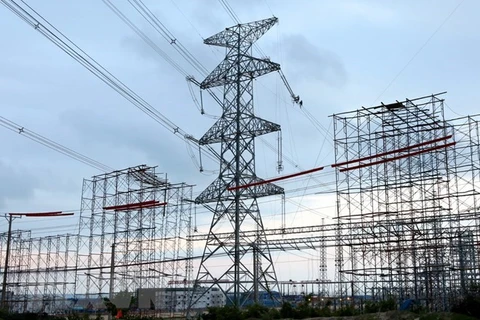
At the meeting, ASEAN member countries agreed to increase power grid connectivity to double the power integration capacity from the current 5,200 MW to 10,800 MW in 2020 and 16,000 ME after that year. Phase 1 of the Laos-Thailand-Malaysia-Singapore Power Integration Project, the first multilateral power trade, started in January this year and has so far hit 15.97 GWh.
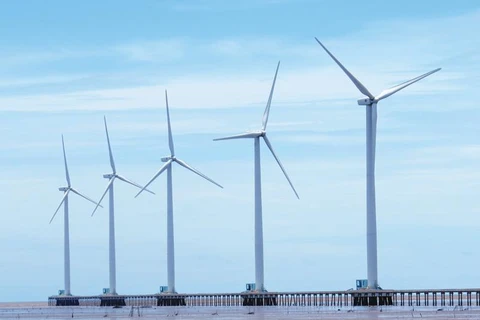
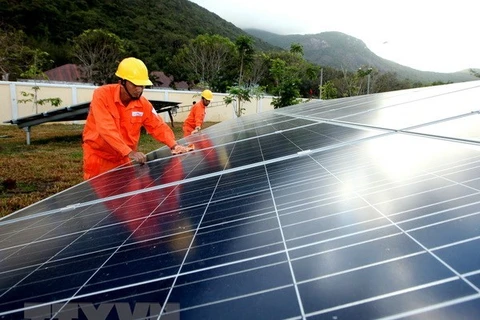
ASEAN nations signed a memorandum of understanding (MoU) with IRENA on renewable energy development and approved an action programme to realise this MoU, with a view to supporting ASEAN in achieving the target of increasing renewable energy rate to 23 percent by 2030.
The participants agreed to enhance energy collaboration with partners including nations and international energy organisations so that ASEAN could be guaranteed in energy security, thus meeting people’s energy demand.
They also recognised outstanding results in ASEAN energy cooperation such as the region’s energy intensity in 2016 dropping by 21.9 percent compared to 2005 level, exceeding the targets of 20 percent in 2020 and 30 percent in 2030.
The rate of renewable energy reached 12.4 percent in the total energy structure of the region. For the Trans-ASEAN Gas Pipeline, six ASEAN member states namely Myanmar, Thailand, Malaysia, Singapore, Indonesia and Vietnam have been successfully connected through over 3,673 kilometres of cross-border natural gas pipelines. In addition, eight liquefied natural gas (LNG) regasification terminals have been built with a total capacity of 36.3 million tonnes per annum.
Right after the 36th AMEM, the host country organised the 11th Singapore International Energy Week (SIEW), drawing the participation of policymakers, experts and businesses in the energy industry who shared current development strategies and discussed measures to boost innovative ideas and cooperation to deal with energy challenges the region is facing.-VNA
He said investments in power generation capacity and infrastructure will be needed to meet ASEAN’s energy demand, which has grown by 60 percent over the past 15 years. According to the International Energy Agency (IEA)’s projections, it will continue to grow strongly by 2040. Innovative solutions are also needed to supply energy across ASEAN, as 65 million people in Southeast Asia currently still do not have access to electricity.
Therefore, Chan stated that in addition to efforts by each nation, cooperation within ASEAN and between the grouping and dialogue partners and international organisations like the International Energy Agency (IEA) and the International Renewable Energy Agency (IRENA) in energy investment and infrastructure finance will support the region’s increasing energy demand and make ASEAN more attractive to investors.
At the meeting, ASEAN member countries agreed to increase power grid connectivity to double the power integration capacity from the current 5,200 MW to 10,800 MW in 2020 and 16,000 ME after that year. Phase 1 of the Laos-Thailand-Malaysia-Singapore Power Integration Project, the first multilateral power trade, started in January this year and has so far hit 15.97 GWh.
ASEAN nations signed a memorandum of understanding (MoU) with IRENA on renewable energy development and approved an action programme to realise this MoU, with a view to supporting ASEAN in achieving the target of increasing renewable energy rate to 23 percent by 2030.
The participants agreed to enhance energy collaboration with partners including nations and international energy organisations so that ASEAN could be guaranteed in energy security, thus meeting people’s energy demand.
They also recognised outstanding results in ASEAN energy cooperation such as the region’s energy intensity in 2016 dropping by 21.9 percent compared to 2005 level, exceeding the targets of 20 percent in 2020 and 30 percent in 2030.
The rate of renewable energy reached 12.4 percent in the total energy structure of the region. For the Trans-ASEAN Gas Pipeline, six ASEAN member states namely Myanmar, Thailand, Malaysia, Singapore, Indonesia and Vietnam have been successfully connected through over 3,673 kilometres of cross-border natural gas pipelines. In addition, eight liquefied natural gas (LNG) regasification terminals have been built with a total capacity of 36.3 million tonnes per annum.
Right after the 36th AMEM, the host country organised the 11th Singapore International Energy Week (SIEW), drawing the participation of policymakers, experts and businesses in the energy industry who shared current development strategies and discussed measures to boost innovative ideas and cooperation to deal with energy challenges the region is facing.-VNA
VNA