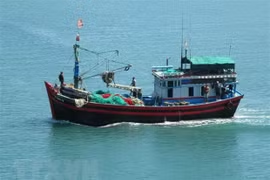
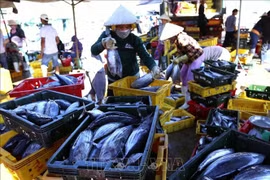
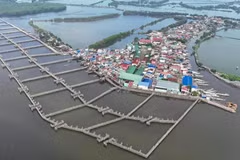
Fishermen in Khanh Hoa province (Photo: VNA)
Singapore (VNA) – ASEAN Today, a website based in Singapore, on October 26 ranan article entitled “Vietnam launded for efforts to combat illegal fishing”,hailing the country’s efforts in this sphere.
The article quoted Vice Chairman of the Spanish Chamber of Commerce inVietnam Rubén Saornil Mínguez as saying at a conference in Khanh Hoa provincethat the country had made significant improvements on the issue in recent years.
Rubén noted that as part of its reforms, Vietnam has raised standards throughout the fishing industry tocomply with regulations for EU export under the EU-Vietnam Free Trade Agreement(EVFTA).
In line with EC recommendations, Vietnam adopted a new Fisheries Law in 2017, including a framework for building sustainable aquaculture andfisheries development. The government also establisheda steering committee for illegal, unreported and unregulated (IUU) fishingprevention at the national level—the move is aimed at supporting thoroughenforcement of fisheries laws.
New regulations also requirethat all fishing vessels carry tracking devices. It appears that the regulations may already be helping to improveseafood traceability, as the number of boats with on-board GPS or other trackingtechnology has increased from 56 percent in April to 81 percent as of late August. These steps to improve traceability in aquatic product supply chainshave been recognized internationallyas well.
The article wrote that these efforts on transparency andgovernance are part of Vietnam’s new master plan for aquatic resourcesmanagement. The plan also reportedly includes programmes to ensure all fishing vessels comply with regulations andinitiatives to develop fisheries sustainably and responsibly.
Public programmes are also helping some producers convert theirbusiness to processed products. This offers producers more flexibility, allows them to sell products online and insulates them from economicshocks.
Vietnam is currently thethird-largest seafood exporter in the world, shipping 8.6 billion USD worth offisheries products in 2019. But the country has seen a decline in fisheries shipments amid theCOVID-19 pandemic. In the first half of 2020, the country's fisheriesexports fell 8.6 percent compared to the same period last year. Bythe end of August, shipments had picked up again, shrinking the year-on-year drop to 5.3 percent./.
VNA