Bac Ninh province works to preserve, promote cultural heritage

Over the past years, the northern province of Bac Ninh, known for its rich and long-standing culture, has taken steps to preserve and bring into play local cultural heritage, with the engagement of the political system, organisations, and locals.
Bac Ninh province works to preserve, promote cultural heritage ảnh 1Illustrative photo (Source: baobacninh.vn)
Bac Ninh (VNA) – Over the past years, the northern province of Bac Ninh, knownfor its rich and long-standing culture, has taken steps to preserve and bringinto play local cultural heritage, with the engagement of the political system,organisations, and locals.

Bac Ninhis home to 1,589 relic sites, of which 643 havebeen ranked, including four special national, 204 national, and 435 provincial relic sites. It also owns 14 objects andgroups of objects recognised as national treasures.

The Quan ho Bac Ninh folk songs were inscribed in therepresentative list of the intangible cultural heritage of humanity by theUnited Nations Educational, Scientific and Cultural Organisation (UNESCO).Meanwhile, eight others were also named as part of the national intangiblecultural heritage. In 2021, the Prime Minister agreed to submit a dossierseeking the UNESCO inclusion of the Dong Ho folk paintings in thelist of intangible cultural heritage in need of urgent safeguarding.

Topreserve and bring into play cultural heritage, the province has worked tocomplete the policies on cultural heritage preservation and promotion, basingon which it has identified rather comprehensively the values of local culturalheritage.

It hasbeen implementing several policies, including the regulations on the managementand use of historical and cultural relic sites, the rules on benefits forartisans of intangible cultural heritage, benefits for artists and staff of theQuan ho Bac Ninh Folk Song Theatre, and the regulations on artefact andnational treasure management.

In recent years, local authorities have allocated hundredsof billions of VND to help restore nearly 700 relic sites. From 2011 to 2022,the provincial Department of Culture, Sports and Tourism has carried out 22restoration projects at total cost of over 450 billion VND (18.8 millionUSD). Localities in Bac Ninh have alsoraised thousands of billions of VND from private sources for relic protection.

Therestoration has been carried out basically in line with the Law on CulturalHeritage and related legal documents.

In terms of intangible cultural heritage, Bac Ninh hasimplemented many plans, projects, and programmes to uphold the values of the Quanho Bac Ninh folk songs in conformity with Vietnam’s commitment to UNESCO.

Hundreds of billions of VND has been spent on boostingcommunications about local heritage, building a film production plan topopularise heritage, and assisting the construction and upgrading of culturalcentres and related facilities.

Bac Ninh was the first province in Vietnam tohave a particular policy on benefits for those who directly maintain, practice,and teach cultural heritage. Accordingly, artisans will receive a lump-sumreward that is seven times higher than the basic wage level regulated by theState. Those of the UNESCO-recognised Quan ho Bac Ninh folk songs will gainmonthly allowances.

Since 2010, it has bestowed the artisan titles thrice,honouring 202 artisans, of whom four have been granted the People’s Artisantitle, 18 the Meritorious Artisan title, and 180 the Provincial Artisan title.

Despite major achievements, there remain certain shortcomingsin heritage preservation and promotion, including insufficient funding foraddressing relic degradation, infringement of rules on relic restoration, thetheft of antiquities, and the shortage of professional restoration personnel.

In the time ahead, the province is set to continue perfectingrelevant policies; improving awareness of authorities, localities, andorganisations and sense of responsibility towards the work; stepping uptraining for heritage management and restoration personnel; increasing investmentin the implementation of national programmes on culture; and boosting thecollection, research, and recovery of the intangible cultural heritages at riskof disintegration./.
VNA

See more

Delegates cut the ribbon to launch the 46th Spring Flower Festival at Tao Dan Park. (Photo: VNA)

Festive activities herald Lunar New Year of the Horse

A vibrant array of cultural and media events has been launched across Vietnam to welcome the Lunar New Year of the Horse 2026, highlighting both the country’s enduring traditions and its dynamic socio-economic progress.

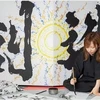
A calligraphy booth at the festival (Photo: VNA)

Spring Calligraphy Festival 2026 opens in Hanoi

A central attraction remains the traditional New Year calligraphy request activity, featuring 35 booths staffed by calligraphers selected through a rigorous, transparent evaluation process.

A ritual to welcome new year of Muong people in Phu Tho (Photo: nhandan.vn)

Unique Lunar New Year traditions on display

Each ethnic group brings its own unique Tet customs to the Vietnam National Village for Ethnic Culture and Tourism on the outskirts of Hanoi, creating a rich and colourful cultural mosaic.

Polish Ambassador to Vietnam Joanna Skoczek (R) attends a cultural event in Vietnam (Photo: VNA)

Cultural, people-to-people interactions anchor Vietnam–Poland relations: diplomat

Skoczek also pointed to striking similarities between Vietnam’s Tet and Poland’s Christmas Eve traditions, particularly the emphasis on family reunions, symbolic meals and shared rituals passed down through generations. Despite differences in customs and cuisine, she said the essence of the celebrations remains universal: bringing loved ones together to welcome a new start.

A Tet flower street is held for the first time at the Thang Long Imperial Citadel during the Lunar New Year 2026. (Photo: VNA)

Tet flower street held for first time at Thang Long Imperial Citadel

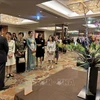
More than a seasonal attraction, the flower street also functions as a formal cultural venue for receiving ambassadors, their spouses and representatives of diplomatic missions attending the Vietnam Discovery Day 2026 programme. Its linkage with an external event further reinforces the Thang Long Imperial Citadel’s position as a key platform for introducing Vietnam’s cultural identity to international friends.

The recreation of Tien lich (calendar presentation ceremony), an important year-end ritual in which the royal court presented the new calendar for the coming year to the king, within a programme at the Thang Long Imperial Citadel in Hanoi on February 10. (Photo: VNA)

Hanoi recreates Lunar New Year court ritual at Thang Long Imperial Citadel

Organised by the municipal People’s Committee in coordination with the Vietnam National Commission for UNESCO, the programme recreated a range of ceremonial practices once performed in the royal court. These included the Tien lich ritual, in which calendars were formally distributed to the court and the public; the Thuong tieu ceremony featuring the ceremonial New Year pole erected to ward off evil spirits and welcome spring; the ritual release of carp to send the Kitchen Gods to heaven; and the solemn changing-of-the-guard ceremony inside the imperial citadel. Together, the activities helped audiences better understand the cultural, spiritual and ceremonial order of Vietnam’s feudal past.

Illustrative image (Photo: VNA)

Fireworks, festive events usher in Year of the Horse across Vietnam

Local residents and visitors can enjoy spectacular fireworks displays at locations like the Hanoi Post Office in Hoan Kiem ward; Coconut island in Thong Nhat park, Hai Ba Trung ward; the F1 racetrack area in Tu Liem ward; Lac Long Quan flower garden in Tay Ho ward; Van Quan lake in Ha Dong ward; and the Son Tay Ancient Citadel in Son Tay ward.

People visit the Spring Fair 2026. (Photo: VNA)

Spring Fair 2026: Celebration of Vietnamese Tet flavours, cultural memory

Food has long occupied a central place in Vietnamese Tet culture, symbolising abundance, harmony and gratitude. At the Spring Fair 2026, traditional Tet delicacies are presented in a modern setting while retaining their familiar essence, allowing visitors to experience both nostalgia and renewal.

(Photo: baoquocte.vn)

Spring Fair 2026 features imperial spring colours, heritage imprints

Beyond cultural impressions, the fair created tangible opportunities for Hue enterprises and artisans to promote brands, connect partners and expand markets, laying foundations for deeper participation in value chains and long-term sustainable development aligned with Hue’s green growth and international integration strategy toward 2030, with a vision to 2045.

The horse-themed stamp set and commemorative coin. (Photo: VNA)

Stamp set, coin issued to mark Year of the Horse

In traditional beliefs, the horse is a sacred animal symbolising loyalty, vigour, patience and perseverance, and is also believed to bring good fortune and prosperity. Drawing on this symbolism, the stamp set is presented in a contemporary folk-art style and, for the first time, features the image of the “Nine Red-Maned Horse” on Vietnam’s Tet stamps.