Vietnam’s beverage market remains rich in promise, reflected by theincrease in the number of recent investments from major domestic andforeign enterprises, says Vietnam Investment Review (VIR).
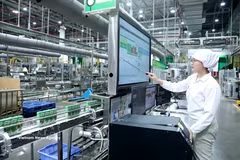
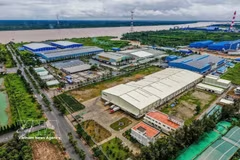
Tan Hiep Phat, one of Vietnam’s leading beverage groups, will startoperations of its 85 million USD beverage manufacturing plant in thenorthern province of Ha Nam’s Kien Khe Industrial Park in the secondquarter of next year, Mai Tien Dung, Chairman of the Ha Nam ProvincialPeople’s Committee confirmed with VIR last week.
InAugust last year, Tan Hiep Phat received an investment certificate toestablish Ha Nam Number 1 Limited Company for the development of the new600 million litre non-carbonated drinks plant on a 25 hectare site.
The latest figures from the London-based market research andbusiness-intelligence report firm Euromonitor International showed thatin 2010 Tan Hiep Phat held a 53 percent market share in the bottledwater and herbal tea drink market.
Vietnam’sbeverage market has continued to attract fierce competition. Accordingto Vietnam Competition Administration, Vietnam was home to 134 local andforeign beverage manufacturers last year, with the top ten in terms ofrevenue including IBC, Tan Hiep Phat, Coca-Cola, PepsiCo, Interfood, RedBull, La Vie, Chuong Duong Beverages, CKL, and Vinh Hao.
According to Euromonitor’s report on Vietnam’s soft drinks marketdated August 2013, multinational players PepsiCo Vietnam, Coca-ColaBeverages Vietnam and URC Vietnam, and domestic firms of Tan Hiep Phatand Vietnam Dairy Products JSC occupied the top five.
“These top five players occupied a major proportion of market share,leaving little space for other players and making it difficult for newcompanies to penetrate the market,” read the report.
Coca Cola and PepsiCo still hold the largest share of the Vietnamesebeverage market, occupying about 60 percent between them.
Coca Cola also plans to invest an additional 300 million USD into theVietnamese soft drink market by 2015. The company entered Vietnam in2009 with an initial investment of 200 million USD.
In addition, PepsiCo Vietnam earlier this year formed a joint venturewith Japan’s Suntory Holding Ltd in which Suntory would buy a 51 percentstake in PepsiCo’s Vietnamese beverage business. The deal is animportant part of PepsiCo’s long-term strategy in Vietnam. So far, Pepsihas poured 118 million USD into two beverage plants in Dong Nai and BacNinh provinces.
The Philippines’ leading food andbeverage manufacturer Universal Robina Corp (URC) has also targetedexpansion plans, with the intention to build its third 35 million USDbeverage manufacturing facility in the central province of Quang Ngailate this year. In Vietnam, URC is known for its popular C2 and Rong Dobrands.
Since it is near to impossible to competewith foreign giants such as Coca Cola and PepsiCo in the carbonateddrink market, domestic beverage companies have chosen to focus onnon-carbonated alternatives.
Tan Hiep Phat also isinvesting in another beverage manufacturing plant worth $86 million inQuang Nam province’s North Chu Lai Industrial Park. The firm plans tobuild on its strong point of tea products with its extremely successfulDr. Thanh and Number 1 brands.
Euromonitor said thatthere were more than 10 tea brands in the market, with C2 and Dr. Thanhmaintaining a leading position.
Masan Consumerrecently acquired a 62 percent of Vinh Hao Mineral Water Company group,marking its venture into the drink business field. Last month Vinh Haoannounced a board resolution to expand into other business fields whichimplies Masan will broaden Vinh Hao’s product portfolios to othercategories, including ready to drink tea, soft drinks, juices and energydrinks.
“Soft drinks will continue to see strongperformance, although growth will not be as strong as during thereviewed period. Fruit juice and tea will be the main drivers of growth,due to rising health concerns,” stated Euromonitor’s report.
According to Euromonitor, Vietnam’s 2.5 billion USD bottled water andbottled beverage market is expected to grow at 20 percent per yearduring 2011-2015.-VNA