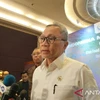
Cambodia expects that Thailand will convene a Joint Working Group (JWG) meeting to discuss troop withdrawal of both sides from disputed areas next to the 11th century Preah Vihear temple, Cambodian Deputy Prime Minister cum Defence Minister Tea Banh said on Mar. 14.
Both Cambodia and Thailand have already established their own JWG, but have yet set the date for their JWG meeting, Tea Banh told repoters, adding that Cambodia hopes Thailand will hold the meeting as soon as possible in order to comply with the order of the International Court of Justice (ICJ) for troop withdrawals.
The formation of the JWG was made on Dec. 21, 2011 in the 8th meeting of Cambodia-Thailand General Border Committee (GBC) in order to work out a timeframe for troop withdrawals from the Provisional Demilitarized Zone (PDZ).
Cambodia and Thailand share an 805 km borderline. The two countries have had sporadic border conflict over territorial disputes near Cambodia 's Preah Vihear temple since it was listed by UNESCO as a World Heritage Site on July 7, 2008.
At the request of Cambodia, the ICJ on July 18, 2011 ordered Cambodia and Thailand to immediately withdraw their military personnel from the Provisional Demilitarized Zone (PDZ) of about 17 kilometres on the disputed border near the Preah Vihear temple and allow observers from the Association of South East Asian Nations (ASEAN) to access the PDZ to monitor the implementation of the ceasefire.-VNA
Both Cambodia and Thailand have already established their own JWG, but have yet set the date for their JWG meeting, Tea Banh told repoters, adding that Cambodia hopes Thailand will hold the meeting as soon as possible in order to comply with the order of the International Court of Justice (ICJ) for troop withdrawals.
The formation of the JWG was made on Dec. 21, 2011 in the 8th meeting of Cambodia-Thailand General Border Committee (GBC) in order to work out a timeframe for troop withdrawals from the Provisional Demilitarized Zone (PDZ).
Cambodia and Thailand share an 805 km borderline. The two countries have had sporadic border conflict over territorial disputes near Cambodia 's Preah Vihear temple since it was listed by UNESCO as a World Heritage Site on July 7, 2008.
At the request of Cambodia, the ICJ on July 18, 2011 ordered Cambodia and Thailand to immediately withdraw their military personnel from the Provisional Demilitarized Zone (PDZ) of about 17 kilometres on the disputed border near the Preah Vihear temple and allow observers from the Association of South East Asian Nations (ASEAN) to access the PDZ to monitor the implementation of the ceasefire.-VNA