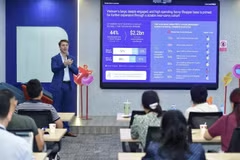
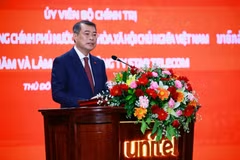
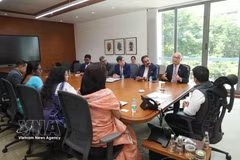
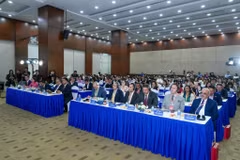
Representativesof the southern regions’ business community highlighted the need forinformation support and legal guidelines to utilise investment andbusiness opportunities in the context of the country’s furtherintegration into the world economy and Vietnam’s participation in TPP.
TPP’smember countries are potential markets for Vietnam, accounting for 40percent of GDP and 30 percent of the total export-import revenueworldwide.
Head of the National Institute for Finance Vu NhuThang said that, in the first 10 months of this year, Vietnam’s importsfrom these countries reached 27,921 million USD, equivalent to 23percent of its total import value. It exported 48,368 million USD tothese countries, amounting to 39 percent of export value.
Further,in terms of investment, 11 member countries account for nearly 32percent of the foreign direct investment (FDI) in Vietnam.
Officialsnote that it is a necessary preparation for Vietnam to evaluateopportunities and challenges when joining TPP, as well as analyse theimpacts of the agreement to the country’s market. Therefore, enterprisesand the nation’s economy could utilise such advantages effectively.
NgoChung Khanh, deputy head of the Ministry’s Multilateral Trade PolicyDepartment, said opportunities for Vietnam include export-import marketmechanism improvement, regional and global production chains,institutional environmental improvements, production capacity creationand job creation.
However, the TPP agreement also createscompetitive pressure and social impacts upon the country. Therefore,Vietnam needs to make efforts to adjust its legal system and managementcapacity, he added.
The TPP has been discussed at more than 20 official negotiation sessions and is expected to be signed next year.
The conference was organised by the National Institute for Finance and the US Agency for International Development (USAID).-VNA
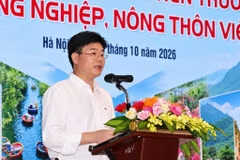
Turning OCOP products into rural tourism experiences
Experts stressed that rural tourism can develop sustainably only when local communities actively participate and benefit from it. Investment in transport, accommodation and attractions must go hand in hand with clean water, waste treatment, hygiene, traditional craft preservation and environmental protection.