Corporate bond market to boom in second half

Companies are looking to raise debts from bond issuance before the amended Law on Securities takes effect next January.
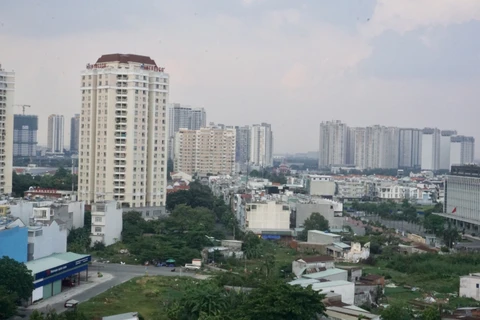
Corporate bond market to boom in second half ảnh 1A view of Vinhomes Smart City, a project developed by the residential real estate firm Vinhomes JSC. (Photo vinhomes.vn)

Hanoi (VNS/VNA) —
Companies are looking to raise debts from bond issuancebefore the amended Law on Securities takes effect next January.

The amended securities law, which was approved by National Assembly deputies inNovember 2019, will take effect on January 1, 2021.

The amended law will restrain local companies from selling their bonds toinvestors, especially individuals, to diminish the risks for the equity market.

According to Bao Viet Securities Co (BVSC), corporate bond issuance in June wasestimated at 31 trillion VND (1.34 billion USD).

In May, the value was 27 trillion VND, which was down slightly from theprevious month as the economy suffered from the social distancing and thespread of the coronavirus.

Real estate firms and banks were the biggest issuers as they sold 8.5 trillion VNDand 11 trillion VND worth of bonds in June, respectively.

But banks’ issuance value was down slightly compared to May while real estatefirms hiked their issuance to 11 trillion VND in June from 4.75 trillion VND inMay.

That indicated real estate developers were still hungry for capital as they haddifficulties getting access to bank loans, said BVSC analyst Nguyen Duc Hoang.
Recent issuers includeresidential developer Vinhomes, which outsold 12 trillion VND worth of bonds inprivate deals.

The corporate bond market would be more dynamic in the last six months of theyear and both issuance volume and value would jump, Hoang said.

“Banks and real estate firms will remain the biggest issuers,” he said. “Bankswill need more borrowing to lower their capital expenses and maintaintheir capital adequacy ratios.”

“As property developers will be restricted from loans from banks and financialinstitutions, their demand for debt will increase, especially when bondissuance will be tightened next year under the amended Law on Securities.”

Under the new law, companies will have to meet higher standards of bondissuance while unprofessional (or uncertified) investors are no longer eligibleto purchase corporate bonds.

According to business insiders, unprofessional investors are often individualones, who are not qualified for financial investment by any companies andmarket regulators.

Individual investors are lured into the corporate bond market because companiesoffer annual yield rates (average 10-11 percent) that are higher than banks’saving rates (average 7-8 percent).

In addition, they don’t have to wait until the maturity dates of the bonds tosell the assets like they do when depositing in banks, as they can negotiatewith the company that is the distributor of the bonds.

Especially, individual investors don’t pay close attention to the financialhealth and operation of the bond issuer.

“Restraining unprofessional investors from buying corporate bonds is common inthe international markets,” Vuong Hoang Son, director of bond market atVNDirect Securities Corporation, said.

“This type of product is more suitable for institutional investors, who areable to analyse and evaluate the issuers while companies also have to meetstrict issuance requirements,” he said.

“Companies should be encouraged to sell bonds in public deals and theprocedures should be simplified to make it more convenient for them to do so,”Son said.

Limiting individual purchases for corporate bonds may not affect the marketbecause major buyers are institutional ones with strong financial capacity andexperience, Hoang said.

Unprofessional investors must study the bond issuers first regarding theirpurposes, guarantees and financial capacities when issuing bonds, he suggested.

“Investors must be careful with high-interest bond issuers because high riskswill come along,” he said. “They should ask for the consultancy ofinstitutional investors before making decisions.”

As the corporate bond market is showing signs of significant growth, theMinistry of Finance has asked the issuers to make sure they are financiallyhealthy to pay back the debts. Companies must also be committed to the dealssigned with investors, especially individual ones.

In addition, the ministry has recommended investors get access to theevaluation reports by financial firms before buying corporate bonds tounderstand the target and financial status of the bond issuer as well as thechance and risk of the bond deal.

Underwriters and distributors are asked not to sell corporate bonds at allcosts. They are asked to be responsible for providing accurate, transparentinformation of the bond issuer and the issuance and make sure the benefits ofinvestors are secure./. 
VNA

See more

The Quang Tri coastal road project, spanning nearly 55km, is among key projects with regional connectivity that play an important role in promoting socio-economic development in the central province of Quang Tri. The project is expected to be completed by the end of 2026.(Photo: VNA)

Public investment disbursement slow despite record capital scale

As of February 28, total disbursed capital reached 55.74 trillion VND, equivalent to 5.6% of the plan assigned by the Prime Minister. Of the figure, disbursement of the central budget was estimated at 10.18 trillion VND, or 2.9% of the plan, while that of local budgets totalled 45.56 trillion VND, reaching 7% of the target.

Delegates taste UK food (Photo: VNA)

Taste of UK week promotes British foods in Vietnam

The “Taste of the UK” food week, held for the first time in Ho Chi Minh City from February 26 to March 11, is an opportunity to promote British food products and strengthen their presence in Vietnam, while giving local consumers a chance to experience the diversity of UK cuisine.

A customer purchases E5RON92 bioethanol fuel at a PVOIL gas station on Thai Thinh street, Hanoi (Photo: VNA)

Retail fuel prices rise sharply in March 5 adjustment

According to the Ministry of Industry and Trade, the global fuel market during the latest price adjustment period from February 26 to March 4, 2026 was influenced by several major factors, including the escalating military conflict between the US – Israel coalition and Iran.

Workers at a textile factory in Hanoi (Photo: VNA)

Supporting industries seek fresh growth momentum

Against a backdrop of global uncertainty and supply chain restructuring, the Government has introduced a range of measures aimed at injecting new momentum into domestic manufacturing. New provisions covering workforce training, testing and certification, trade promotion and technology upgrades have been implemented.

Workers package fruits at the factory of Vina T&T Group (Photo: nhandan.vn)

Vietnamese exporters adapt to escalating Middle East conflict

The Ministry of Industry and Trade’s Export-Import Department forecasts upward pressure on global prices for consumer goods, fuel, and crude oil in the coming time. Such hikes could exert indirect but broad negative effects on Vietnam’s overall production and trade, with particular exposure in exports destined for the Middle East.

The MoIT will closely monitor global oil prices, output, inventories and trade flows to adjust imports and domestic supply accordingly. - Illustrative image (Photo: VNA)

Vietnam triggers fuel contingency plan over Middle East crisis

The Ministry of Industry and Trade will closely monitor global oil prices, output, inventories and trade flows to adjust imports and domestic supply accordingly. It will also intensify oversight of key traders’ compliance with their 2026 minimum reserve obligations.

Workers process tra fish for export. (Photo: VNA)

Agro-forestry-fishery exports up over 17% in first two months

Of the total export value in the January–February period, agricultural products accounted for 6.09 billion USD, up 17.1% year-on-year. Seafood exports reached 1.76 billion USD, marking a sharp increase of 23.3%, while forestry products brought in 2.82 billion USD, up 7.4%.

Many private businesses are investing in the service and real estate sectors in Da Nang. (Photo: VNA)

Da Nang augments efforts to attract high-quality investments

Da Nang has consistently implemented business support policies and a selective investment attraction strategy, prioritising high technology, smart city building and sustainable development, thereby strengthening investor confidence and enhancing the city’s competitiveness in the new development phase.

Export activities at the Cai Mep - Thi Vai port cluster (Photo: VNA)

Southern region opens wide to new wave of US investment

Since 2025, US enterprises have increasingly explored investment opportunities across provinces in the Southern Key Economic Region. Ho Chi Minh City has emerged as a leading destination, highlighted by multiple cooperation agreements concluded in late 2025.

Visitors explore Vietnamese furniture products at HawaExpo 2026. (Photo: VNA)

Ho Chi Minh City’s HawaExpo 2026 triples in scale

Held under the theme “Gateway to Vietnam Furniture Prowess” and featuring more than 2,500 booths, the four-day event is expected to serve as a gateway to exploring the genuine capabilities of Vietnam’s wood and furniture industry, as well as a strategic trading hub for international markets.

Deputy Governor of the State Bank of Vietnam Pham Thanh Ha answers reporters’ questions. (Photo: VNA)

SBV vows agile policy response amid global headwinds

In the coming period, the SBV will calibrate interest rate management in line with macroeconomic developments and inflation trends, while requiring credit institutions to publicly disclose lending rates to enhance transparency.