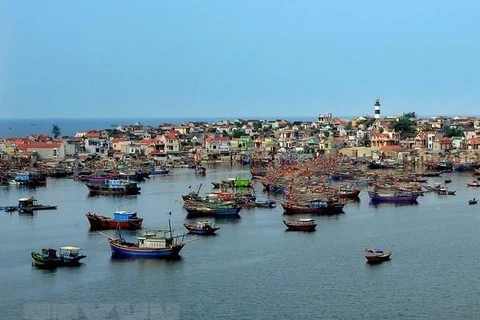
Illustrative image (Source: VNA)
 Hanoi (VNS/VNA) - Rising production costs are harming the competitiveness of Vietnamese seafood products, according to experts. These include the prices of feed, material input, electricity and labour.
The average retail price for power increased 8.36 percent last week, according to the Ministry of Industry and Trade (MoIT).
The hike means that electricity bills have risen from 1,720 VND (7.49 US cents) per kWh to 1,864 VND (8.03 cents), excluding VAT.
Power tariffs for businesses and industrial zones are now divided into two levels: 3,076 VND per kWh for peak hours and 970 VND per kWh for off-peak hours.
Duong Nghia Quoc, Chairman of the Vietnam Pangasius Association, said the increase in power prices has worried tra fish producers because rising input costs will impact production and selling prices.
Quoc was quoted by the Nong thon ngay nay newspaper as saying that at present, electricity consumption for farming and processing of aquatic products as well as operation of aquatic feed factories is significant. Competition at home and abroad is also becoming increasingly fierce.
For instance, a tra fish (pangasius) processing factory with medium capacity in Dong Thap province usually pays 10 billion VND for electricity each month. With the latest increase in power prices, factories will be paying many times more.
Freezers and air conditioning systems at seafood processing enterprises, especially factories processing seafood products for export, accounts for over 85 percent of total power consumption, he said.
The tra fish industry has suggested that the electricity sector should consider and adopt reasonable policies to create favorable conditions for production, especially in the agricultural and fishery sectors.
Electricity prices should increase according to a schedule with an initial surge rate of 3-4 percent, followed by suitable changes. An immediate price increase of 8.36 percent is a shock to enterprises, according to Quoc.
The State should offer preferential loans for businesses to convert old electrical equipment to new machines, as well as promoting the use of renewable energy resources, he said.
Many businesses want to use clean energy but for a large factory, the investment cost for clean energy could be as high as 10 billion VND, or even 30 billion VND. Facing difficulties in production, businesses are already struggling to get credit or attract investment.
Quoc said businesses will have to increase the price of products due to higher production costs. If tra fish consumption is slow, meaning the products are stocked for longer, selling prices will increase due to fees paid for warehouses.
Seafood processing enterprises also face pressure from increasing labour costs due to difficulties in finding workers, especially enterprises in Ho Chi Minh City and the Mekong Delta.
Many enterprises have increased salaries to about 8-10 million VND per month, and even 14 million VND for experienced workers, but they still struggle with a shortage. Many workers have changed jobs because they said their incomes were unstable and the working environment was hazardous.
Ho Quoc Luc, General Director of the Sao Ta Food Joint Stock Company, a leading shrimp exporter, said the cost of feed in Vietnam is higher compared to other countries. The production cost for one kilo of shrimp in Vietnam is about 1 USD higher than in neighbouring countries.
Additionally, the cost of antibiotics has put pressure on the domestic shrimp industry.
Le Van Quang, Chairman and General Director of the Minh Phu Seafood Corporation, said the cost of antibiotics is about 6,000 VND per kilo of raw shrimp, pushing up prices and harming competitiveness.
The price of raw shrimp is also a big challenge for many seafood processing enterprises, reported the Thoi bao kinh doanh newspaper.
The supply of aquatic materials is unstable due to reductions in fishery resources and severe weather. Farmers are raising aquatic products on a small scale, with low capacity.
Vietnam has imported a large volume of feed, shrimp seed, fish fingerling and other material for aquatic production.
Therefore, large seafood producers have actively developed large-scale material regions with high capacities to reduce production costs and control quality and hygiene.
Minh Phu has developed a high-tech, large-scale shrimp farm to increase supply of shrimp each year.
The Sao Ta Food Joint Stock Company last year invested in 40 extra hectares of ponds to rear shrimp.
Vinh Hoan JSC this year will expand its tra fish farming area by 220ha to increase its supply by 40 percent against last year. Processing capacity will also increase from 850 tonnes of raw materials per day at present to 1,130 tonnes in the next two years.
Nam Viet Joint Stock Company earlier this year started construction on a high-tech tra fish farming region with an area of 600ha and total investment of 4 trillion VND in An Giang province. This region will help the company meet its target of raising processing capacity from 600 tonnes of raw materials per day to 1,100 tonnes.-VNS/VNA
The average retail price for power increased 8.36 percent last week, according to the Ministry of Industry and Trade (MoIT).
The hike means that electricity bills have risen from 1,720 VND (7.49 US cents) per kWh to 1,864 VND (8.03 cents), excluding VAT.
Power tariffs for businesses and industrial zones are now divided into two levels: 3,076 VND per kWh for peak hours and 970 VND per kWh for off-peak hours.
Duong Nghia Quoc, Chairman of the Vietnam Pangasius Association, said the increase in power prices has worried tra fish producers because rising input costs will impact production and selling prices.
Quoc was quoted by the Nong thon ngay nay newspaper as saying that at present, electricity consumption for farming and processing of aquatic products as well as operation of aquatic feed factories is significant. Competition at home and abroad is also becoming increasingly fierce.
For instance, a tra fish (pangasius) processing factory with medium capacity in Dong Thap province usually pays 10 billion VND for electricity each month. With the latest increase in power prices, factories will be paying many times more.
Freezers and air conditioning systems at seafood processing enterprises, especially factories processing seafood products for export, accounts for over 85 percent of total power consumption, he said.
The tra fish industry has suggested that the electricity sector should consider and adopt reasonable policies to create favorable conditions for production, especially in the agricultural and fishery sectors.
Electricity prices should increase according to a schedule with an initial surge rate of 3-4 percent, followed by suitable changes. An immediate price increase of 8.36 percent is a shock to enterprises, according to Quoc.
The State should offer preferential loans for businesses to convert old electrical equipment to new machines, as well as promoting the use of renewable energy resources, he said.
Many businesses want to use clean energy but for a large factory, the investment cost for clean energy could be as high as 10 billion VND, or even 30 billion VND. Facing difficulties in production, businesses are already struggling to get credit or attract investment.
Quoc said businesses will have to increase the price of products due to higher production costs. If tra fish consumption is slow, meaning the products are stocked for longer, selling prices will increase due to fees paid for warehouses.
Seafood processing enterprises also face pressure from increasing labour costs due to difficulties in finding workers, especially enterprises in Ho Chi Minh City and the Mekong Delta.
Many enterprises have increased salaries to about 8-10 million VND per month, and even 14 million VND for experienced workers, but they still struggle with a shortage. Many workers have changed jobs because they said their incomes were unstable and the working environment was hazardous.
Ho Quoc Luc, General Director of the Sao Ta Food Joint Stock Company, a leading shrimp exporter, said the cost of feed in Vietnam is higher compared to other countries. The production cost for one kilo of shrimp in Vietnam is about 1 USD higher than in neighbouring countries.
Additionally, the cost of antibiotics has put pressure on the domestic shrimp industry.
Le Van Quang, Chairman and General Director of the Minh Phu Seafood Corporation, said the cost of antibiotics is about 6,000 VND per kilo of raw shrimp, pushing up prices and harming competitiveness.
The price of raw shrimp is also a big challenge for many seafood processing enterprises, reported the Thoi bao kinh doanh newspaper.
The supply of aquatic materials is unstable due to reductions in fishery resources and severe weather. Farmers are raising aquatic products on a small scale, with low capacity.
Vietnam has imported a large volume of feed, shrimp seed, fish fingerling and other material for aquatic production.
Therefore, large seafood producers have actively developed large-scale material regions with high capacities to reduce production costs and control quality and hygiene.
Minh Phu has developed a high-tech, large-scale shrimp farm to increase supply of shrimp each year.
The Sao Ta Food Joint Stock Company last year invested in 40 extra hectares of ponds to rear shrimp.
Vinh Hoan JSC this year will expand its tra fish farming area by 220ha to increase its supply by 40 percent against last year. Processing capacity will also increase from 850 tonnes of raw materials per day at present to 1,130 tonnes in the next two years.
Nam Viet Joint Stock Company earlier this year started construction on a high-tech tra fish farming region with an area of 600ha and total investment of 4 trillion VND in An Giang province. This region will help the company meet its target of raising processing capacity from 600 tonnes of raw materials per day to 1,100 tonnes.-VNS/VNA
VNA