CPP endorses Hun Manet as future PM candidate

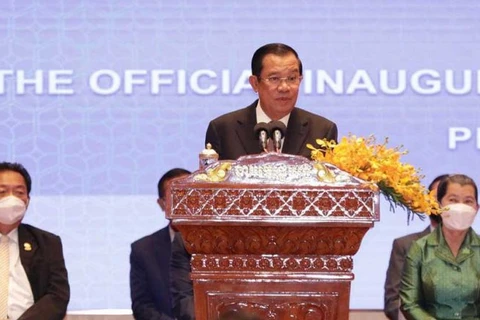
The ruling Cambodian People's Party (CPP) on December 24 held the 43rd meeting of its Central Committee, during which members of the committee endorsed Dr. Hun Manet, a member of the CPP Permanent Committee, to run for the Prime Minister position in the future.
Phnom Penh (VNA) – The ruling Cambodian People's Party (CPP) on December 24 held the 43rd meeting of its Central Committee, during which members of the committee endorsed Dr. Hun Manet, a member of the CPP Permanent Committee, to run for the Prime Minister position in the future.

According to CPP Spokesperson Sous Yara, Hun Manet received 775 yes votes out of total 865 votes.

Hun Manet, the oldest son of Prime Minister Hun Sen, was born in 1977. He graduated West Point Military Academy, and holds a MA degree in economics of New York University and a PhD degree in economics of Bristol University.

He has rich experience in Party and military activities.

During the meeting, members of the committee also elected Tea Banh and Men Sam An as Vice Presidents of the CPP, raising the number of Vice Presidents of the Hun Sen-led party to four./.
VNA

See more

Malaysia considers establishing strategic petroleum reserve

Malaysia considers establishing strategic petroleum reserve

Malaysia, which was previously a net exporter, has now become a net importer due to declining domestic production and rising consumption, with demand estimated at around 800,000 barrels per day compared to production of about 400,000 barrels per day.

Illustrative Image (Photo: theedgemalaysia.com)

Malaysia rolls out financial support measures for businesses

Prime Minister Anwar Ibrahim said on April 20 that a key measure is a 5 billion MYR guarantee package (1.27 billion USD) under the Syarikat Jaminan Pembiayaan Perniagaan (SJPP) scheme. The financial guarantee ratio for businesses will be raised to 80% from the previous 70%, while the guarantee period will be extended to up to 10 years instead of seven years.

Indonesia to halt diesel imports from July

Indonesia to halt diesel imports from July

The move is part of the Indonesian Government’s efforts to strengthen national energy independence by utilising palm oil as an alternative fuel, said Agriculture Minister Andi Amran Sulaiman.

Malaysia’s growing microplastics crisis is largely self-inflicted, driven by domestic waste, weak recycling practices and everyday plastic use, said experts. (Photo: New Straits Times)

Malaysia seeks solutions to microplastic crisis

Microplastics originating from domestic waste and wastewater are increasingly entering the food chain, posing serious threats to seafood safety and the livelihoods of coastal communities.

The new mass emergency alert system SG Alert, which will be used during emergencies such as major fires, chemical or terror incidents, seen on an Apple and Android device on Apr 17, 2026. (Photo: CNA)

Singapore launches new national emergency alert system

SG Alert in Singapore uses cell broadcast technology, enabling alerts to be delivered within seconds without requiring mobile data or collecting personal information. Unlike conventional SMS, which may be delayed during network congestion or depend on internet connectivity, the system ensures fast and reliable message delivery. Alerts can be sent islandwide or targeted to specific affected areas.

Malaysia establishes ‘war room’ to ensure water security

Malaysia establishes ‘war room’ to ensure water security

The establishment of the war room reflects the Malaysian government’s commitment to shift from a reactive approach to a more proactive, data-driven one in managing national water challenges, particularly amid increasingly unpredictable weather conditions caused by global climate change

Indonesia diversifies supply sources to ensure energy security

Indonesia diversifies supply sources to ensure energy security

Indonesia is facing significant supply pressure as crude oil consumption reaches approximately 1.6 million barrels per day, much lower than the domestic production at only around 600,000 barrels per day, forcing the country to rely heavily on imports.