CPTPP still holds untapped potential for Vietnamese businesses

There is still a lot of untapped potential for Vietnamese businesses in the Comprehensive and Progressive Agreement for Trans-Pacific Partnership (CPTPP) three years after it went into effect, said policymakers and industry experts during an online conference in Hanoi on December 1.
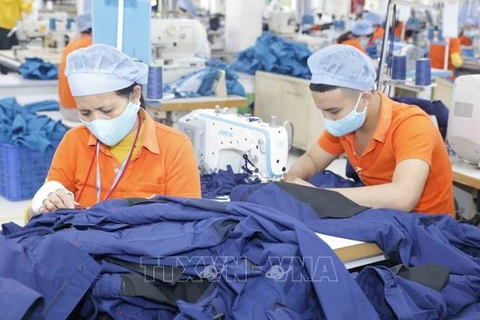
CPTPP still holds untapped potential for Vietnamese businesses ảnh 1Illustrative image (Photo: VNA)
Hanoi (VNA) - Thereis still a lot of untapped potential for Vietnamese businesses in theComprehensive and Progressive Agreement for Trans-Pacific Partnership (CPTPP)three years after it went into effect, said policymakers and industry expertsduring an online conference in Hanoi on December 1.

Ngo Chung Khanh, Deputy Director of the Multilateral Trade PolicyDepartment under the Ministry of Industry and Trade (MoIT), said Vietnamesebusinesses have been increasingly interested in taking advantage of the tradeagreement, the largest of its kind signed by the Southeast Asian country inrecent years.

According to a survey conducted by the Vietnam Chamber of Commerceand Industry (VCCI), 9% of businesses now said they possess a "deep understanding"of CPTPP, a significant improvement from just over 2% from two years ago.

During the same period, the country's export turnover to CPTPPmarkets improved significantly, notably to Canada and Mexico. Last year, Vietnamreported a trade surplus of more than 8 billion USD with the twomentioned-above countries alone. It has reflected a growing interest amongVietnamese exporters in CPTPP markets.

However, Canada and Mexico could be considered small tomedium-sized markets. While growth has been impressive, they only accounted forjust under 3% of Vietnam's total trade with the bloc.

Another issue, according to Khanh, was even traditionally strongVietnamese export products still struggled to penetrate CPTPP markets.

Nguyen Xuan Duong, Chairman of Hung Yen Garment Corporation(HUGACO), said that major hurdles for Vietnamese textile manufacturers includeddifficulties in meeting CPTPP's product origin protocols, inadequate investmentin expanding production and technology.

Duong said the country still relied heavily on raw material importfrom China (43-45%) and has not been able to clear CPTPP's requirements onproduct origin, a prerequisite for tariff reduction. He added the underlyingissue was a lack of capital investment and industrial infrastructure, whichcould be attributed to not having enough large consumer markets.

Even those who managed to secure the required investment to expandtheir operations could not bring production to full throttle. Many said theycould only produce at 30-40% of their designed capacity.

Another key issue was CPTPP's high environmental standards, whichhave proven difficult and costly for Vietnamese businesses to overcome.
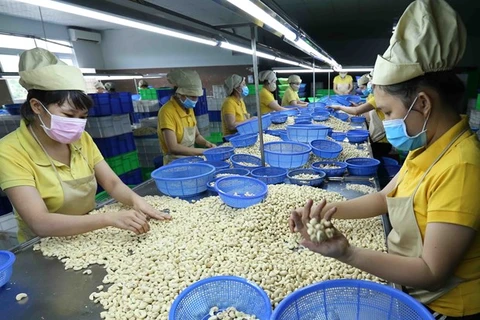
CPTPP still holds untapped potential for Vietnamese businesses ảnh 29% of businesses now said they possess a "deep understanding" of CPTPP, a significant improvement from just over 2% from two years ago. (Photo: VNA)
Nguyen Thi from the Ministry of Natural Resources and Environmentalsaid many new-generation free trade agreements placed great importance onpreserving the natural habitat, biodiversity and workers' well-being.

"Production is only a part of the equation. What good isprofit if our natural resources and living habitat continue to bedegraded," Thi said.

"In the long run, it is not sustainable. Input costs willeventually increase as resources dwindle while demand falls as human well-beingsuffers," Thi said.

He urged businesses to seek out sustainable technologies actively,saying it's no longer an option as consumers in developed markets have becomehighly conscious of environmental issues, which translates into politicalpressure to revamp the production model.

Do Thi Thu Huong, Deputy Director of the MoIT's Foreign TradeAgency, said Vietnamese businesses have been able to capitalise on the tradeagreement's available tariff advantages, especially Canada, Mexico and Peru,which had not signed free trade agreements with Vietnam before CPTPP.

In Vietnam-Canada trade alone, since the implementation of CPTPP,Vietnamese businesses reported they could benefit from 24% of the availabletariff advantages./.
VNA

See more

The Vietnam – Bangladesh business forum in Dhaka on May 19 (Photo: VNA)

Vietnam, Bangladesh eye to foster economic ties

Addressing the forum, Vietnamese Ambassador to Bangladesh Nguyen Manh Cuong highlighted the fruitful development of the bilateral ties over the past 53 years, noting that trade turnover has consistently exceeded 1.1 billion USD despite global disruptions. The two sides are now striving to raise the figure to 2 billion USD in the coming years.

The opening ceremony of the 10th International Livestock, Dairy, Meat Processing and Aquaculture Exposition on May 20 (Photo: VNA)

ILDEX Vietnam 2026 showcases livestock, agri-food innovation

The three-day event is jointly organised by VNU Asia Pacific and Thailand’s ITEC, serving as a platform for business networking, technology exchange and knowledge sharing in the livestock, aquaculture and food industries in Vietnam and Southeast Asia.

Permanent Deputy Prime Minister Pham Gia Tuc and officials inspect the Gia Binh International Airport project on May 20, 2026. (Photo: VNA)

Gia Binh international airport project accelerated ahead of APEC 2027

Tuc described Gia Binh International Airport as a national key project requiring strict adherence to construction timelines, particularly as it is expected to be put into operation in time for the 2027 APEC Economic Leaders' Meeting. Several associated projects are also being implemented under special mechanisms to serve major national tasks.

Vietnamese Ambassador to the Republic of Korea Vu Ho speaks at the forum.(Photo: VNA)

Forum promotes Vietnam–RoK supply chain connectivity

Cao Thi Phi Van, Deputy Director of ITPC, said that after more than three decades of cooperation, Vietnam–RoK ties are shifting from traditional manufacturing cooperation towards mastering future-oriented technologies such as semiconductors, artificial intelligence (AI), digital finance, renewable energy and global supply chains.

Fitch Ratings gives positive assessment of Vietnam’s economic fundamentals (Illustrative image. Source: VNA)

Fitch Ratings gives positive assessment of Vietnam’s economic fundamentals

Deputy Minister Tran Quoc Phuong stressed that Fitch’s credit assessments have enhanced Vietnam’s image and credibility in international financial markets, and provided additional motivation for the country to continue improving institutions, strengthening policy management efficiency and increasing economic transparency.

Consumer purchases E10 biofuel at a PVOIL petrol station on Thai Thinh street in Hanoi. (Photo: VNA)

Hanoi strengthens oversight of transition to E10 biofuel

To ensure compliance with the transition roadmap, the Hanoi Market Surveillance Sub-Department has requested petrol traders to proactively review and upgrade storage tanks, fuel pumps and other technical conditions necessary for E10 distribution, thereby preventing disruptions to fuel supply serving consumption and production demands across the capital.

A Phu Tho civil servant guides a local how to switch from presumptive tax mechanism to tax sef-declaration. (Photo: VNA)

📝OP-ED: Vietnam’s tax reform: Fair play, not revenue squeeze

At a time when social media disinformation grows more sophisticated, transparency and public disclosure are the most potent counter to distortions. Facts, data and real-world results deliver the strongest rebuttal to attempts that twist reality and erode trust in tax administration reform.

Experts are expected to analyse opportunities for boosting exports and investment cooperation between Vietnam and South American countries at the coming seminar. (Illustrative photo: VNA)

Seminar on trade promotion in South American market to take place in Hanoi

A seminar on opportunities and challenges in developing the South American market will be held in Hanoi on May 28. It aims to provide updates on the economic outlook, market trends and import demand in South America, particularly in Argentina and Chile, amid continued fluctuations in global supply chains.