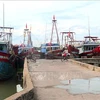
Da Nang’s Tien Sa Port plays a key role in the East-West Economic Corridor. (Source: VNA)
 Da Nang (VNA) – Vietnam and Da Nang in particular could emerge as huge potential markets for Japanese businesses.
The city and the country could witness investment in the fields of hi-tech agriculture, hospitality, human resource training and service, as well as environment, information technology, energy and health care for the elderly.
This was announced by Noboru Kondo, CEO of Brain Works Group, at the 50th Asia Business Conference held recently in the central city of Da Nang, which attracted the participation of over 200 businesses from Japan and Vietnam.
He said Vietnamese and Japanese businesses should develop a mutual understanding of their lifestyles, cultures and customs to boost cooperation.
“Local businesses should take advantage of the know-how of their Japanese partners to produce popular products in Japanese styles, instead of importing them from Japan. However, Da Nang was not yet as known to Japanese investors as HCM City and Hanoi, so the central city has drawn only modest investment projects from Japan,” Kondo said.
“Vietnam and Japan should cooperate in agriculture and its support industries – a deficient sector – to boost the industrialisation process in the country. Vietnam is perceived by Japanese investors as a friendly destination and a gateway to the Mekong region,” Kondo added.
Kondo, who has been doing business in Vietnam for the past 20 years, suggested Da Nang advertise more and build Japanese townships to attract Japanese investors and tourists.
He said Japanese investors would find potential industries in Da Nang in fisheries, retail, hi-tech farming, hospitality and the restaurant business.
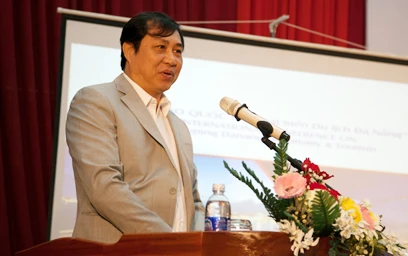
Vice Chairman of Da Nang Phung Tan Viet stressed the city would accord top priority and ensure smooth conditions for Japanese investors by providing good infrastructure.
“We have considerably developed traffic infrastructure, such as deep sea ports and airports. Some big brand names from Japan, including Mabuchi Motors, Foster Electric, Keiki and Tokai, have invested in the city,” Viet said.
He said the city, which is situated in central Vietnam and at the end of East-West Economic Corridors linking Laos, Thailand, Myanmar and Vietnam, would help boost exports and trade between local manufacturers and regional markets, as well as industrial centres in Binh Dinh, Quang Nam and Quang Ngai.
He said the city should also set up a one-stop shop and a Japanese desk to support Japanese investors in Da Nang.
The city organised an investment promotion week for members of the Japanese Business Association, also called Keidanren, and 120 businesses in Japan last year.
According to the Japan External Trade Organisation (JETRO), Japanese companies started 176 new projects, of which 40 percent were in the field of industrial manufacturing, last year.
Da Nang has launched a direct flight to Narita, Japan, with seven flights per week, and plans to open a new direct route to Osaka this August.
Mai Dang Hieu, Vice Director of the municipal Foreign Affairs Department, said the city opened a liaison office in Tokyo and Yokohama to provide up-to-date investment and tourism information to Japanese businesses.
He said the city also hosted the annual Vietnam-Japan Cultural Exchange every summer to boost tourism and exchange among Vietnamese and Japanese partners.
A survey by JETRO pointed out that 66 percent of the 458 Japanese firms based in Vietnam plan to expand their businesses during the next one or two years.
Shoko Chukin Bank from Japan revealed that 40.7 percent of the 3,750 respondents from various businesses in Japan said they would invest in Vietnam.
According to the latest report, Da Nang has attracted 305 foreign investment projects worth 3.37 billion USD.
Japan ranks fourth among the top investors in the city with over 90 projects worth 500 million USD, of which 55 projects involve manufacturing, creating 30,000 jobs for the local people.
Exports from Japanese enterprises accounted for 37 percent of the city’s total imports, while 30 percent of the city’s industrial production value comes from Japanese FDI projects.
Route Inn Group from Japan will develop a coastal resort in Da Nang, the first of its kind in Vietnam, with total investment of 18 million USD.
FPT Software Da Nang began its 10,000-Bridge Software Engineer (BrSE) programme in cooperation with Japanese partners.
In 2014, Da Nang also included Japanese language education in its curriculum at some high schools and colleges.-VNA