DDoS cybercrimes may return in second half: expert

Vietnam’s cybersecurity landscape may face a surge in Advanced Persistent Threat (APT) attacks, online scams and the return of Distributed Denial of Service (DDoS) attacks in the second half of this year, Vu Ngoc Son, technical director of the Vietnam National Cybersecurity Technology Corporation (NCS), told Vietnamplus.

Hanoi (VNA) – Vietnam’s cybersecurity landscape may face a surge in Advanced Persistent Threat (APT) attacks, online scams and the return of Distributed Denial of Service (DDoS) attacks in the second half of this year, Vu Ngoc Son, technical director of the Vietnam National Cybersecurity Technology Corporation (NCS), told Vietnamplus.

The following is the full interview:

Reporter: Could you please give your evaluation on the cybersecurity situation in Vietnam in the first half of this year?

Vu Ngoc Son: According to NSC’s statistics, Vietnam saw 5,100 cyber security attacks targeting various systems in the first half of the year, a year-on-year decrease of 12%.

However, there was a rise of around nine percent in the instances of APT attacks on critical establishments during the six-month period, which can be attributed to the abundance of vital and influential data present in such facilities, making them prime targets for hackers.

The mentioned APT attack campaigns primarily concentrated on three key attack methods, namely employing fabricated email content containing text files embedded with malicious code or deceptive login links aiming to hijack user accounts.

Others include exploiting software vulnerabilities on servers, particularly targeting systems utilizing Microsoft software such as Exchange and SharePoint.

The final method is exploiting website vulnerabilities, particularly SQL Injection vulnerabilities or attempting to breach website administrator and server passwords.

Once the hacker successfully infiltrates a system component, whether it is a user’s device or a vulnerable server, they will conceal their presence, gather login credentials, and subsequently escalate the attack by targeting additional computers within the network.

APT attacks have the potential to persist for extended periods, spanning weeks or even months.

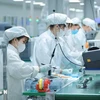
DDoS cybercrimes may return in second half: expert ảnh 1Illustrative photo (Photo: VietnamPlus)

Agencies and organisations typically lack a security operations center (SOC) or possess one that inadequately collects logs. 

To prevent APT attacks, I think organisations need to review their systems, fully collect logs, and hire agencies who can make cyber threats vanish.

Reporter: What is your comment on Vietnam’s online scams?

Vu Ngoc Son: There was a surge in online scams. Although warnings have been given, the number of victims are on the rise. “High-paying easy jobs” advertisement was moved from Zalo to the Telegram platform.

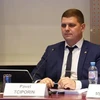
DDoS cybercrimes may return in second half: expert ảnh 2Vu Ngoc Son, technical director of the Vietnam National Cybersecurity Technology Corporation (NCS) (Photo: VietnamPlus)

Scammers can easily operate on Telegram, a platform that allows them to add an unlimited number of members to a group chat. Competent authorities are not able to trace their activities once they are detected as messages and images in the group chat are easily retrieved or deleted.

With Deepfake technology, criminals pretend to be police, procuracy officers, bank and tax staff, or victims’ friends and relatives, making it hard for victims to realize they are being cheated.

The scammers exploit technological loopholes to insert fake SMS into the official message stream of popular banks (or SMS Brand names).

Thousands of clients believe in the counterfeit content and clicked on the links. The users are fooled by fake interfaces made to look the same as authentic ones. This kind of cheating has moved to the outskirts of big cities to prevent authorities from tracing them. There were no new forms but many people fell into these traps.

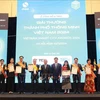
DDoS cybercrimes may return in second half: expert ảnh 3Illustrative photo (Photo: VietnamPlus)

In my opinion, besides giving more warnings, competent authorities should take more drastic measures such as locking SIM cards and bank accounts with unverified information to ensure safety for the cyberspace.

Reporter: What are the reasons behind the fact that agencies and organisations websites were inserted with gambling and betting advertising codes?

Vu Ngoc Son: According the NSC statistics, in the first six months of the year, nearly 400 agencies and organisation websites were hacked and had gambling and betting advertising codes inserted.

The affected websites include those with domain names ending in .gov.vn and edu.vn, which signify a website belonging to organisations and agencies under the Government or the Ministry of Education and Training.

This is an alarming figure as hackers not only insert advertising links but also exploit system control to pilfer the database, which includes users’ personal information, then they potentially upload harmful content to distribute malicious code in the future.

I think it is time for organisations and agencies to seriously review their portals, and arrange experts to ensure cybersecurity.

Reporter: What are your forecasts for Vietnam’s cybersecurity in the remaining months of this year?

Vu Ngoc Son: Online scams and attacks are expected to continue.

People should stay vigilant with the return of DDoS attacks as Microsoft’s Azure outages in June 2023 caused by a DDos Attack was a vivid illustration that hackers are now powerful and own a large number of bottnets – networks of hijacked computer devices used to carry out various scams and cyberattacks.

Reporter: Thank you for spending time with us!./.
VNA

See more

Students practice microcontroller programming at the Viet - Han College of Technology in Bac Ninh province (Photo: VNA)

Vietnam steps up semiconductor talent training to meet market demand

Vietnam needs to step up semiconductor workforce training to meet growing market demand and enhance its capacity to participate in the global technology value chain, experts said, highlighting the importance of closely linking training with businesses, production and technological research.

Vietnam seeks to boost education and technology cooperation with France

Vietnam seeks to boost education and technology cooperation with France

Education and training, science and technology, and high-quality human resources are key areas of cooperation in Vietnam-France relations, said Politburo Member, Secretary of the Communist Party of Vietnam Central Committee, and Chairman of its Commission for Organisation Nguyen Duy Ngoc while visiting the Institut Polytechnique de Paris on September 11.

General Secretary of the Communist Party of Vietnam Central Committee and President To Lam witnesses the exchange of cooperation agreements between the two countries. (Photo: VNA)

Vietnam, France deepen cooperation in science, technology, workforce training

The University of Science and Technology of Hanoi (USTH), under the Vietnam Academy of Science and Technology (VAST), and the French Alternative Energies and Atomic Energy Commission (CEA) exchanged two cooperation agreements in Paris on September 11, in the presence of General Secretary of the Communist Party of Vietnam Central Committee and President To Lam.

A display area for unmanned aerial vehicles (UAVs) at a workshop in Da Nang city on June 12, 2026. (Photo: VNA)

Vietnam eyes UAV industry as key driver of low-altitude economy

For Vietnam, the opportunity presented by unmanned aerial vehicles (UAVs) lies not only in expanding their applications but, more importantly, in gradually building industrial capacity, mastering technologies and engaging more deeply in global value chains.

A semiconductor chip by TSMC (Photo: VCG)

Vietnam seeks deeper integration into global semiconductor value chains

Nguyen Anh Tuan, Director of the National Centre for Pilot Semiconductor Chip Manufacturing Support under the Ministry of Science and Technology, said that amid increasingly intense global technological competition, the semiconductor industry is not only a high-value-added economic sector but also a foundation for technological self-reliance, national security and economic competitiveness.

Demonstration of an autonomous electric street sweeper. (Photo: VNA)

Hanoi approves controlled pilot of two technology projects

The two projects involve an intelligent autonomous transportation system developed by Phenikaa-X JSC and a technology for producing mixed rare-earth oxides with a purity of over 95% on a semi-industrial scale developed by the Mining Technology and Construction Consultancy JSC.

Prof. Dr. Tran Hong Thai, President of the Vietnam Academy of Science and Technology (VAST), has a working session with leaders of Russia’s State Atomic Energy Corporation Rosatom. (Photo: VNA)

Vietnam, Russia develop quantum technology cooperation roadmap

Quantum technology is an emerging field undergoing rapid breakthroughs and requiring enormous investment resources. Learning from the experience of pioneering countries such as Russia will enable Vietnam to significantly shorten the time needed to build its workforce and develop endogenous capabilities.

Senior Vice-President of Latin America and Asia at Thales Group Guy Bonassi (L) at a meeting with Vietnamese Ambassador to France Trinh Duc Hai (Photo published by VNA)

Vietnam, France should expand cooperation in strategic fields: business leader

General Secretary of the Communist Party of Vietnam Central Committee and President To Lam’s visit to France, Guy Bonassi, Senior Vice-President of Latin America and Asia at Thales Group, said the upgrade of bilateral ties to a Comprehensive Strategic Partnership reflects their shared desire to deepen and broaden cooperation, with technological autonomy, resilience and human resources development assuming increasingly important roles.

The Vietnamese delegation led by Deputy Prime Minister Ho Quoc Dung visits the Korea Institute of Science and Technology (KIST). (Photo: VNA)

Vietnam, RoK promote strategic technological cooperation

Deputy Prime Minister Ho Quoc Dung proposed expanding joint research programmes, particularly in strategic areas where Vietnam has development needs, and KIST has strengths, including semiconductor integrated circuits, AI, batteries and energy storage, and biotechnology.

Digital transformation brings economic benefits closer to businesses

Digital transformation brings economic benefits closer to businesses

In addition to streamlining processes and reducing the time required to complete administrative procedures, digital models are creating more opportunities for businesses, household enterprises and small traders to access information, adopt new payment methods, connect with partners and expand their markets.