Discovering art of making vegetarian dishes in Tay Ninh

From their habit of enjoying vegetarian dishes, locals in the southwestern province of Tay Ninh have creatively made attractive vegetarian food and turned it into an art. ​
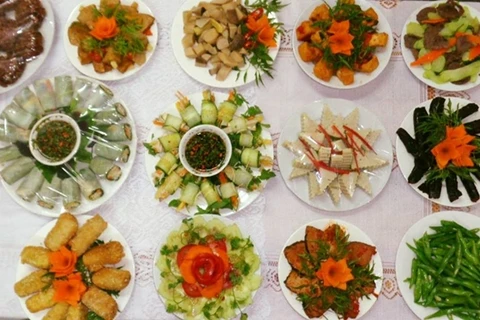
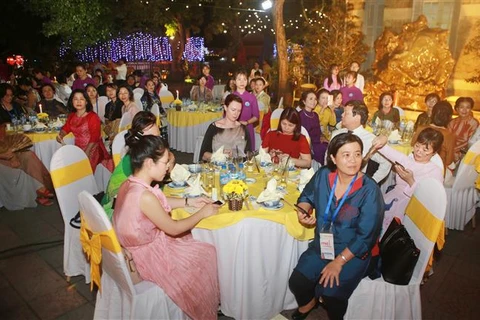
Discovering art of making vegetarian dishes in Tay Ninh ảnh 1Tay Ninh vegetarian cuisine shows ingenuity and sophistication. (Photo: Phuoc Lac Vien)

Hanoi (VNA) – From their habit of enjoying vegetarian dishes, locals in the southwestern province of Tay Ninh have creatively made attractive vegetarian food and turned it into an art.

Through 180 years of formation and development, Tay Ninh has formed a unique and typical culinary culture, especially vegetarian food.

Tay Ninh is home to 127 pagodas and Buddhist worshipping facilities. Buddhists often have vegetarian food on the first and 15th days of each lunar month. 

The province is also considered the cradle of the Cao Dai religion, and vegetarianism is one of the regulations for Cao Dai followers. 

According to the old custom, Cao Dai people believe that January is their fasting month, and since then, the profession of cooking traditional vegetarian dishes has been respected and famous. 

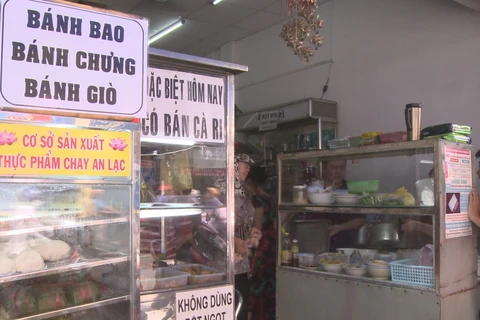
They go vegan every month for 10 days on the 1st, 8th, 14th, 15th, 18th, 23rd, 24th, 28th, 29th, and 30th days of the lunar month. In months that have 29 days, they will take the 27th day as an additional vegan day. Previously, on vegan days, Long Hoa, a major local market, sold nothing but vegetarian food.

Religions and beliefs have made considerable contributions to the culinary culture of Tay Ninh. The art of making vegetarian food has been spread to the community, creating the uniqueness of Tay Ninh cuisine.

In the province, there are many families that are famous for their tradition of making vegetarian food to serve at parties, weddings and special events. The most famous name is Trai Duong which is always crowded with Buddhist followers.

The vegetarian menu in Tay Ninh is richer than in many other places and is creatively processed and looks like a savoury dish. Ingredients for vegetarian dishes are diverse from typical products to common foods such as tofu, mushrooms, bananas, potatoes, flour, vegetables, fruits, salt, soy sauce, seasoning vegetables and other spices. From the ingredients, vegetarian culinary artists can turn dishes into art works.

Vegetarian porridge is one of the dishes that best reflects the art of vegetarian cuisine in Tay Ninh, which is rich in the colours of the ingredients and has the effect of balancing yin and yang (sweet-bitter, cold-heat), and nutrition.

Vegetables used in the dishes, which are gathered from mountains and rivers, are also rich in both kinds and taste in harmonious combination. Particularly, there are many special dishes from the trees and fruits of banana, jackfruit and papaya. 

At weddings or festivals, vegetarian dishes are raised to an artistic level with elaborate processing and artistic presentation, which is a combination of five flavours: sour, spicy, salty, bitter, and sweet.

Particularly, during the traditional New Year days, many families in Tay Ninh offer vegetarian dishes to their ancestors and pray for their family's peace and happiness. The vegetarian Tet trays, especially that on the first day of the Lunar New Year, are made very sophisticatedly, meticulously, beautifully and with more delicious dishes than usual.

Tay Ninh's vegetarian cuisine has not only satisfied the spiritual, religious and health needs of the people, but also showed the creativity and tradition inheritance of artisans, evoking the people's love for nature, and driving the people to good things. The art of vegetarian cuisine in Tay Ninh, with a system of vegetarian restaurants and a vegetarian market, has contributed to the development of the local economy, attracting and popularising the local culture to tourists from all over the world.

With its great values, the art of making vegetarian food in Tay Ninh province has been recognised as a national intangible heritage following the Minister of Culture, Sports and Tourism’s decision No. 75/QD-BVHTTDL issued on January 12, 2022./.
VNA

See more

(Photo: baoquocte.vn)

Spring Fair 2026 features imperial spring colours, heritage imprints

Beyond cultural impressions, the fair created tangible opportunities for Hue enterprises and artisans to promote brands, connect partners and expand markets, laying foundations for deeper participation in value chains and long-term sustainable development aligned with Hue’s green growth and international integration strategy toward 2030, with a vision to 2045.

The horse-themed stamp set and commemorative coin. (Photo: VNA)

Stamp set, coin issued to mark Year of the Horse

In traditional beliefs, the horse is a sacred animal symbolising loyalty, vigour, patience and perseverance, and is also believed to bring good fortune and prosperity. Drawing on this symbolism, the stamp set is presented in a contemporary folk-art style and, for the first time, features the image of the “Nine Red-Maned Horse” on Vietnam’s Tet stamps.

Vietnamese Ambassador to Japan Pham Quang Hieu commends collectives that have made significant contributions to community work in 2025 (Photo: VNA)

Vietnamese in Australia preserve traditional Tet celebrations

The “Homeland Spring” programme in Australia left lasting impressions, bringing the warmth of Tet to overseas Vietnamese and reaffirming that wherever they may be, Vietnamese people share common roots and an aspiration for a prosperous future.

At the Vietnamese booth at the first International Spring Festival hosted by the administration of Chongqing city, China from February 6 to 8. (Photo: VNA)

Vietnam attends international spring festival in China’s Chongqing

The event brought together more than 20 foreign consulates general in Chongqing and Chengdu, along with many companies and well-known brands from the participating countries, creating a vibrant and multicultural exchange space on the occasion of the Year of the Horse.

Nguyen Thi Lien, Head of the Vietnamese Language Club in Malaysia and Vice Chairwoman of the Vietnamese Women’s Association in Malaysia. (Photo: VNA)

Overseas Vietnamese join hands in spreading Vietnamese culture

They affirmed that culture is the spiritual foundation and a vital endogenous strength of the nation, while underscoring the important role of overseas Vietnamese in preserving and spreading national cultural identity and promoting the image of Vietnam and its people to the world.

Foreign diplomats wear ao dai (Photo: VNA)

Foreign diplomats in Ho Chi Minh City join Tet celebrations

With the desire to share the beauty of Tet with international friends, HUFO organised the programme to create opportunities for diplomats working in the city and their families to engage in warm exchanges and build closer ties through Vietnamese traditional cultural activities, leaving them with lasting and memorable impressions of a traditional Vietnamese Tet in a civilised, modern and compassionate city, according to HUFO President Ha Thanh.

A performance at the Spring Concert 2026 (Photo: VNA)

Spring Concert 2026 celebrates Vietnam–China friendship

Featuring renowned artists from both countries, the programme comprised two parts with a well-structured and engaging artistic arrangement, guiding the audience from traditional Chinese music to melodies praising Vietnam–China friendship, as well as excerpts from classic world operas.

Farmers in Ninh Phuc flower village, Dong Hoa Lu ward, Ninh Binh province, are completing the final steps to bring beautiful and high-quality potted plants to market (Photo: VNA)

Spring colours fill Ninh Binh as farmers gear up for Tet market

As Tet approaches, traditional craft villages in the province are entering their busiest period. In kumquat and flower-growing villages, farmers are completing the final stages of care to ensure their products meet market demand in both quality and appearance.

International friends experience how a bowl of pho is prepared. (Photo: VNA)

Vietnamese Pho Day showcases culture, connectivity in Beijing

Vietnamese Ambassador to China Pham Thanh Binh described pho as a “national dish” and a cultural symbol of Vietnam. He said the event aimed to build bridges bringing international friends closer to Vietnam's culinary culture, thereby enhancing mutual understanding and people-to-people exchanges.