Hanoi (VNS/VNA) - Vietnam is looking into developing an ecosystem to enhance connections between Vietnamese enterprises and other countries in order to further take advantage of free trade agreements (FTAs), including the Comprehensive and Progressive Agreement for Trans-Pacific Partnership (CPTPP), participants heard in a seminar in Hanoi on October 2.
The seminar, organised by the European – American Market Department under the Ministry of Industry and Trade (MoIT), aimed to review the achievements of the CPTPP after five years and discuss solutions to boosting trade and collaboration with the Americas.
Deputy Minister of Industry and Trade Nguyen Hoang Long said that the CPTPP has played an important role in accelerating Vietnam’s trade with the Americas since it took effect in January 2019, especially with Canada, Mexico and Chile.
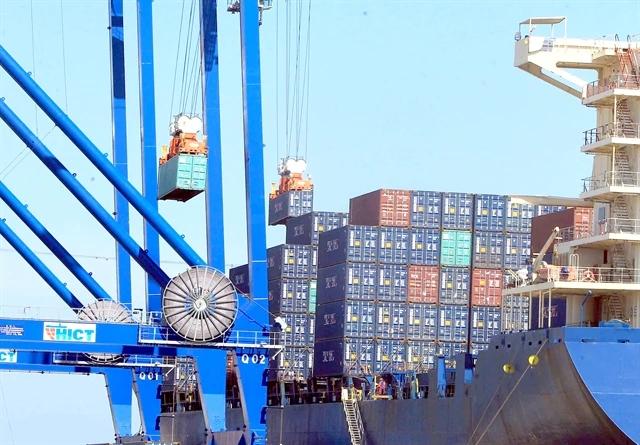
He cited the General Department of Customs’ statistics showing that Vietnam’s export and import value between Vietnamese businesses and CPTPP markets rose 56.3% over five years, from 8.7 billion USD in 2018 to 13.6 billion USD in 2023. However, this represents a unique period full of challenges like the global economic downturn and COVID-19 pandemic.
Vietnam’s exports to CPTPP markets nearly doubled over that period, from 6.3 billion USD to 11.7 billion USD. Trade surplus also nearly tripled, from 3.9 billion USD to 11.01 billion USD.
Aside from impressive trade figures, participation in the CPTPP helps speed up institutional reforms in Vietnam and improve the legal system towards transparency, which not only forces enterprises to operate more professionally but also contributes to enhancing Vietnam’s international reputation to attract more foreign investors.
The relationship between Vietnam and the Americas has also been strengthened through strategic commitments, Long noted.
However, there are limitations, such as low added value for Vietnam’s export products, inadequate attention to building brands and the limited proportion of Vietnamese goods in imports into the region, Long pointed out.
He added that he expects the seminar to provide valuable information to enterprises so that they can take better advantage of the CPTPP and move higher in the global value chain.
Shawn Steil, Canadian Ambassador to Vietnam, said that the trade deal has brought economic benefits to both sides. It is time to discuss solutions for stronger developments and inclusive trade, he said.
The CPTPP Commission meeting scheduled in November in Canada will discuss how the CPTPP can help accelerate new industries, such as the technology industry, and how enterprises, especially women-led and small- and medium-sized firms, can take advantage of the trade deal to promote the environment for inclusive and highly effective trade as well as enhance global supply chains.
Speaking at the seminar, Ngo Chung Khanh, Deputy Director of the Department of Multilateral Trade Policy under the MoIT, said that building connections between Vietnamese enterprises and other countries can expand the ecosystem to take advantage of FTAs.
This is a considered a fundamental solution to better exploit FTAs, including the CPTPP, he stressed, noting, “It’s time we enhance connections.”
The MoIT is studying the development of an ecosystem to take advantage of FTAs in which enterprises -- not only in Vietnam but also in foreign markets -- will be connected to fully exploit resources.
The Government is providing a platform, but it is up to companies to be active in taking advantage of FTAs, Khanh said, urging firms to diversify markets with special attention to markets with new-generation FTAs with Vietnam.
Khanh also pointed out that there are significant opportunities that the CPTPP brings to foster trade and collaboration with the Americas. “There is still a lot of room for trade growth. The potential between Vietnam and other countries is still great,” he said.
The UK has joined the CPTPP and many other economies are also applying to join, creating greater opportunities, he added.
There are also challenges in taking advantage of the CPTPP, including short-term competitive advantages and geographic distance.
The competitive advantage of the CPTPP gradually decreases with the FTAs under negotiation, such as ASEAN – Canada, or the fact that other countries will join the CPTPP, such as Indonesia.
He said the wide geographical distance, which increases business costs, is also a significant barrier to business decisions.
“More in-depth cooperation mechanisms need to be developed by connecting Vietnamese enterprises with American countries. Vietnamese and foreign businesses need to clearly understand the benefits and ways to take advantage of the CPTPP to pay more attention to each other’s markets,” Chung said.
Chung said that it is necessary to build a mechanism for specialised cooperation by topic between Vietnam and other countries and promote bilateral cooperation in the CPTPP by identifying topics of joint interest.
Vietnam should identify focused areas and enterprises to strengthen export orientation towards American markets, he added.
Vu Duc Giang, President of the Vietnam Textile and Apparel Association, said that the CPTPP has provided huge opportunities for the garment and textile industry to expand in the global market. The trade deal also helped reshape the industry’s development strategy.
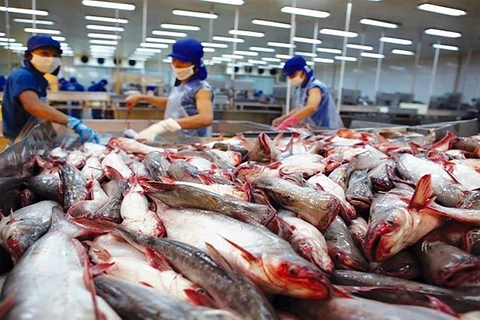
Nguyen Hoai Nam, Deputy Secretary General of the Vietnam Association of Seafood Exporters and Processors (VASEP), said there is still a lot of space for the seafood industry to expand thanks to the CPTPP.
But aside from quality, import markets are also increasing their criteria related to sustainability, requiring exporters to pay extra attention to enhance their competitiveness, Nam said.
More efficient trade promotion activities are critical for enterprises to better take advantage of FTAs, he added.
The CPTPP is a free trade agreement between 11 countries, including Australia, Brunei, Canada, Chile, Japan, Malaysia, Mexico, Peru, New Zealand, Singapore and Vietnam. The trade deal was officially signed by the member countries in March 2018 and took effect for Vietnam in January 2019.
To date, all member countries have ratified the trade deal.
The UK applied for participation in the CPTPP in February 2021 and officially signed a treaty to join the pack on July 16, 2013./.