Experts recommend policies to achieve 2024 CPI target

Increasing public investments, easing monetary policies, stabilising foreign exchange rates, and ensuring sufficient supplies are among the solutions recommended by experts to control the rise in the Consumer Price Index (CPI) this year.
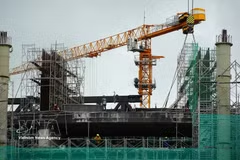
Experts recommend policies to achieve 2024 CPI target ảnh 1In 2024, domestic consumers and businesses will have to face crucial decisions regarding spending and investment. (Photo: VietnamPlus)

Hanoi (VNA) - Increasing public investments, easing monetary policies, stabilising foreign exchange rates, and ensuring sufficient supplies are among the solutions recommended by experts to control the rise in the Consumer Price Index (CPI) this year.

Under the National Assembly’s Resolution No. 103/2023/QH15, the national gross domestic product (GDP) is expected to expand from 6-6.5% and the CPI growth kept at 4-4.5% in the year.

Associate Professor, PhD. Vu Duy Nguyen, Director of the Institute of Economics and Finance, forecast that the average CPI in the first half of this year will rise 3.2-3.5% year-on-year.

According to the expert, the world political-economic situation will facilitate Vietnam’s efforts to maintain its average CPI.

He added that inflation in neighbouring China is forecast to remain low at 0.5% this year, while the trade balance between the two countries reached 173.3 billion USD in 2023, with China being the main supplier of materials for Vietnam's manufacturing activities, hence the risk of inflation-driven imports is low.

Moreover, inflation in big economies, which are Vietnam’s major trade partners and export markets such as the US and the EU, is being tamed, leading to the low risk.

Domestically, Nguyen noted several advantages brought about by macroeconomic policies maintained in the direction of fiscal and monetary easing based on the "pillars" of foreign exchange reserves, budget revenue, trade surplus, and increased FDI attraction and disbursement.

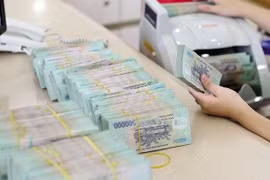
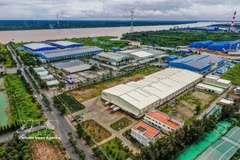
Experts recommend policies to achieve 2024 CPI target ảnh 2Natural disasters and epidemics would affect food and foodstuff prices in some localities, causing the CPI to rise. (Photo: VietnamPlus)

Associate Professor, Dr. Phan The Cong, head of the Economics Department at the Thuongmai University, pointed to a number of factors that would cause inflation pressure and price fluctuations in Vietnam such as global high material prices, natural disasters and epidemics, among others.

In addition, the prices of strategic goods managed by the State such as health care and education services may increase after many years of suppression, plus the impacts of wage increases and rising prices of consumer goods according to seasonal factors.

The Government's support programmes also increase aggregate demand, causing inflationary pressure in the economy, he said, adding that these things cause consumers and domestic businesses to face important decisions about spending and investment.

Given this, Nguyen raised some recommendations regarding policy management to maintain CPI growth at 4-4.5% this year, including increasing public investments in line with the 2024 state budget estimate approved by the legislature, maintaining monetary policy easing, and stabilising the foreign exchange market and currency value.

He also suggested stabilising the prices of state-managed commodities; ensuring adequate supplies of goods, especially food, foodstuff, and other essential goods; and intensifying the communications work to make price information and the management work transparent.

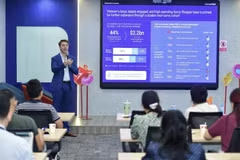
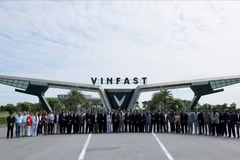
Experts recommend policies to achieve 2024 CPI target ảnh 3All-level management agencies need to have policies to ensure smooth supply, circulation, and distribution of goods and services. (Photo: VietnamPlus)

In this regard, Cong proposed the government, ministries, and agencies keep a close watch on price and inflation developments in the world to give timely warnings of risks affecting prices and inflation at home.

Notably, reducing inflation needs policies, fiscal and monetary solutions, and wage adjustments, he said, stressing that enterprises should fully prepare conditions to boost production and business, ensure the supplies of goods and services, and invest in technology, human resources, and other areas to raise productivity and competitiveness, he said./.

VNA

See more

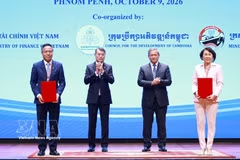
Prime Minister Le Minh Hung and his Cambodian counterpart Hun Manet witness the exchange of cooperation agreements between businesses of the two countries (Photo: VNA)

Vietnam, Cambodia look to elevate economic links

Prime Minister Le Minh Hung said that economic, trade and investment cooperation constitutes an important pillar of bilateral ties, which has achieved positive results. However, considerable room remains for further expansion to match the strong political ties and the potential of both countries.

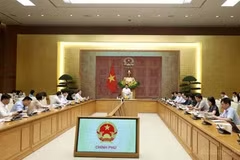
An overview of the meeting (Photo: chinhphu.vn)

Deputy PM calls for tighter price management of essential goods

Deputy PM Thang, who is also head of the committee, urged ministries and agencies to coordinate closely to deliver effective fiscal and macroeconomic policies. The aim is to control inflation, stabilise the macroeconomy, ensure major economic balances, create room to support growth and bolster the economy’s resilience to external shocks.

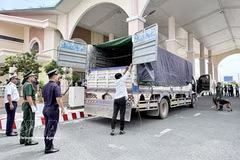
 Khanh Binh International Land Border Gate in An Giang province.( Photo: VNA)

Vietnam-Cambodia trade gathers pace towards 20 billion USD target

After setting a record of more than 11.3 billion USD in 2025, bilateral trade reached about 8.7 billion USD in the first eight months of 2026, up 8.3% year on year. Vietnam is currently Cambodia’s third-largest trading partner, its second-largest source of imports and second-largest export market.

Vietnamese Ambassador to India Trinh Minh Manh discusses potential areas and strengths for cooperation between Vietnam and India’s Gujarat state. (Photo: VNA)

Vietnam, India’s Gujarat state seek to unlock cooperation potential

Vietnam attaches importance to strengthening cooperation with Indian states boasting strong economic potential, including Gujarat, to further advance the two countries’ Enhanced Comprehensive Strategic Partnership, particularly in the economy, trade and investment, said Ambassador Trinh Minh Manh.

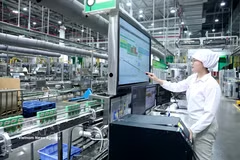
At Nestlé Vietnam factory in Hung Yen province (Photo: VNA)

Vietnam seeks to build stronger ecosystem for FDI

The World Bank has stressed the need to connect global companies with domestic suppliers, improve the business climate and develop supply-chain finance solutions. Those steps will let domestic firms gradually meet requirements on quality, technology, costs and delivery times, and position them to become suppliers to multinational corporations.

Construction of technical infrastructure facilities serving APEC 2027 in Phu Quoc Special Zone, An Giang province. (Illustrative photo: VNA)

Vietnam enters investment grade credit rating category for first time

Vietnam has maintained robust growth, outperforming other Southeast Asian economies. Its ongoing government reforms aimed at streamlining the state apparatus, promoting the private sector, improving the institutional framework and developing capital markets will strengthen the country’s growth potential and economic resilience.

Vietnamese Prime Minister Le Minh Hung and Lao Prime Minister Saleumxay Kommasith witness the presentation of investment certificates and investment cooperation agreements between businesses of the two countries. (Photo: VNA)

Vietnam, Laos strengthen “strategic cohesion” in economic sector

The great friendship, special solidarity, comprehensive cooperation and strategic cohesion between Vietnam and Laos, and between Laos and Vietnam, are an invaluable asset of the Vietnamese and Lao Parties, States and people. It is the responsibility of today's generation to transform this invaluable political asset into new resources for the development of the two countries’ people.

West Food Hau Giang JSC’s factory at the Nam Song Hau Industrial Park – Phase 1, Can Tho city (Photo: VNA)

Southern industrial property market enters new phase of competition

Industrial site selection was previously driven largely by land prices, location and access to markets. However, as supply chains become more complex and manufacturing projects face higher technical requirements, businesses are increasingly assessing sites based on their long-term operational capabilities.

Members of the RoK delegation visit booths showcasing signature agricultural products of Da Lat – Lam Dong. (Photo: VNA)

Lam Dong seeks stronger economic, tourism links with RoK

Lam Dong is particularly interested in sectors in which Korean businesses have strengths, including agriculture, green energy, the circular economy, high-quality tourism, healthcare, education, human resources training and digital transformation, an official said.

Illustrative image (Photo: EVNNPT)

EVNNPT seeks over 224 mln USD in bank loans for grid expansion

Three projects account for part of the financing need, including 13.3 million EUR for the 220kV Ung Hoa substation and connection lines, 18.6 million EUR for the 220kV Tan Viet substation and the 220kV Tan Viet–Gia Loc–Pho Noi line, and 35.3 million EUR for the 220kV substation connecting the Dong Anh–Van Tri transmission line.