Exposing dark schemes of Viet Tan terrorist organization

The terrorist organization Viet Tan has made use of the complicated developments in the East Sea to deploy its schemes of systematic terrorist activities designed to sabotage Vietnam.
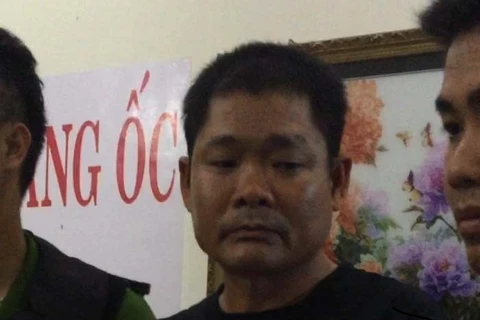
Exposing dark schemes of Viet Tan terrorist organization ảnh 1Viet Tan member Nguyen Quoc Quan (or Richard Nguyen) (Source: VNA)

Hanoi (VNA) – The terrorist organization Viet Tan has made use of the complicated developments in the East Sea to deploy its schemes of systematic terrorist activities designed to sabotage Vietnam.

What is Viet Tan

In 1981, Hoang Co Minh, a former vice admiral of the old Sai Gon puppetry regime, set up a so call National United Front for the Liberation of Viet Nam (NUFLV), with the aim of carrying out armed and terror activities against Vietnam.

In 1982, Minh established Viet Tan, which has its headquarters and many branches in foreign countries. Viet Tan is the brain of the NUFLV, and all members of the NUFLV are also members of Viet Tan.

Systematic terrorist activities

After its establishment, Viet Tan has recruited members and trained them in using weapons and explosives as well as in conducting sabotaging or kidnapping. It organized several campaigns to send groups of armed men (totaling 246 men) from Thailand to Vietnam via Laos and Cambodia with the aim of setting up “secret bases”, instigating disturbance and conducting terrorist activities. However, their schemes were stopped and neutralized by competent forces of Vietnam and Laos.

Viet Tan even set up a death squad named K9 led by the organisation’s key members to assassinate its critics. Several journalists of Vietnamese origin had been targeted because they published articles exposing Viet Tan’s cheating, such as Duong Trong Lam, editor-in-chief of the “Cai dinh lang” newspaper in San Francisco and Nguyen Dam Phong, founder of the “Tu do” newspaper in Houston.

At present, Do Hoang Diem, a US citizen of Vietnamese origin born 1963, is chairman of Viet Tan and its secretary general is Ly Thai Hung, also a US citizen of Vietnamese origin born in 1953.

Viet Tan continues to recruit and train members and send them to Vietnam to incite disorder and disturbance, kidnap and murder hostages. The organization also took members in Vietnam abroad for training, or held online training courses on forms and methods of terrorism and sabotage, as well as publicized on the internet methods to make petrol bombs for terrorist activities.

Recently, Viet Tan took advantage of hot issues of public concern in Vietnam related to the environment, religious affairs and corruption to distort the situation in Vietnam. For example, it spread false information on social media on the fire at the Rang Dong Rang Dong Light Source and Vacuum Flask Joint Stock Company or the incident at the Song Da Water Plant, with the aim of undermine the public’s trust in the Party and State of Vietnam. Their higher goal is to demand the abolition of Article 4 of the Constitution on the leadership of the Communist Party of Vietnam.

Timely stopping Viet Tan’s terrorist activities

With high vigilance, Vietnam’s competent forces have timely intercepted many terrorist attempts and brought the culprits to justice.

In one such case, a group of Viet Tan members were arrested and put on trial in May 2008. The group comprised of Nguyen Hai, Nguyen Ngoc Duc, Nguyen Quoc Quan, Nguyen Thi Thanh Van and Truong Leon, who infiltrated into Vietnam in 2007 to instruct local members to distribute leaflets inciting demonstrations and violence.

In another case, Pham Minh Hoang, a Viet Tan member in France, arrived in Vietnam and became a contracted lecturer of a university in Ho Chi Minh City. Hoang wrote 33 articles misrepresenting policies and guidelines of the Vietnamese Party and Sate and sent them to Viet Tan for publishing on the internet. Hoang had to stand trial in 2011 for his violations of law.

Between August 2009 to November 2011, Viet Tan arranged for 17 members in Vietnam to go to Thailand, Cambodia, Laos, the Philippines and the US to receive training by it leaders. Those members were arrested when they returned to Vietnam on August 2, 2011.

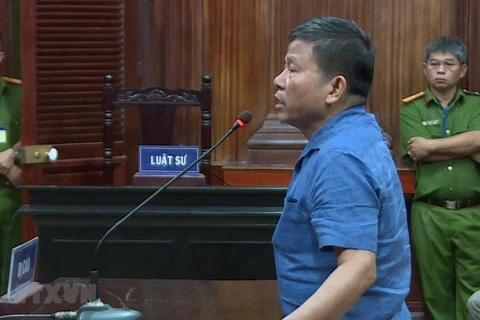
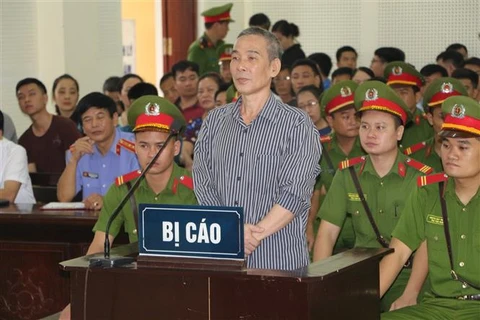
Most recently, the Ho Chi Minh City People’s court held a first-instance trial of six defendants on the charges of “conducting terrorism against the people's administration” and “forging seals and documents of agencies/organisations.” Investigations showed Chau Van Kham, a Vietnamese Australian and member of Viet Tan, entered Cambodia and then used a forged ID card under the name of Chung Chinh Phi to enter Vietnam. When in Vietnam, Kham recruited Nguyen Van Vien. The police also uncovered another Viet Tan member Tran Van Quyen, who made false documents and placed jobs for Viet Tan members. Quyen and Vien also participated in Viet Tan’s training camp in Cambodia.

Exposing dark schemes of Viet Tan terrorist organization ảnh 2Chau Van Kham is led to the court (Photo: VNA)

Based on the dangerous activities of Viet Tan, Vietnam’s Ministry of Public Security classified Viet Tan as a terrorist organization on October 4, 2016./.

Next: What’s new in Viet Tan’s schemes?
VNA

See more

Hugues Tertrais, Honorary Professor at Paris 1 Panthéon-Sorbonne University and former Director of the Centre for Contemporary Asian History (Photo published by VNA)

Historical foundation, future momentum for Vietnam–France ties

The historical dialogue between Vietnam and France had at times been very tense, but this process helped the two sides understand and respect each other better. Greater mutual understanding built over time has created conditions for cooperation at many levels today, a French scholar has said.

General Secretary of the Communist Party of Vietnam Central Committee and President To Lam and his spouse meet with officials and staff of the Vietnamese Embassy and representatives of the Vietnamese community in Russia in Moscow on September 7, (Photo: VNA)

General Secretary and President To Lam meets Vietnamese community in Russia

In particular, the Politburo recently issued Resolution No. 23-NQ/TW on overseas Vietnamese affairs, General Secretary and President To Lam, emphasising that in the time ahead, the Party and State will continue to improve institutions, and adopt comprehensive, open and breakthrough mechanisms and policies to connect with, attract and effectively mobilise the resources of overseas Vietnamese, particularly intellectuals, experts, entrepreneurs, scientists and young people.

Vietnamese Ambassador to France Trinh Duc Hai (R) grants an interview to the Vietnam News Agency (Photo: VNA)

Fresh impetus for Vietnam - France cooperation on new journey

Vietnam-France relations have been nurtured over generations through historical, cultural, educational and scientific ties, as well as extensive people-to-people exchanges. Despite the ups and downs of history, the two countries have successfully built a relationship of friendship, equality and mutual respect, looking towards the future together.

Dr. Benoît de Tréglodé, Director (Africa - Asia - Middle East) at the Institute of Strategic Research (IRSEM) under the French Ministry of Armed Forces. (Photo: VNA)

Vietnam-France cooperation hoped to be expanded

Vietnam and France should also build a forward-looking, mutually beneficial partnership in which stronger economic and industrial ties serve as an indispensable foundation, said Dr. Benoît de Tréglodé, Director (Africa - Asia - Middle East) at the Institute of Strategic Research (IRSEM) under the French Ministry of Armed Forces.

General Secretary of the Communist Party of Vietnam Central Committee and President To Lam (R) and Chairman of the Communist Party of the Russian Federation Gennady Zyuganov at the meeting in Moscow on September 7 (Photo: VNA)

Top Vietnamese leader meets Russian Communist Party chief

To deepen the two parties' ties at bilateral and multilateral levels, the top Vietnamese leader proposed both sides effectively follow the agreement on further expanding and deepening inter-Party relations, especially by increasing high-level delegation exchanges and promptly sharing information on each Party's key activities.

Party General Secretary To Lam (right) receives AAFV Chairman Nguyen Hai Nam during his visit to France in 2024. (Photo: VNA)

Top leader’s upcoming visit to renew vitality of Vietnam-France friendship

Chairman of the France-Vietnam Friendship Association (AAFV) Nguyen Hai Nam said the trip demonstrates that France is truly a special partner of Vietnam in Europe. France can serve as a gateway for Vietnam to access the European Union (EU), while Vietnam can be France’s entry point for deeper engagement with the Association of Southeast Asian Nations (ASEAN).

General Secretary of the Communist Party of Vietnam Central Committee To Lam and his spouse, Ngo Phuong Ly, arrive at Vnukovo international airport in Moscow on September 7 afternoon (local time). (Photo: VNA)

General Secretary and President To Lam begins state visit to Russia

As scheduled, the top Vietnamese leader will receive Chairman of the Communist Party of Russia Gennady Ziuganov, the Russian War Veterans’ Association and the Russia-Vietnam Friendship Association, and have a meeting with staff of the Vietnamese Embassy and representatives of the Vietnamese community in Russia.

President of the Vietnamese National Assembly Tran Thanh Man (right) and Chairman of the Democratic Party of Korea Kim Min Seok meet in Seoul on September 7. (Photo: VNA)

Vietnam's top legislator meets with Democratic Party of Korea leader

Lauding the friendship and sound cooperation between the Communist Party of Vietnam and the DPK in recent years, NA President Tran Thanh Man called on both sides to continue effectively following their 2019 cooperation agreement, and foster political trust and mutual understanding by maintaining all-level delegation exchanges and meetings.

National Assembly President Tran Thanh Man and Speaker of the National Assembly of the Republic of Korea (RoK) Cho Jeong-sik hold talks in Seoul on September 7. (Photo: VNA)

Vietnamese NA President holds talks with RoK counterpart

NA President Man urged the RoK legislature to encourage Korean companies to expand investment in Vietnam in priority areas, including infrastructure, semiconductors, large-scale AI data centres, energy and seaports; create favourable conditions for Vietnamese enterprises to engage more deeply in the RoK’s manufacturing supply chains.