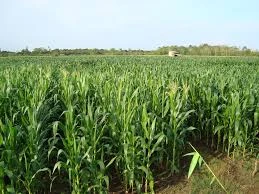
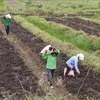
A farm using modern farming in Tien Giang. (Source: tiengiang.gov.vn)
HCM City (VNA) – Vietnam's agriculture sector must reform its production and business structure to attract more foreign direct investment (FDI) and develop further when the Trans-Pacific Partnership (TPP) deal comes into effect.
The period from 1990 to 2000 was considered the most successful for attracting FDI in the domestic agriculture sector as it accounted for 15 percent of the total national FDI volume at that moment, Vu Thi Minh, lecturer of the National Economic University said at a business forum on investment in agriculture after the TPP comes into effect, held in HCM City on November 21.
However, the FDI to the sector dropped from 2001 and reached 3.72 billion USD, accounting for only 2.17 percent of the total national FDI volume. The sector's FDI volume occupied 1.6 percent of the total national FDI in the first 10 months of this year.
According to the Vietnam Association of Foreign Invested Enterprises, by 2013, 50 countries and territories and invested in Vietnam's agricultural, forest and fishery sector, including one third from Taiwan and Hong Kong, and a small volume from some developed countries.
Minh said the agricultural sector is more at risk than any other production and service sectors. Foreign investors do not want to invest in sectors such as the farming sector, which are fraught with risks.
Therefore, foreign investors would think twice about the investment incentives offered by countries seeking FDI in the agricultural sector, she said. The country would receive more FDI in its farming sector if its incentives were more attractive.
In addition, a small production scale, risks of diseases and old infrastructure in the rural areas of Vietnam are factors that prevent foreigners from investing, she said.
At the forum, Vu Van Tam, Deputy Minister of Agriculture and Rural Development, said the domestic agricultural sector needs to restructure production and business, including solutions on attracting investment from home and abroad.
The investment activities would create breakthroughs in restructuring the sector and guide Vietnam's small- and medium-sized farming enterprises during the integration process, he said.
Truong Dinh Tuyen, former Minister of Industry and Trade, said that with integration into the TPP, the domestic agricultural sector, especially the livestock industry, would face numerous challenges.
Vietnam's TPP negotiators have protected the livestock industry, but the protection would be limited for several years and that would be enough for the industry to restructure itself to develop further and improve its competitive ability, he said. In the long-term, the protection would not create any pressure on the industry to reform.
The greatest challenge for the domestic agricultural sector is to ensure food hygiene and safety, Tuyen said. If enterprises cannot ensure that, countries would not ask for Vietnamese farming products even though tax rates were reduced to zero.
The local farming sector should convert to multi-functional farming sectors, he said. So the sector must restructure itself strongly with the latest technologies, and in producing, preserving, and processing, apart from distributing and selling farming products.
The sector should develop large production regions, nurture close cooperation in processes, ensure reasonable distribution and close connectivity between quality, price, supply and demand, he said.
Meanwhile, the state should play a role in organising and planning development, and developing incentive systems for agricultural and veterinary sectors, he said.
Minh said the Government should pay more attention to building strategy on attracting FDI and provide information on the agricultural, forestry and fishery sectors to foreign investors.
Also at the forum, Tran Hai Yen, economic expert from Bao Viet Securities Company, said there was a wave of investments in the banking sector from 2008 to 2010, while now there is a surge of investments in the agricultural sector.-VNA