FDI helps boost industrial infrastructure

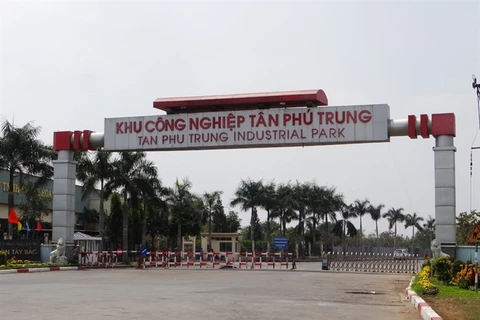
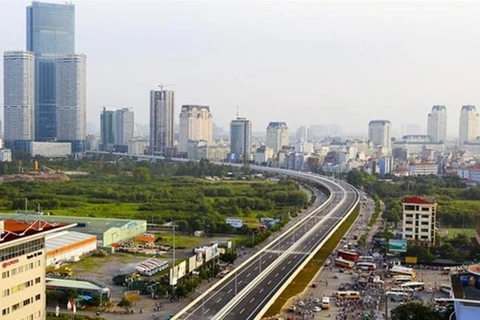
Foreign direct investment (FDI) capital poured into industrial zones (IZs) has rapidly increased recently, bringing large profits for infrastructure development companies.
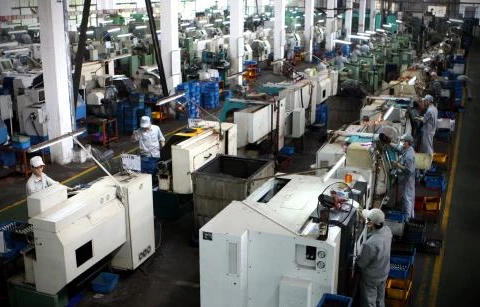
FDI helps boost industrial infrastructure ảnh 1The Cat Thai Manufacturing Trading Co.Ltd specializes in producing components and parts for foreign enterprises in Vietnam ( Photo: VNA)

Hanoi (VNA) – Foreign direct investment (FDI) capital poured into industrial zones (IZs) has rapidly increased recently, bringing large profits for infrastructure development companies.

According to the Management Board of HCM City Export Processing and Industrial Zone Authority (Hepza), from the beginning of this year, export processing and IZs have received a large volume of FDI capital. Of the total 128 million USD poured into export processing and IZs in the first two months, FDIs accounted for 80 million USD and the remainder came from domestic companies.

Hepza also reported that the huge influx of FDI capital allowed the ratio of filled land in export processing and IZs in the city to reach 80 percent.

The neighboring Binh Duong and Dong Nai provinces have also seen an increase in FDI. In the first three months of this year, Binh Duong Province granted licences to 28 FDI projects, with a total investment capital of over 680 million USD. After registering to add more capital, investors have actively expanded plans to build new factories in the Song Than 1, Song Than 2 and Nam Tan Uyen IZs.

By March 18, Dong Nai province’s registered investment capital and newly added capital for FDI projects reached some 488 million USD, or a year-on-year increase of 311 percent. Foreign investors have not only focused on developing industrial parks in Bien Hoa City but have also expanded land lease agreements and have invested in many factories and warehouses in new IZs such as Long Duc, Long Thanh and Bau Xeo.

Local experts attributed the increase in investment in IZs since October last year to the official conclusion of trade agreements such as the Trans-Pacific Partnership (TPP). Many investors from England, Japan, the Republic of Korea and Thailand have started investing in IZs.

In HCM City alone, investors have an ambitious plan to develop a Silicon Valley-style high-tech zone in District 9, with total investment capital of 1.5 billion USD.

By the end of 2016, the business results of five listed infrastructure development companies all showed a profit.

Accordingly, Long Hau JSC in the southern Long An province reported its revenue rose 10.67 billion VND (476,339 USD). Of this figure, revenue from land leases accounted for 6.69 billion VND. The company’s after-tax profits reached 20.33 billion VND, or a 20-fold increase over the same period last year.

Sonadezi Long Thanh in Dong Nai province reported its total revenue of 46.23 billion USD in the first half of this year. Of this figure, revenue from land leases in IZs accounted for 18.54 billion USD.

In the northern provinces, Vinh Phuc Infrastructure Development Company reported revenue of 33 billion USD in the first quarter of this year, or a 3.7-fold increase over the same timeframe last year.

The Thoi Bao Ngan Hang (Banking Times) reported that all businesses are now involved in infrastructure development in IZs, with four businesses expecting strong growth in profits this year. They are Tan Tao, Long Hau, Kinh Bac and Vinh Phuc.

With these high profit targets for this year, industry insiders have predicted that fierce competition between these companies will prompt them to offer new incentives to attract FDI enterprises.

Instead of concentrating on land leases only, as in previous years, they will take advantage of spending their own money to build warehouses, offices, retail space, serviced apartments and high-rise apartments.

Hepza reports that this tendency will see major growth in the next 1 or 2 years as the TPP officially comes into effect.-VNA
VNA

See more

Da Nang People’s Committee Chairman Nguyen Manh Hung (second from left) presents investment policy approval decisions and investment registration certificates for three infrastructure projects in FTZ Zones 2, 3 and 4. (Photo: VNA)

Da Nang promotes investment links for pioneering Free Trade Zone

The conference also highlighted the role of digital technologies in building next-generation FTZs. Proposed solutions included the adoption of artificial intelligence (AI), the Internet of Things (IoT), big data, cloud computing and digital customs systems to improve operational efficiency, streamline logistics, accelerate customs procedures and enhance transparency for investors.

Import and export activities at the Mong Cai border gate. (File photo: VNA)

Vietnam–China crossings see spike in ASEAN fresh produce

Since the start of the summer harvest season, China's two major border gates with Vietnam, Youyi Guan in Pingxiang and Beilun 2 Bridge in Dongxing, have entered their peak period for handling imports of fresh agricultural and seafood products from member states of the Association of Southeast Asian Nations (ASEAN).

Rohit Khurana, an automotive expert at Car Blog India. (Photo: VNA)

Green SM poised to make mark in Indian market

Green SM's strengths, including a dedicated fleet, professional drivers and premium electric limousine models, can help differentiate the company and attract customers seeking higher-quality services in India.

The opening ceremony of the Hue Festival Trade Fair 2026. (Photo: VNA)

Hue Festival Trade Fair 2026 opens with 240 booths

For Hue, the fair is also an opportunity to introduce the image of a dynamic and business-friendly locality while promoting local specialties, One Commune One Product (OCOP) items and outstanding rural industrial products, helping stimulate trade, services, tourism and investment attraction.

Deputy Minister of Finance Cao Anh Tuan at the meeting with the delegation of the RoK Embassy led by Ambassador Choi Young-sam on June 12 (Photo: mof.gov.vn)

Ambassador pledges more contributions to Vietnam – RoK economic links

Deputy Minister of Finance Cao Anh Tuan congratulated Ambassador Choi Young-sam on his successful tenure in Vietnam and praised his contributions to the substantive and productive development of the Vietnam – RoK Comprehensive Strategic Partnership across various fields, including economic and financial cooperation.

The working session between Deputy Minister of Industry and Trade Nguyen Hoang Long and IKC Representative Director and Executive Vice President Atsuhiko Hirano in Hanoi on June 12 (Photo: Vietnamese Ministry of Industry and Trade)

Vietnam, Japan cultivate energy collaboration

Deputy Minister of Industry and Trade Nguyen Hoang Long urged Idemitsu to leverage its role as a strategic shareholder and team up with other partners to respond swiftly to geopolitical shifts, ensuring a stable, sustainable crude oil flow to the refinery.

Leaders of Bamboo Airways and Rakso Holdings Co.Ltd sign an MoU to promote cooperation in the aviation, tourism and service sectors at the forum in Seoul on June 12. (Photo: VNA)

FLC Group seeks to expand investment cooperation in RoK

Ambassador Vu Ho suggested enhancing Vietnam – RoK ties in tourism, aviation and flexible investment models to develop flagship projects meeting high standards, helping herald a new cooperation phase between the two countries.

Delegates press the buttons to launch the Meiko Yen Quang semiconductor manufacturing plant project. (Photo: VNA)

Work starts on 500-million-USD Meiko semiconductor plant in Phu Tho province

The project has an initial investment of more than 500 million USD and will focus on artificial intelligence and space technology-related applications. Once fully operational, it is expected to generate annual revenue of around 530 million USD per year and create approximately 2,000 jobs for local workers.

Coffee, often referred to as the “brown gem” of Lam Dong, is one of the province’s signature agricultural products. (Photo: VNA)

Lam Dong reshapes coffee industry to elevate export value

Lam Dong plans to strengthen branding and trade promotion efforts, develop coffee-growing regions linked to geographical indications, expand digital traceability systems and make greater use of free trade agreements (FTAs) to diversify export markets.