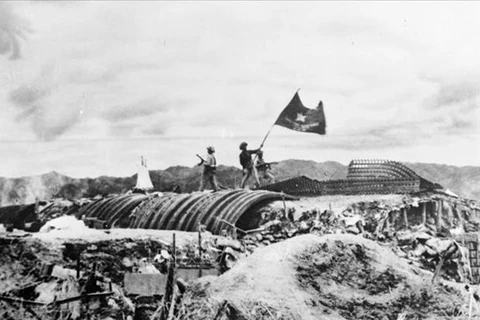
Dien Bien (VNA) – The northern province of Dien Bien is well-known not only for the Dien Bien Phu Victory which "resounded across the five continents and shook the globe" 70 years ago but also for many typical dishes of ethnic groups living in the province.
The dishes are usually meticulously made, using spices from the Northwest mountains and forests.
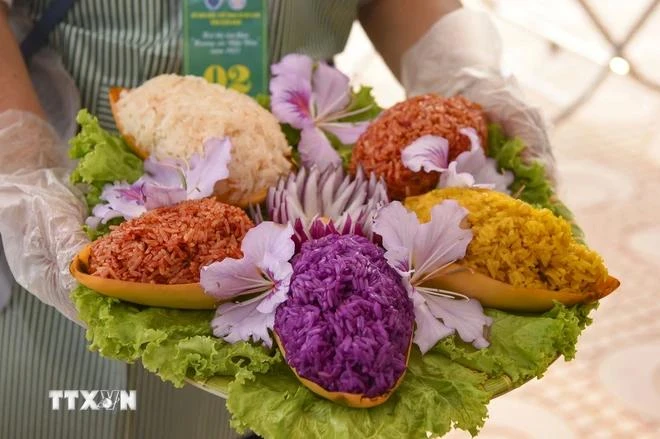
In the list of top 100 unique dishes across Vietnam selected by the Vietnam Record Organisation (Vietkings), five are from Dien Bien province. They include boiled bitter bamboo shoots, upland sticky rice, smoked buffalo meat, grilled chicken with “mac khen”, and “Pa pinh top” (grilled stream fish).
1. Bitter bamboo shoots

Bitter bamboo shoots are a specialty product that can only be found in mountainous areas like Dien Bien. They can be used to make many different dishes. People from the Thai ethnic group in Dien Bien usually prefer having boiled bamboo shoots with “cham cheo”, a sauce with pepper, garlic, chilli, mac khen, and herbs.
In addition, bitter bamboo shoots can be grilled, stir-fried with pork, or beef or stewed with pig bones. The combination of tastes, bitter and sweet of the bamboo shoots, the spicy taste of garlic, chilli, mac khen, and the aromatic taste of herbs make up the unique taste of Dien Bien dishes.
2. Sticky rice
Sticky rice is grown a lot in Northwest provinces of Vietnam, but the rice grown in Dien Bien is said to be the most delicious. It is sweet, fragrant, and soft. The steamed sticky rice served with grilled fish, grilled pork, and sesame salt brings diners an interesting culinary experience.
Sticky rice is meticulously prepared. The raw sticky rice is soaked in water for hours before cooking. It is steamed two times. In the first steaming, after the sticky rice has a fragrant aroma and is cooked, it is poured into flat winnowing basket. People use chopsticks to spread it out evenly. Leave it for a while then pour it into the pot and continue steaming. In the cool weather of the Northwestern region, it is difficult to forget the taste of warm steamed sticky rice.
3. Kitchen-smoked buffalo meat

Smoked meat is a favourite specialty of Dien Bien ethnic groups, whether buffalo, pork or beef.
The main factor in ensuring tasty kitchen-smoked buffalo meat is that the meat comes from free-range buffaloes on hilly land. Their meat is soft and yields a fragrant meat when smoked.
The meat is soaked with mac khen, salt, lemongrass leaves, chilli, sugar and garlic for hours before using bamboo skewers to hang them over the kitchen on a wood fire for about 15 hours.
When perfectly done, it has a brown-red colour with an aromatic flavour carrying the characteristics of the region’s mountains and forests.
4. Grilled chicken with “mac khen” (Zanthoxylum rhetsa)

“Mac khen” (Zanthoxylum rhetsa) is a spice that is quite close to pepper with a mild spicy taste and intense aroma.
People from the Thai ethnic group in the Northwestern region like grilled chicken with “mac khen” because of the special taste of the spice.
Moreover, spices including “mac khen”, lemon, ginger, lemongrass, chili, and salt are mixed, pounded and stuffed into the chicken's belly. The remaining spices are rubbed into the chicken skin to make the dish more flavourful.
The chicken is grilled over charcoal with moderate heat. While grilling, the chicken fat will melt and the skin will turn golden. When the grilling is cooked, apply the “mac khen” seasoning sauce on the chicken. When exposed to heat, “mac Khen” emits a sweet fragrance.
Diners can eat the grilled chicken with fried sticky rice, bamboo-tube rice or hot rice, plus a little lettuce, herbs and dipping sauce.
5. Grilled fish

"Pa pinh top" is the Thai name for grilled fish. The fish used to make the dish should be a live tilapia or carp, weighing from 1,5-2kg.
The special point when making the dish is to cut the fish open at the back, not the stomach so that it can be easily folded in half for grilling. The knife to cut the fish must also be very sharp, so the cut looks neat.
Also an indispensable spice in making “pa pinh top” is “mac khen” (Zanthoxylum rhetsa), which can help to quell the fishy taste.
Some other herbs such as scallions, basil, lemongrass, ginger, chili, and dill are minced, mixed, and rubbed on the fish, and put into the fish's belly.
The fish is marinated for about 20 minutes and then grilled on a charcoal stove. The coal fire must be kept even and small. If the fire is high, the fish will burn. If the fire is low, it is hard to cook the fish evenly and parts will retain a fishy smell. It takes about 30-40 minutes to grill the fish and it must be turned over often so that the fish grills evenly and turns golden brown on both sides./.