Foreign banks assure continued presence in Vietnam

Some foreign banks have assured that they will retain their presence in Vietnam after withdrawing capital from some Vietnamese partners recently, noting that the country is still an attractive market.
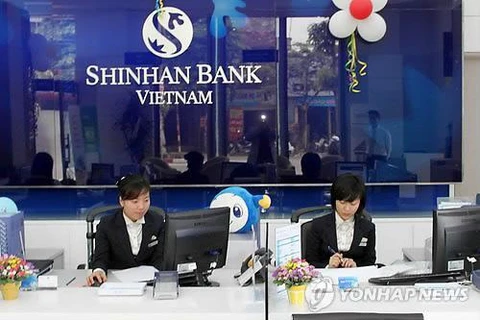
Foreign banks assure continued presence in Vietnam ảnh 1Some foreign banks have assured that they will retain their presence in Vietnam after withdrawing capital from some Vietnamese partners recently (Photo: VNA)

Hanoi (VNA) – Some foreign bankshave assured that they will retain their presence in Vietnam after withdrawingcapital from some Vietnamese partners recently, noting that the country isstill an attractive market.

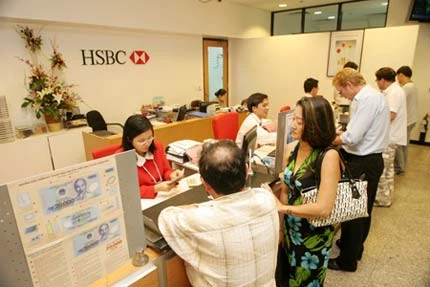
Local media recently reported on the capitalwithdrawal of BNP Paribas of France, HSBC of Hong Kong (China) and Commonwealthof Australia from their Vietnamese partners.

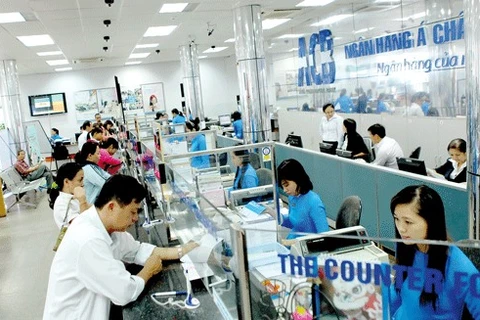
Last January, Standard Chartered of the US soldall of its 8.75-percent stake in the joint venture with the Asia CommercialJoint Stock Bank (ACB) of Vietnam. Meanwhile, Australian-owned ANZ Vietnam alsosold all of its retail banking segment in the Vietnamese market to ShinhanVietnam in December 2017.

The withdrawal of the foreign investors has causedconcern of a mass capital outflow from Vietnam.

However, a representative of ANZ Vietnamconfirmed they will not exit the country, adding that the transfer of theretail segment to Shinhan is part of ANZ’s strategy to increase its capitalefficiency and focus resources on business and financial institution clients,which are the biggest business segments of ANZ in Asia.

The representative said with its long-standingsuccessful operations in Vietnam, the bank pledges to continue its presence inthis market to support businesses and financial institutions.

Commenting on some foreign banks’ capitalwithdrawal, economy-finance expert Bui Quang Tin said investors usually havetheir own plans or strategies after joining a partnership. 

“Additionally, business is not always smooth, sowithdrawing or investing capital is just a business strategy of foreigninvestors,” he added.

According to finance-banking expert Nguyen TriHieu, many Asian investors have entered Vietnam over the past years. However,those from Europe are rather reluctant and in fact, some big European bankshave pulled capital out of Vietnam.

He attributed the situation mainly to Asianinvestors’ understanding of the market and business culture in Vietnam. Theyhave also possibly had traditional clients here, and investing in the countryis a way to support the clients from their homelands.

Some foreign banks also highly value theVietnamese market, especially its retail banking segment.

Sabbir Ahmed, head of the Retail Banking andWealth Management at HSBC Vietnam, said retail is still an important businesssegment of HSBC in Vietnam.

The ANZ representative also expressed optimismabout business opportunities in the Southeast Asian nation, citing a stablegovernment, a favourable population, increasing trade integration and foreigndirect investment and the strong growth of the middle class.

Bui Quang Tin said foreign investors are likelyto invest more in local banks like Vietcombank, VietinBank and BIDV when thesebanks expand foreign ownership. Agribank’s coming equitisation has alsoattracted great interest from foreign investors.

Private commercial banks are predicted to earngood profits this year and the following years. While the bad debt rate isexpected to decline, bank stock value has risen significantly recently. Thosefactors will entice investors in the time to come, he added.

Echoing this view, Nguyen Tri Hieu said thanksto the recent signing of the Comprehensive and Progressive Agreement forTrans-Pacific Partnership, Vietnamese banks will be attractive destinations inthe future.-VNA
VNA

See more

VinFast will provide each university with two electric cars, along with practical equipment and training materials on electric vehicle repair techniques that meet official standards (Photo: VNA)

VinFast collaborates with 30 colleges to standardise training for EV engineers

VinFast will work with leading institutions offering automotive engineering programmes, including the University of Transport and Communications, the Ho Chi Minh City University of Technology, the Hanoi University of Industry and the Hung Yen University of Technology and Education, to implement hands-on training aligned with industry needs.

Illustrative image (Photo: VNA)

E-commerce at turning point as new law sets higher standards in 2026

To propel the digital economy forward, experts said 2026 should be the year of foundational reforms, including standardised identification for sellers and marketers, real-time transparency in product details, enhanced logistics and financial infrastructure, and robust safeguards for authentic value creation.

Illustrative photo (Photo: VNA)

Billion-dollar capital seeks new opportunities in data centre real estate

Ho Chi Minh City is witnessing a strong investment wave in the data centre sector. The city has set up a dedicated task force to support investment procedures for a Hyperscale Data Centre serving AI development, with total investment estimated at around 2 billion USD. The investor consortium includes UAE-based technology company G42, Microsoft, FPT Corporation, VinaCapital, and Viet Thai Group.

Party General Secretary To Lam (C) and Prime Minister Pham Minh Chinh (third from left) and other delegates break ground Vietnam’s first semiconductor chip manufacturing plant (Photo: VNA)

Vietnam launches first semiconductor chip manufacturing plant

The plant, developed by Viettel Group in line with the mission assigned by the Ministry of Defence and based on the government’s resolution, is located on a 27-hectare site within the Hoa Lac High-Tech Park and is expected to serve national industries such as aerospace, telecommunications, Internet of Things (IoT), automotive manufacturing, medical equipment, and automation.

Vietnam’s cashew exports in 2025 are estimated at 766,600 tonnes, generating more than 5.2 billion USD (Photo: VNA)

Cashew sector faces economic efficiency challenge despite high export revenue

Vietnam’s cashew industry has faced a pressing challenge despite an export revenue of over 5 billion USD for the first time in 2025, as this impressive figure has yet to translate into commensurate economic efficiency for exporting enterprises, especially when the industry seeks to ensure that its position as the world’s leading cashew exporter is matched by sustainable profitability.

Deputy Director General of Vietnam National Authority of Tourism Nguyen Thi Hoa Mai (centre) chairs an online meeting on the organisation of ITE HCMC 2026. (Photo: TITC)

International Travel Expo HCM City 2026 set for August

The expo will feature key activities including on-site and online exhibition booths; a digital business-to-business (B2B) buyer–seller matching programme; Vietnam Night; the opening ceremony; programmes for international buyers and media representatives; forums and thematic seminars introducing key source markets and emerging tourism trends; and a tourism consumer festival.

An illustrative image showing a Crystal Bay Airlines plane. (Photo: dantri.com.vn)

New Vietnamese airline takes off with charter capital of 11.4 million USD

According to the company's registration documents, Crystal Bay Airlines Joint Stock Company was established on November 6, 2025, with a charter capital of 300 billion VND (11.4 million USD). The firm operates in 51 business sectors, with its main focus being air passenger transportation.

Garment production for export at the Thai Nguyen Garment Company. (Photo: VNA)

Spring Fair 2026 strengthens Vietnam – India cooperation

The seminar aimed to help the Indian business community gain a clearer understanding of the scale, role and potential of the Spring Fair 2026 one of Vietnam’s major trade promotion events hosted by the Government and the Ministry of Industry and Trade.

VinFast Evo battery-swap electric motorbike (Photo: VNA)

VinFast rolls out four new electric motorbike models

The automaker introduced three battery-swappable models, Evo, Feliz II and Viper, designed for different customer segments. It also launched the Amio, a compact pedal-assisted model that does not require a driving licence, aimed primarily at students and short-distance urban commuters.