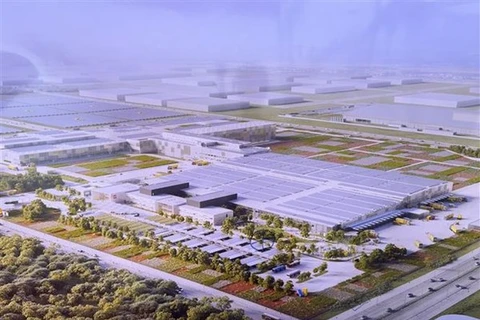
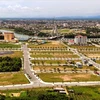
A model of the LEGO factory in Bình Dương Province. The factory would have solar panels on its roof and a nearby solar farm (Photo:VNA)
 Hanoi (VNS/VNA) - As Vietnam has made a strong commitment to carbon emission neutrality by mid-century, foreign direct investments in the country have begun to go green to join the efforts.
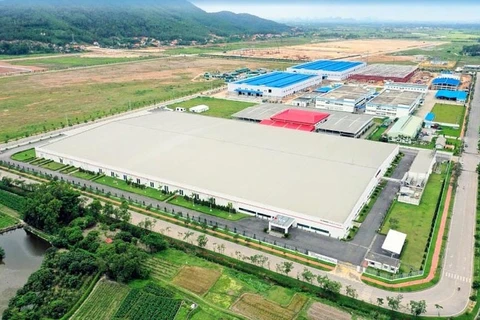
One such investment was the new LEGO factory in southern Binh Duong province, which is currently under construction.
LEGO Group said it aims to bring the factory up to the LEED Gold standard, which covers all areas of sustainability including energy, water, and waste. The factory will be designed to accommodate electric vehicles and be geared toward energy-efficient equipment.
The factory will also feature solar panels on its roof and a solar farm in close proximity. Combined, these solar facilities will generate enough energy to meet the factory's full power needs.
LEGO Group also said it had been planting 50,000 trees in three years to compensate for the vegetation that would be removed during construction. The move was part of its effort to ensure the factory has a minimal impact on the environment.
"We are exploring many other initiatives that will make our new site a global lighthouse for sustainable operations," said Preben Elnef, Vice President and Programme Lead for LEGO Group in Vietnam.
DHL Express is another name in the vanguard of green transition in the country.
The world's leading express service provider has inaugurated its latest service centre in Hanoi, which is equipped with a wide range of technologies to minimise carbon footprint and maximise operational efficiencies.
These include green air-conditioning systems utilising variable refrigerant volume technology, helicopter fans, and electric vehicles.
The express service heavyweight said it had repeatedly redefined logistics, from pioneering the first green logistics product to becoming the first logistics company to commit to a zero-emissions target.
Pandora, the world's largest jewellery brand, followed suit with a memorandum of understanding to build a new crafting facility in Binh Duong province. The facility will be constructed in line with the LEED Gold standard and be powered fully by green energy.
EuroCham Chairman Alain Cany said the growing interest in sustainable development among European investors would open up more investments to Vietnam in the short term, given its commitment to net-zero targets by 2050.
He revealed that EuroCham was implementing an investment promotion programme to bring 300 European green-growth-centered firms to Vietnam to seek business opportunities. Their feedback is positive so far.
The chairman also said regarding green transition, Vietnam could get ahead of other regional countries with its policies highly in favour of sustainable development.
The recent report prepared by Vietnam's Association of Foreign Invested Enterprises shows that 53.5% of foreign-invested enterprises in Vietnam have embraced green growth.
However, their green transition is not broad-based but limited to discrete activities such as building a standalone waste treatment plant or an incinerator furnace for waste disposal.
The report calls for more favourable policies to attract FDI flows into green growth, digital transition, and supply chain integration.
It also urges Vietnam to legislate the Global Minimum Corporate Tax, step up administrative reform, and improve infrastructure facilities to redouble the effort./.
One such investment was the new LEGO factory in southern Binh Duong province, which is currently under construction.
LEGO Group said it aims to bring the factory up to the LEED Gold standard, which covers all areas of sustainability including energy, water, and waste. The factory will be designed to accommodate electric vehicles and be geared toward energy-efficient equipment.
The factory will also feature solar panels on its roof and a solar farm in close proximity. Combined, these solar facilities will generate enough energy to meet the factory's full power needs.
LEGO Group also said it had been planting 50,000 trees in three years to compensate for the vegetation that would be removed during construction. The move was part of its effort to ensure the factory has a minimal impact on the environment.
"We are exploring many other initiatives that will make our new site a global lighthouse for sustainable operations," said Preben Elnef, Vice President and Programme Lead for LEGO Group in Vietnam.
DHL Express is another name in the vanguard of green transition in the country.
The world's leading express service provider has inaugurated its latest service centre in Hanoi, which is equipped with a wide range of technologies to minimise carbon footprint and maximise operational efficiencies.
These include green air-conditioning systems utilising variable refrigerant volume technology, helicopter fans, and electric vehicles.
The express service heavyweight said it had repeatedly redefined logistics, from pioneering the first green logistics product to becoming the first logistics company to commit to a zero-emissions target.
Pandora, the world's largest jewellery brand, followed suit with a memorandum of understanding to build a new crafting facility in Binh Duong province. The facility will be constructed in line with the LEED Gold standard and be powered fully by green energy.
EuroCham Chairman Alain Cany said the growing interest in sustainable development among European investors would open up more investments to Vietnam in the short term, given its commitment to net-zero targets by 2050.
He revealed that EuroCham was implementing an investment promotion programme to bring 300 European green-growth-centered firms to Vietnam to seek business opportunities. Their feedback is positive so far.
The chairman also said regarding green transition, Vietnam could get ahead of other regional countries with its policies highly in favour of sustainable development.
The recent report prepared by Vietnam's Association of Foreign Invested Enterprises shows that 53.5% of foreign-invested enterprises in Vietnam have embraced green growth.
However, their green transition is not broad-based but limited to discrete activities such as building a standalone waste treatment plant or an incinerator furnace for waste disposal.
The report calls for more favourable policies to attract FDI flows into green growth, digital transition, and supply chain integration.
It also urges Vietnam to legislate the Global Minimum Corporate Tax, step up administrative reform, and improve infrastructure facilities to redouble the effort./.
VNA