Silver plating requires high experiences and skills from craftsmen. (Photo: Phuong Linh/Vietnam Pictorial)
Hanoi (VNA) - Ha Thai lacquerware is now enjoying a new vitality and has established a firm position among the famous craft villages in Vietnam, with most of its products being exported.
The Ha Thai lacquerware craft village is located right next to Highway 1A. It was formerly named Cu Trang, but renamed as Dong Thai in 1870 and Ha Thai in the early years of the 20th century.
History has it that the trade started in Ha Thai in the 17th century. The village is not the cradle of the trade but famous for its contingent of craftsmen.
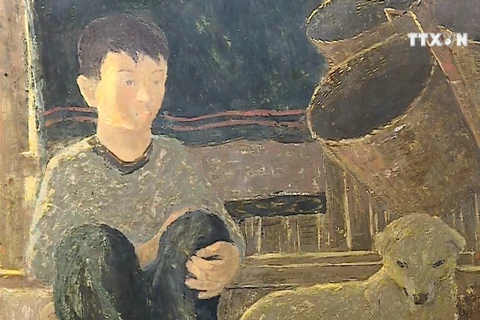
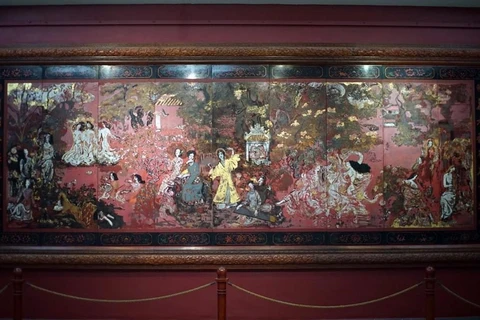
In the first part of the 1930’s, Vietnam’s first painters studying at the Indochina Fine Arts College applied new colour materials like egg and snail shell and bamboo, and especially the polishing technique, to the art, thus creating really valuable artworks.
 Polishing, a finishing touch for lacquerware products. (Photo: Phuong Linh/Vietnam Pictorial)
 Since 1955, the Ha Thai lacquerware craft village has experienced various ups and downs, but they in general have created a sustainable development. Since the start of the market mechanism, the village has seen another development, mostly in the household scale. Ha Thai village is home to 800 households, 90 percent of them engage in the job with about 1,600 workhands and thousands of satellite labourers from nearby villages.
Ha Thai was recognized by the People’s Committee of the former Ha Tay province as a craft village in 2001. Each year, the village turns out millions of products. It has affirmed its trademark thanks to not only its products’ prestige, quality and aesthetic values but also the skill and creativeness of the craftsmen.
The stability of the craft village, together with the preservation of the material and spiritual cultural values of the products, has helped Ha Thai become one of the two craft villages in the country selected by the Japan International Cooperation Agency (JICA) as strategic points for sustainable craft village development to 2010.
Besides traditional products, Ha Thai craftsmen have also created thousands of new ones which attract and meet the requirement of customers inside and outside the country, such as bowls, plates, vases, and paintings. The main raw materials used for Ha Thai lacquerware products are wood, bamboo and rattan, and most recently composite and chinaware. Besides inheriting the traditional experiences passed down by their forefathers, current Ha Thai craftsmen are developing new materials and colours as well as applying new techniques for their products.
 Some of Ha Thai lacquerware products. (Source: Phuong Linh/Vietnam Pictorial)
  Some of Ha Thai lacquerware products. (Source: Phuong Linh/Vietnam Pictorial)
 Currently, Ha Thai lacquerware products are meeting requirements of customers not only inside but also outside the country. For many years, Ha Thai has been a prestigious address among foreign customers. Its products have found their ways to many countries in the world such as the UK, France, Russia, the US, Spain, Australia, Italy, Japan, the Republic of Korea, etc. Annual revenue of each household averages about 150 million VND, especially that of major enterprises like My Thai and Thanh Son amounts to billions of VND.
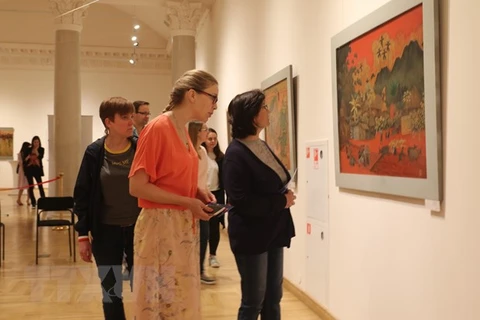
Along with the tradition of a craft village more than 200 years old, Ha Thai is now enjoying a new vitality and has established a firm foothold among the famous craft villages in Vietnam, with most of its products being for export to many countries in the world. Ha Thai lacquerware products have been put on show at many handicraft and fine art exhibitions and fairs inside and outside the country, and won admiration from visitors./.