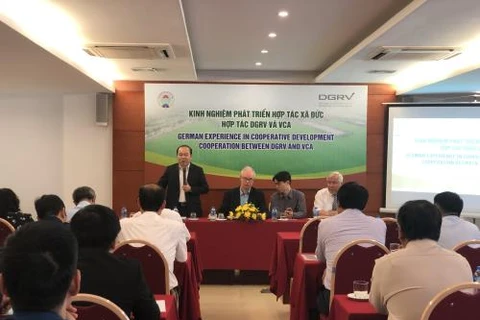
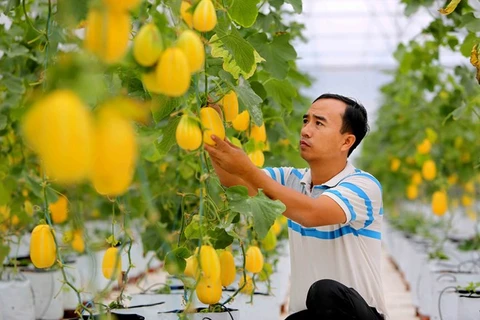
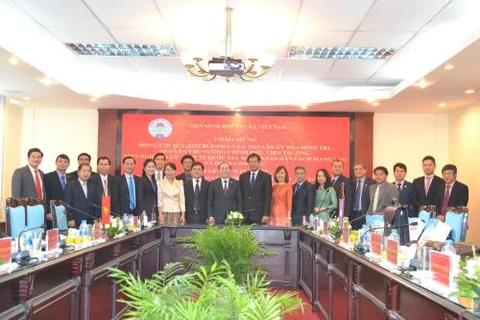
The second ICA-AP Cooperative Registrars' forum is introduced at a press conference on April 11 (Source: VNA)
 HCM City (VNA) – The second International Cooperative Alliance-Asia Pacific (ICA-AP) Cooperative Registrars’ forum will take place in Ho Chi Minh City from April 16-19, identifying legal frameworks and policies that affect the sustainable development of cooperatives.
Themed “Creating an Enabling Legal Framework and Policies to Promote the Sustainable Development of Co-operatives in the 21st Century,” the event is expected to gather delegates from the Vietnamese Government, the ICA-AP, heads of cooperative alliances in 63 cities and provinces, and 120 international representatives.
President of the Vietnam Cooperative Alliance Nguyen Ngoc Bao said on April 11 that the forum will deliberate on development trends and their impacts on cooperatives in the 21st century, as well as exchange experience in the creation of an enabling environment for the cooperative eco-system.
The event will also bolster collaboration between the Government and the cooperative movement in settling current socio-economic issues, he added.
Meanwhile, Director of the Institute of Vietnam Organic Agricultural Economics Le Thanh said that the forum creates opportunities for regional countries and international organisations to gain a deeper insight into the Vietnamese cooperative economy, and for domestic cooperatives to introduce their products and gain access to the Asia-Pacific market.
On the occasion, a trade promotion fair will be organised in Ho Chi Minh City, with 350 booths displaying agro-forestry-fishery products, industrial products, agricultural machinery and equipment, and plant protection products, among others. Exhibitors include domestic cooperatives and businesses, as well as those from Japan, Taiwan, Thailand, Malaysia, and the Philippines.
Vietnam is currently home to more than 22,400 cooperatives, with over 7 million members. Around 13,000 cooperatives operate in agriculture. –VNA
Themed “Creating an Enabling Legal Framework and Policies to Promote the Sustainable Development of Co-operatives in the 21st Century,” the event is expected to gather delegates from the Vietnamese Government, the ICA-AP, heads of cooperative alliances in 63 cities and provinces, and 120 international representatives.
President of the Vietnam Cooperative Alliance Nguyen Ngoc Bao said on April 11 that the forum will deliberate on development trends and their impacts on cooperatives in the 21st century, as well as exchange experience in the creation of an enabling environment for the cooperative eco-system.
The event will also bolster collaboration between the Government and the cooperative movement in settling current socio-economic issues, he added.
Meanwhile, Director of the Institute of Vietnam Organic Agricultural Economics Le Thanh said that the forum creates opportunities for regional countries and international organisations to gain a deeper insight into the Vietnamese cooperative economy, and for domestic cooperatives to introduce their products and gain access to the Asia-Pacific market.
On the occasion, a trade promotion fair will be organised in Ho Chi Minh City, with 350 booths displaying agro-forestry-fishery products, industrial products, agricultural machinery and equipment, and plant protection products, among others. Exhibitors include domestic cooperatives and businesses, as well as those from Japan, Taiwan, Thailand, Malaysia, and the Philippines.
Vietnam is currently home to more than 22,400 cooperatives, with over 7 million members. Around 13,000 cooperatives operate in agriculture. –VNA
VNA