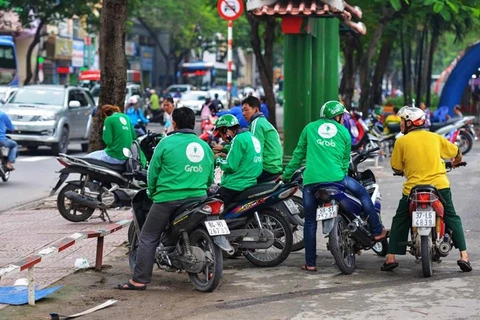
Grab started collecting a share of 23.6 percent of GrabBike and GrabExpress fares from January 1, an increase of 3.6 percentage points (Photo: baomoi.vn)
 Hanoi (VNA) - Grab has explained why the company decided to increase the percentage it took from the fares of GrabBike and GrabExpress services since the beginning of this year.
The company started collecting a share of 23.6 percent of GrabBike and GrabExpress fares from January 1, an increase of 3.6 percentage points, which was opposed by drivers.
Nguyen Trung Thanh, manager of GrabBike and GrabExpress, said the increase was not a revenue-sharing policy of Grab to raise the fee the company collected from its partner drivers. Instead, the increased share was the tax amount the company declared and contributed to the State budget on behalf of the drivers following guidance from the tax authority.
Accordingly, Grab Vietnam helped collect three percent of value-added tax and 1.5 percent of individual income tax on its partner drivers’ share of 80 percent of the total fare, which was equivalent to 3.6 percent of the total revenue.
The tax collection was only applicable to drivers who earned a revenue of 100 million VND (4,380 USD) a year, Thanh said.
In 2016-17, Grab Vietnam used its budget to pay taxes for drivers to support its partner motorbike drivers.
Grab entered Vietnam in February 2014 with a legal capital of 20 billion VND, but posted an aggregated loss of more than 938 billion VND.
Its total revenue in 2014-16 was 1.755 trillion VND, and the company paid more than 142 billion VND in taxes to the State budget during the period.
In August last year, Grab increased the percentage it took from fares from 15 percent to 20 percent.
With the increase in the share Grab collected, together with reductions in support policies of the company and harsh competition as the number of drivers grew, the income of Grab drivers has significantly decreased.-VNA
The company started collecting a share of 23.6 percent of GrabBike and GrabExpress fares from January 1, an increase of 3.6 percentage points, which was opposed by drivers.
Nguyen Trung Thanh, manager of GrabBike and GrabExpress, said the increase was not a revenue-sharing policy of Grab to raise the fee the company collected from its partner drivers. Instead, the increased share was the tax amount the company declared and contributed to the State budget on behalf of the drivers following guidance from the tax authority.
Accordingly, Grab Vietnam helped collect three percent of value-added tax and 1.5 percent of individual income tax on its partner drivers’ share of 80 percent of the total fare, which was equivalent to 3.6 percent of the total revenue.
The tax collection was only applicable to drivers who earned a revenue of 100 million VND (4,380 USD) a year, Thanh said.
In 2016-17, Grab Vietnam used its budget to pay taxes for drivers to support its partner motorbike drivers.
Grab entered Vietnam in February 2014 with a legal capital of 20 billion VND, but posted an aggregated loss of more than 938 billion VND.
Its total revenue in 2014-16 was 1.755 trillion VND, and the company paid more than 142 billion VND in taxes to the State budget during the period.
In August last year, Grab increased the percentage it took from fares from 15 percent to 20 percent.
With the increase in the share Grab collected, together with reductions in support policies of the company and harsh competition as the number of drivers grew, the income of Grab drivers has significantly decreased.-VNA
VNA