Hanoi: Son Tay old fortress citadel boasts historical, architectural values

The Son Tay ancient fortress citadel, covering 16 ha in Son Tay township 40km from Hanoi’s centre, not only bears historic value, but also catches attention for its unique architecture. The site marked its 200 years of existence last year.
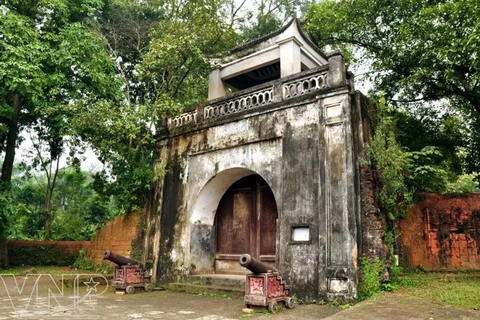
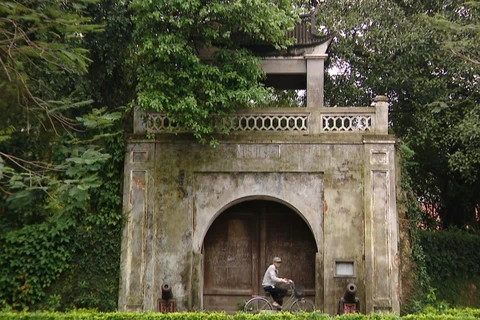
Hanoi: Son Tay old fortress citadel boasts historical, architectural values ảnh 1The gate of the Son Tay ancient fortress citadel (Photo: VNA)

Hanoi (VNA) – The Son Tay ancient fortress citadel, covering 16 ha in Son Tay township 40km from Hanoi’s centre, not only bears historic value, but also catches attention for its unique architecture. The site marked its 200 years of existence last year.

According to historical documents, Son Tay Citadel was built in 1822 during the reign of Minh Mang Emperor (1791-1841) under the Nguyen Dynasty. It was built entirely of laterite, a material that meets the requirements of a defensive building and was available in the locality.

Following the style of France's Vauban architecture, each side of the square citadel was about 400m long and 5m high. The citadel had four gates facing east, west, south and north, called the Front (Tien), the Back (Hau), the Right (Huu) and the Left (Ta). Each entrance had a guard tower.

Many great events related to the Nguyen’s fighting against French colonialism in Vietnamese history took place in the citadel, reflecting its critical significance in guarding the northern plains and midlands and backing the Northwest border.

After nearly 200 years and with much devastation, only a few relics are left, including an octagonal 18-meter-high flag tower, some stretches of the citadel walls, the citadel gates, guard towers, Kinh Thien's Palace platform, two cannons and some ruins at Vong Lau, the foundation of Kinh Thien palace and the wells.

Due to its important cultural, historical and unique construction techniques, the Governor General of Indochina granted it with relic statues in 1924. It was later recognised as a national historical relic by the Ministry of Culture and Information (now the Ministry of Culture, Sports and Tourism) in 1994.

Carrying out research on Son Tay Citadel for many years, President of the Vietnam Archaeological Association Tong Trung Tin said that the site represents a period when ramparts were built the most in Vietnam, given the context of colonisation taking place all over the world. Experiencing many ups and downs, Son Tay Citadel still retains the best vestiges, demonstrating the construction techniques of defensive military works in the North. Meanwhile, most of the other citadels have basically lost all of their traces.

Echoing the view on the site’s value, Nguyen Huy Khanh, former Vice Chairman of Son Tay town People's Committee, said the conservation of the citadel has received significant investment from the State and the support of the local people over the past time.

Currently, a pedestrian walking area has been formed around the fortress, the fourth of its kind in the capital city. The space attracts about 25,000-30,000 visitors at weekends after its launch in April 2022.

The old citadel today impresses visitors with its serenity and calm. Ancient trees give it shade all year round; lotus ponds, and green grass create a picturesque site.

Nguyen Thi Toan, a 70 years old resident in Son Tay town’s Phu Thinh ward, said that on weekends, the citadel is crowded with tourists. Locals’ income and living standards have been improved thanks to business activities from tourism, she added.

Secretary of the Son Tay Party Committee Tran Anh Tuan said the locality is implementing various measures to promote the heritage, including the compiling of a dossier for it to be recognised as a special national relic site./.
VNA

See more

Children perform Xoan folk singing at the cultural camp. (Photo: VNA)

Hung Kings festival opens with vibrant cultural, tourism activities in Phu Tho

Beyond its role as a sacred national commemoration, the event helps promote cultural values, strengthen national unity and enhance cultural exchanges. A notable feature is the flexible organisation in 18 commune and ward clusters, encouraging the localities' participation and enriching the festival’s content.

A corner of the Book Street in Hanoi (Photo: VNA)

Hanoi celebrates Reading Culture Day with book street activities

Organised by the Book Street’s management board in collaboration with publishers and distributors, the programme will brings together 14 publishing and distribution units across 15 booths, offering readers access to a rich and diverse selection of book titles spanning literature, children’s books, life skills, economics, history, science-technology and education, among others.

Vietnam’s Consul General in Osaka Nguyen Truong Son speaks at the 9th Vietnam cultural festival in Osaka on April 19, 2026. (Photo: VNA)

Vietnam cultural festival in Osaka draws tens of thousands of attendees

Saito Naoki, Mayor of Ikuno Ward – where the event took place, expressed his pleasure at the rapid growth of the Vietnamese community in the area. He praised such cultural festivals for helping Vietnamese residents maintain their traditions while fostering mutual understanding and closer ties with Japanese locals.

Urawadee Sriphiromya, Thai Ambassador to Vietnam (third from left); Camila Polo Florez, Colombodian Ambassador to Vietnam (C); and Saadi Salama, Ambassador of Palestine to Vietnam (fifth from left), experience indigenous coffee culture in a coffee garden in Dak Lak. (Photo: doanhnghiepkinhtexanh.vn)

World Coffee Heritage Forum: A dialogue connecting coffee culture, knowledge

The recognition of "The knowledge of coffee cultivation and processing in Dak Lak” as a National Intangible Cultural Heritage marks an important milestone. It affirms the value of indigenous knowledge, creative labour, and the harmonious connection between local livelihoods, culture and nature in the Central Highlands.

The artwork "Harvest Day" by Doan Thi Thu Huong. (Photo: cand.com.vn)

Vietnam to join Venice Art Biennale with first national showcase

As Vietnam makes its debut at the Biennale, the exhibition “Vietnam: Art in a Global Flow” does not seek to assert its position through scale or grand statements, but rather opens up a space for meaningful artistic dialogue - an invitation to listen to subtle voices, contemplate in stillness, and reflect on the capacity to nurture sustained creative energy in a dynamic and ever-evolving art world.

Viet Youth Readiness Hub debuts at the event (Photo: VNA)

Vietnamese Canadian youth hub launched to fight mother tongue erosion

The Viet Youth Readiness Hub is seen as a dedicated platform to connect, support, and empower Vietnamese-Canadian youth. It aims to emerge as a central force to host social events, advance heritage education, foster exchange and integration among young Vietnamese in Canada.

At the event “Vietnamese Language in the heart of Kyushu, Japan” (Photo: VNA)

Vietnamese in Japan revive mother tongue among young generations

While the number of Vietnamese-origin children in Japan is surging, opportunities to actually speak Vietnamese in daily life are vanishing fast. Many children can understand the language but default to Japanese in response, gradually relegating their mother tongue to a secondary role, sometimes even treating it as a “second foreign language” inside their own houses.

A tribute to Hung Kings in Ho Chi Minh City (Photo: VNA)

Hung Kings’ Commemoration Day 2026 to spread sacred values, foster national unity

Following the merger of Phu Tho, Vinh Phuc, and Hoa Binh provinces into the new Phu Tho province last year, the Hung Kings Temple Festival has taken on heightened significance. It now serves not only as a tribute to the ancestral homeland but also a unified cultural platform that extends sacred ancestral values to Vietnamese communities at home and abroad.

A traditional art performance at Bach Ma temple in Hanoi (Photo: VNA)

Traditional arts hold untapped economic power

Traditional arts embody deep aesthetic values, worldviews, and national identity, shaping the country’s distinctive “aesthetic identity” and foundational cultural tastes

A performance at the opening ceremony of the Hung Kings Temple Festival and the 2026 Ancestral Land Culture and Tourism Week on late April 17 (Photo: VNA)

Hung Kings Temple Festival, associated tourism week kick off

The annual festival serves as a major national cultural event, offering an opportunity for people across Vietnam and overseas Vietnamese communities to pay tribute to their ancestors, express gratitude, and strengthen the great national solidarity.