HCM City works to promote innovative start-ups

HCM City has created many programmes to support start-up activities, and has plans to expand its support to individuals and groups with potential, the Saigon Hi-tech Park Incubation Centre has said.
HCM City works to promote innovative start-ups ảnh 1

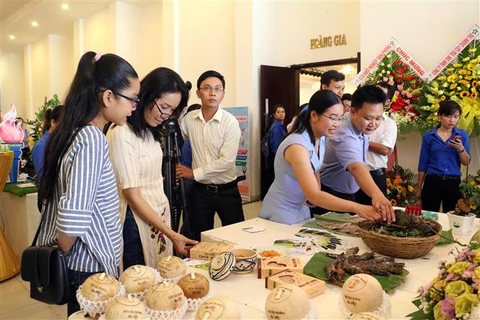
Young people discuss start-up programmes at the Sai Gon Innovation Hub (SI-HUB). (Photo:chinhphu.vn)


HCM City (VNA)
– Ho Chi Minh Cityhas created many programmes to support start-up activities, and has plans toexpand its support to individuals and groups with potential, the Saigon Hi-techPark Incubation Centre (SHTP-IC) has said.

Since 2014, the centre has incubated 38 projects,22 of which have been commercialised, according to SHTP-IC. Last year totalrevenue from incubated projects reached 41.4 billion VND (1.8 million USD), thecentre said.

The centre also helps businesses andprojects register for intellectual property rights, conduct market research, improvemodel products to take to trade fairs, and connect entrepreneurs withinvestors, capital plans and venture capital funds.

Le Thanh Nguyen, head of SHTP-IC, said thiswas a positive sign for a public incubation model for science-technology businesses.

Last year, the city’s Department of Scienceand Technology kicked off a pilot programme for the incubation ofscience-technology businesses at HCM City-based Nong Lam University, HCM CityUniversity of Technology and Saigon Hi-tech Park.

The department also provided consultationand added technological services for the businesses.

In addition, a number of universities inthe city have also established start-up support centres for their own students.

Other private incubation centres have alsobeen built such as Software Business Incubator (SBI) and FPT Ventures.

Thanks to the diversity of incubationcentres, start-ups can now easily find support, investment and partners,according to the centre.

Challenges

Most of Vietnam’s start-ups, however, aresmall in scale and yet to enter the capital-calling period, according to theDepartment of Science and Technology.

They need support from the government andparticipation in public-private cooperation models, as well as contributionsfrom part of the innovative start-up ecosystem.

In addition, they are not lucrative enoughto attract investors because of specific features and policies of publicincubation centres.

Tran Van Tung, Deputy Minister of theMinistry of Science and Technology, said the biggest weakness were start-upskills. A successful start-up business must bring its products to the market,he said.

“In addition, mobilising capital frominvestors is very important. If start-ups cannot attract capital, they will nothave enough resources to grow,” he said.

Experts said the city would focus onencouraging innovative start-up activities among young people and high schoolstudents due to their great potential.

Nguyen Viet Dung, Director of theDepartment of Science and Technology, said it was necessary to help individualsand businesses conduct research and reform their operations.

Speaking at a recent meeting held in Hanoi,Vu Tien Loc, Chairman of the Vietnam Chamber of Commerce and Industry (VCCI),said more than 50 investment funds in diverse investment forms existed, butthey were scattered and on a small scale.

To foster start-up activities, the city hasintroduced many policies, including a programme to help small- and medium-sizedbusinesses to innovate and increase global competitiveness in the 2016-2020period.

HCM City has set a goal to support 2,000innovative businesses until 2020 by creating an innovative working environmentfor start-ups via public-private cooperation.

Vietnam currently has 1,800 start-ups, ofwhich 834 operate in HCM City.

Despite strong growth, investment ininnovative start-ups in Vietnam remains relatively modest, compared to theregion and the world.-VNA
VNA

See more

A view of the second Asia Agri Food International 2026 in Ho Chi Minh City on May 19 (Photo: VNA)

India pushes stronger agri-food cooperation with Vietnam

Experts noted that Vietnam has established itself as one of Southeast Asia’s leading agricultural product exporters, while India remains a major global supplier of agricultural and food products. By combining India’s production capacity and technological strengths with Vietnam’s dynamic processing and export ecosystem, the two countries can build more resilient supply chains in the region.

A panel discussion at the Meet Australia 2026 programme on May 19 (Photo: VNA)

Meet Australia 2026 promotes sustainable partnership opportunities

Meet Australia 2026 is not only a trade and investment promotion event but also a forum connecting trust, vision and action between Vietnam and Australia, as well as between national-level cooperation orientations and development needs of localities and businesses from both countries.

A customer purchases E10 biofuel petrol at a PVOIL station on Thai Thinh street in Hanoi. (Photo: VNA)

Authorities ordered to closely monitor rollout of E10 biofuel from June 1

According to the agency, the move is aimed at ensuring the effective and synchronised implementation of the E10 transition roadmap under Circular No. 50/2025/TT-BCT, issued by the Ministry of Industry and Trade on November 7, 2025. The plan seeks to avoid delays or supply disruptions that could affect the domestic fuel market.

Vietnamese Trade Counsellor in India Bui Trung Thuong speaks at the forum. (Photo: VNA)

Vietnam, India promote digital economy cooperation towards 25 bln USD trade target

With the strengthened Comprehensive Strategic Partnership, the rapid growth of digital economies in both countries and complementary strengths in technology, manufacturing and markets, Vietnam and India are well positioned to build a deeply connected digital trade ecosystem and enhance their participation in global value chains.

“Vietnam Economic Day” in St. Petersburg attracts crowds (Photo: VNA)

Vietnam showcases economic potential, investment opportunities in St. Petersburg

Vietnamese Ambassador to Russia Dang Minh Khoi stressed that economic cooperation between Vietnam and Russia is entering a new phase with promising opportunities for growth. He praised this year’s programme for combining a business roundtable, a youth business forum and traditional cultural and culinary activities, creating both an academic platform for dialogue and an opportunity to deepen mutual understanding between the two countries' people.

Lien Minh Agricultural Cooperative in Thai Nguyen province, provides stable employment for hundreds of its members. (Photo: VNA)

Private economic sector poised for breakthrough growth

More than a year after the Politburo's Resolution No. 68-NQ/TW on private sector development came into effect, expectations now extend beyond increasing the number of enterprises. The goal is to build a stronger business community with greater resilience, larger ambitions and the capacity to compete in global supply chains.

Milk collection at a dairy farm operated by Vinamilk at the Nhon Tan concentrated farming zone in An Nhon Tay commune, Gia Lai province. (Photo: VNA)

Self-reliance in raw materials fuels Vietnam’s dairy growth

The strategy targets annual industry growth of 12-14% by 2030, with processed liquid milk output reaching 4.2 billion litres annually. Domestic fresh milk production is projected to hit 2.6 billion litres per year, meeting 60-65% of processing demand, while milk powder output is expected to reach 245,000 tonnes annually. Per capita milk consumption is targeted at 40 litres per year.

Quang Ninh gives in principle approval to first offshore wind power plant

Quang Ninh gives in principle approval to first offshore wind power plant

Covering an area of 11.95 ha of land and water surface, the project is expected to have a designed capacity of 50 MW and will be implemented in nearshore waters of the Co To special zone. Its key components include wind turbines, a substation, a 110kV transmission line, and related auxiliary facilities.

At Nghi Son 2 thermal power plant in Thanh Hoa province. (Photo: VNA)

Vietnam’s national standards strategy for 2026–2035 approved

The strategy envisions a modern, open standards system welded to international norms, serving as a piece of soft institutional infrastructure, a policy tool and a technical backbone for state governance. It also casts standards as an engine of innovation, digital transformation, green transition and sustainable development.

Shrimp harvesting in Ca Mau province (Photo: VNA)

Vietnamese shrimp sector seeks distinct path in global race

Nguyen Duy Hoa, Deputy Technical Director of Cargill Vietnam, said Vietnam cannot compete with Ecuador on costs nor match India in scale. Instead, the country should focus on value rather than volume or price competition, prioritising quality improvement, technology adoption and value-added products.

Wind turbine No. 3 at the V1-3 site of the Duyen Hai Wind Power Plant in Truong Long Hoa ward, Vinh Long province.(Photo: VNA)

Retail market seen driving double-digit growth

Domestic consumption is being regarded as one of the key drivers for sustaining economic growth. Following the Government’s Resolution No. 88/NQ-CP on promoting the domestic market and stimulating consumption, many retailers have accelerated the expansion of distribution systems, invested in technology and improved supply chains.

Cargo containers are handled at Gemalink International Port, Ho Chi Minh City. (Illustrative photo: VNA)

Government delegation for international economic, trade negotiations established

The delegation is tasked with assisting the Prime Minister in directing ministries, sectors and localities in the negotiation, signing, coordination of ratification and approval, as well as implementation of international treaties and agreements on economic and trade matters involving the Vietnamese State and Government.

Lotte Mart Vietnam is currently distributing around 900 private-label products manufactured in Vietnam under the retailer’s strict quality control. (Photo: VNA)

RoK steps up trade cooperation with Vietnam, Malaysia

The Korean business delegation's trip aims to provide Korean firms with information on import – export trends across the ASEAN region and developments in local markets, while also offering opportunities to explore the latest industry trends and technologies.