High material, fuel prices send June CPI up 0.19 percent

The Consumer Price Index (CPI) rose 1.47 percent year-on-year in the first half of 2021, the lowest since 2016, according to the General Statistics Office (GSO).
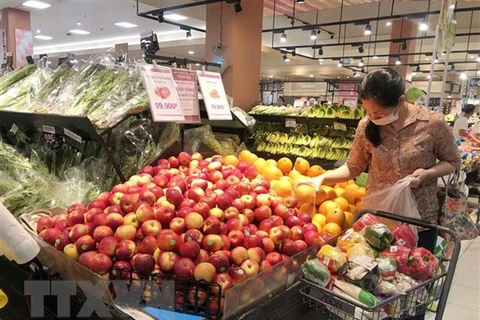
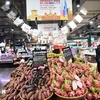
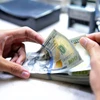
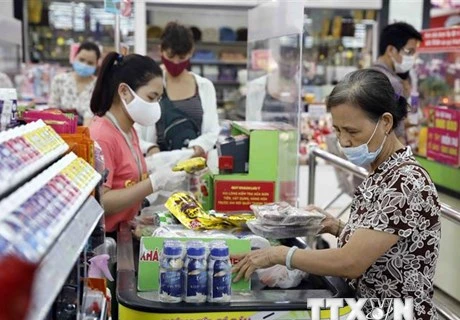
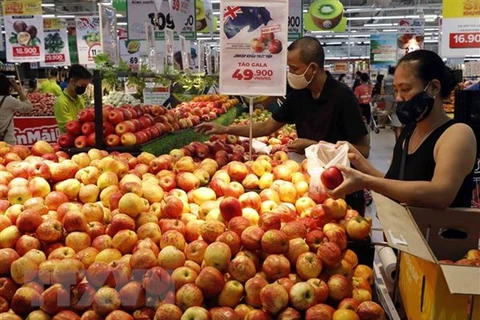
High material, fuel prices send June CPI up 0.19 percent ảnh 1The Consumer Price Index (CPI) rose 1.47 percent year-on-year in the first half of 2021. (Photo: VietnamPlus)

Hanoi (VNA) – The Consumer Price Index (CPI) rose 1.47 percent year-on-year in the first half of 2021, the lowest since 2016, according to the General Statistics Office (GSO).

The June index edged up 0.19 percent month-on-month, 1.62 percent against last December and 2.41 percent year-on-year.

The rise is largely due to increases in the prices of input materials, fuels, electricity and fresh water, said Nguyen Thu Oanh, director of the GSO’s Price Statistics Department.

The average fuel price in the first half of this year surged 17.01 percent year-on-year, pushing the CPI up 0.61 percentage point, while rice prices grew 6.97 percent, contributing to a rise of 0.18 percentage point in the CPI.

Prices of construction materials such as cement, iron, steel, and sand jumped 5.03 percent, adding 0.1 percentage point to the CPI.

In contrast, H1 prices of food declined 0.39 percent from the same period last year, contributing to a 0.08-percentage-point slide of the six-month CPI. It is because of drops in prices of staples, for example pork (down 4.15 percent) and chicken (down 2.04 percent).

A decrease of 3.06 percent in the electricity price in H1 also pushed the CPI down 0.1 percentage point.

The resurgence of the COVID-19 pandemic has been curbing travel during the first six months of the year, causing train tickets and airfares to fall 3.41 percent and 17.05 percent, respectively.

The average gold price spurred 18.06 percent year-on-year between January and June.

Meanwhile, the US dollar exchange rate in June declined 0.3 percent compared to the previous month, making the six-month figure down 0.85 percent.

Oanh said that core inflation in June inched up 0.07 percent compared to May and 1.14 percent from the same period last year. The figure in the first half of the year rose by 0.87 percent year-on-year. Both June and six-month figures are the lowest since 2011.

If Vietnam could control inflation cautiously and proactively, the CPI for the whole of 2021 would rise by below 3 percent, according to Le Quoc Phuong, former deputy director of the Industry and Trade Information Centre under the Ministry of Industry and Trade.

Regarding H1 low inflation, economist Ngo Tri Long said: “It is a favourable condition to create room to control inflation for the whole year within the target.”

“However, Vietnam should not lose focus as inflation pressure will continue to increase from now to the end of the year. The prices of input materials increased sharply by 4.79 percent in the first half, marking the highest since 2013.”

Nguyen Ba Minh, director of the Institute of Financial Economics, predicted average CPI in 2021 would be at 2.5 percent, 0.3 percentage point higher than that in 2020, forecasting the prices of some essential goods will cool down, market prices be stablised and fluctuations prevented.

Nguyen Duc Do, deputy director of the Institute of Economics and Finance, said that weak aggregate demand due to the pandemic was the basic reason of the low inflation in Vietnam in the context of high prices of basic commodities globally.

According to him, the target of keeping the average inflation to below 4 percent in 2021 will certainly be reached.

Do said if the price growth is kept for the rest of the year at about 0.27 percent each month, the inflation over the same period last year will increase from the current 2.41 percent to 3.2 percent in December and the average inflation for the whole year will be at 2.12 percent.

If the gasoline prices continue to rise sharply and CPI to increase by an average of 0.5 percent per month, inflation by December 2021 will be at 4.71 percent and the average inflation, 2.53 percent, he added./.
VNA

See more

Trains on the elevated section of the Cau Giay – Nhon route in Hanoi provide convenient transportation for local residents. (Photo: VNA)

Multimodal connectivity to drive Vietnam’s transport infrastructure

Under the proposed approach, roads would serve mainly as connectors and for first- and last-mile transport; railways would handle large volumes over long distances; maritime transport would serve import and export cargo; inland waterways would carry large volumes at low cost; and air transport would focus on fast delivery and high-value goods.

Amata Industrial Park in Dong Nai city (Photo: VNA)

Green shift powers investment in southeast Vietnam

The Amata Industrial Park in Dong Nai City, established 32 years ago and covering more than 500ha, is home to over 160 domestic and foreign businesses. Selected in 2020 as one of three national pilot sites for conversion into an eco-industrial park, Amata has raised its compliance with the international eco-industrial park framework from 41% to 86% in 2024, and is working towards becoming Dong Nai's first certified eco-industrial park.

At a port in Ho Chi Minh City (Photo: VNA)

Multi-channel capital mobilisation needed to achieve double-digit growth

The Ministry of Finance estimates development investment for 2026-2030 at a minimum of 38.5 quadrillion VND (1.48 trillion USD), or about 40% of GDP. The state budget is expected to provide only about 20%, or more than 7.7 quadrillion VND, leaving over 80%, or more than 30 quadrillion VND, to be raised from the broader economy. That makes expanding capital mobilisation channels beyond bank credit essential.

An aerial view of the Nhieu Loc – Thi Nghe area in Ho Chi Minh City. The southern metropolis is home to the Vietnam International Financial Centre. (Photo: VNA)

Vietnam International Financial Centre launches membership registration system

Integrated into the official Vietnam International Financial Centre portal at vifc.gov.vn, the online system for registering and recognising members provides a unified online service channel through which investors, organisations and businesses can complete procedures related to membership, from new registration and recognition to information updates and termination of membership.

At a tax office in Hung Yen province (Photo: VNA)

Finance ministry moves to cut business costs, spur growth

Tax policy is among the solutions with the most direct impact on companies. Rather than prioritising near-term revenue collection, fiscal policy is being run to help them preserve cash flow, expand production and build more sustainable revenue sources.

In the Kim Long Motor Hue factory (Photo: VNA)

Hue courts capital to turn industrial zones into growth engine

The economic and industrial zones in Hue city host more than 200 active investment projects worth over 152 trillion VND (5.84 billion USD), with 139 already operational. Since the start of 2026, they have generated about 32 trillion VND, contributed 4.2 trillion VND to the state budget and brought in 730 million USD in exports, while employing more than 46,000 workers.

An overview of a meeting between Politburo member and Secretary of the Hanoi Party Committee Tran Duc Thang and representatives of Saint Petersburg businesses. (Photo: VNA)

Saint Petersburg’s metro expertise valuable for Vietnam

As Hanoi implements its master plan with a 100-year vision, in which metro lines are identified as the backbone of the capital city’s transport network, Secretary of the municipal Party Committee Tran Duc Thang met with representatives from several Saint Petersburg companies specialising in urban rail development.

An art performance at 2026 Dak Lak Durian Festival. (Photo: VNA)

Dak Lak Durian Festival seeks to elevate Vietnam’s agricultural brand globally

Dak Lak has about 41,000ha of durian, with this year’s output estimated at nearly 500,000 tonnes. The province has 280 growing-area codes covering around 7,500ha, along with 41 packing facilities approved for export. In 2025, Dak Lak’s durian sector contributed about 1.1 billion USD to the country’s export turnover.

Delegates cut the ribbon to inaugurate the Ho Chi Minh City-Shenzhen direct air route. Photo: baodautu.vn

Vietravel Airlines launches direct Ho Chi Minh City-Shenzhen route

Vietravel Airlines' new route connects Tan Son Nhat International Airport (SGN) in Ho Chi Minh City with Shenzhen Bao'an International Airport (SZX), meeting growing demand for travel between the two markets for investment, trade, tourism and visiting relatives.