Indonesia ready to confront EU over palm oil discrimination

Indonesia is already prepared to confront the European Union (EU) over the discriminatory policies on palm oil of Renewable Energy Directive II (RED II) and Delegated Regulation EU before the World Trade Organization (WTO).
Indonesia ready to confront EU over palm oil discrimination ảnh 1A farmer harvests palm oil in Indonesia's Riau province (Photo: AFP) 

Jakarta (VNA) -
Indonesiais already prepared to confront the European Union (EU) over the discriminatorypolicies on palm oil of Renewable Energy Directive II (RED II) and DelegatedRegulation EU before the World Trade Organization (WTO).

Indonesia will resist discrimination against itspalm oil products, and the country is preparing a question list, which will beadjusted with the team of attorney and scheduled to be filed to WTO on January14, Indonesia Vice Minister of Trade Jerry Sambuaga said on January 7.

Sambuaga said the team will undergo an initialprocess of consultation with the EU team to clarify and gather comprehensivefacts regarding this matter in Geneva, Switzerland.

Some ministries related to this dispute as wellas institutions, associations, business persons and law practitioners have lentsupport to Indonesia upon this measure to face EU via the WTO. 

Indonesia hasfiled a lawsuit at the WTO against the EU, claiming the bloc's restrictions onpalm oil-based biofuel are unfair, the Indonesian trade ministry said onDecember 15.

The EUconcluded earlier this year that palm oil cultivation results in excessivedeforestation and its use in transport fuel should be phased out by 2030.

Indonesia, the world's biggest producer of palm oil, has repeatedly saidit will challenge the EU's renewable energy directive, known as RED II, at theWTO's dispute settlement body./.
VNA


See more

An overview of the dialogue between ASEAN leaders and the ASEAN Business Advisory Council (ASEAN-BAC) in Manila on November 15 (Photo: VNA)

Vietnam puts forward priorities to advance ASEAN cooperation

Appreciating ASEAN-BAC’s report and recommendations, Deputy Minister of Foreign Affairs Dang Hoang Giang, head of Vietnam’s ASEAN Senior Officials’ Meeting (SOM) delegation, called for simplifying procedures, reducing costs, accelerating digitalisation, upgrading the ASEAN Single Window (ASW) and effectively implementing the ASEAN Digital Economy Framework Agreement (DEFA) to make the regional market more accessible.

ASEAN signs Digital Economy Framework Agreement

ASEAN signs Digital Economy Framework Agreement

The Digital Economy Framework Agreement (DEFA), the bloc’s first standalone and legally binding digital economy agreement, establishes common rules covering digital trade, cross-border data flows, electronic payments, cyber security and artificial intelligence (AI).

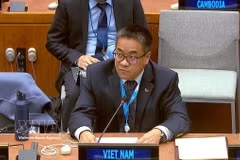
Minister Counsellor Nguyen Hai Luu, Deputy Permanent Representative of Vietnam to the UN, speaks at the discussion on November 12, 2026. (Photo: VNA)

Vietnam supports peace, reconstruction efforts in Gaza: diplomat

Minister Counsellor Nguyen Hai Luu, Deputy Permanent Representative of Vietnam to the UN, expressed deep concern over the dire humanitarian situation in Gaza, particularly as recent heavy rains and flooding have worsened living conditions for residents.

Thailand diversifies oil sources to ensure energy security

Thailand diversifies oil sources to ensure energy security

Although the diversification of oil import sources has helped reduce the risk of domestic oil shortage, it has not immediately reduced energy costs because import prices depend on market mechanisms, transportation costs, foreign exchange rates and the terms of oil contracts.

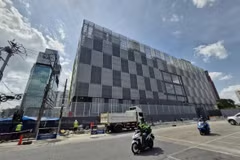
ST Telemedia Global Data Centres (Thailand), an affiliate of Singapore Telecom, is developing three data cehtres in Thailand including this facility on Rama IX Road in Bangkok. (Photo: bangkokpost)

Thailand tightens regulations on data centres

The new rules focus on controlling investment scale, electricity and water consumption, environmental impacts, and preventing investors from reserving resource quotas beyond their actual needs.

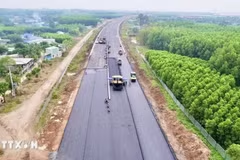
A road is under construction in Dong Nai city, Vietnam. (Photo: VNA)

ADB: Southeast Asia needs 7.1 trillion USD in infrastructure investment by 2040

ADB estimates that the region will need an average of 476 billion USD in infrastructure investment annually during 2026–2040, equivalent to 8.7% of GDP. However, at current investment levels, government budget resources would cover only around 45% of this demand, leaving an annual financing gap of 264 billion USD.

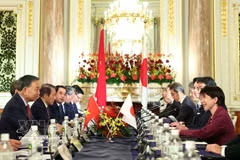
Kyodo News publishes an article titled “Sculptures by Japanese, Vietnamese artists on display in Yokohama,” (Screenshot photo)

Japanese media widely cover top Vietnamese leader ’s visit

Japanese media have continued extensive coverage of General Secretary of the Communist Party of Vietnam (CPV) Central Committee and President To Lam’s activities in Japan, highlighting his meetings with representatives of leading financial institutions at the Tokyo Stock Exchange, witnessing of cooperation agreement signing and participation in cultural exchanges.

Thailand pushes for establishment of ASEAN emergency public health centre

Thailand pushes for establishment of ASEAN emergency public health centre

The draft agreement stipulates that ACPHEED will comprise three specialised centres based in three ASEAN member states. Vietnam will oversee the centre for prevention and preparedness; Indonesia will host the centre for detection and risk assessment; and Thailand will be responsible for the centre for response and risk communication.