Indonesia’s Batik technique introduced in Hanoi

The Indonesian Embassy in Vietnam and the Vietnam-Indonesia Friendship Association (VIFA) held an event in Hanoi on May 31 to introduce Indonesia’s traditional fabric dyeing technique called Batik.
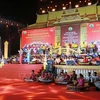
Indonesia’s Batik technique introduced in Hanoi ảnh 1VIFA President Tran Minh Hung speaks at the event. (Photo: vov.vn)

Hanoi (VNA) – The IndonesianEmbassy in Vietnam and the Vietnam-Indonesia Friendship Association (VIFA) heldan event in Hanoi on May 31 to introduce Indonesia’s traditional fabric dyeing techniquecalled Batik.

Considered one of the cultural symbols of Indonesia, Batik is a traditional wax-resist dyeing and printing techniqueon fabric. Severalhistorical records trace the origin of Batik back to the Srivijaya empire inIndonesia through trade activities with the Tang Dynasty of China.

On October 2, 2009, Batik was recognised by UNESCO as an Intangible Cultural Heritage of Humanity, and Indonesia also designated the day as National Batik Day.

Speakingat the opening ceremony, VIFA President Tran Minh Hung said the event was part ofcultural exchange activities to enhance mutual understanding between the two countries' people on the occasion of the 10th anniversary of the Vietnam-Indonesiastrategic partnership (2013-2023).

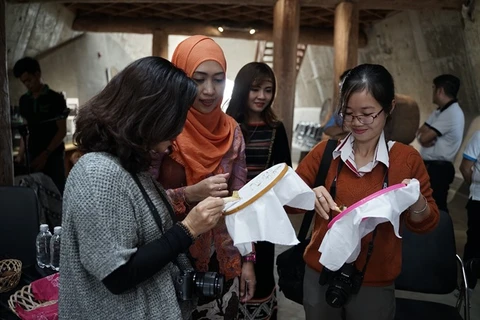
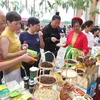
Young Vietnamese participants had a chance to experienceeach stage of creating Batik fabric, such as sketching with pencils, drawingwith wax and dyeing. They also drew patterns on fabric with wax under theguidance of experienced Batik artist Ira Ratna Handayani.

Three most beautifully drawn fabric pieces were alsohonoured./. 

VNA

See more

The horse image symbolises resilience, endurance, and spirit of “success upon arrival.” (Photo: VNA)

Horse mascot leaves strong impression at spring fair

A major attraction is a unique “Eight galloping horses” (Bat Ma) sculpture displayed at the To Trinh gemstone booth. Carved from a rare monolithic jade block, the artwork features eight spirited horses racing across golden rice fields. The harmonious blend of pure jade veins and natural golden tones enhances both its aesthetic depth and symbolic meaning, evoking prosperity and abundance associated with Vietnam’s rice civilisation.

Delegates cut the ribbon to launch the 46th Spring Flower Festival at Tao Dan Park. (Photo: VNA)

Festive activities herald Lunar New Year of the Horse

A vibrant array of cultural and media events has been launched across Vietnam to welcome the Lunar New Year of the Horse 2026, highlighting both the country’s enduring traditions and its dynamic socio-economic progress.

A calligraphy booth at the festival (Photo: VNA)

Spring Calligraphy Festival 2026 opens in Hanoi

A central attraction remains the traditional New Year calligraphy request activity, featuring 35 booths staffed by calligraphers selected through a rigorous, transparent evaluation process.

A ritual to welcome new year of Muong people in Phu Tho (Photo: nhandan.vn)

Unique Lunar New Year traditions on display

Each ethnic group brings its own unique Tet customs to the Vietnam National Village for Ethnic Culture and Tourism on the outskirts of Hanoi, creating a rich and colourful cultural mosaic.

Polish Ambassador to Vietnam Joanna Skoczek (R) attends a cultural event in Vietnam (Photo: VNA)

Cultural, people-to-people interactions anchor Vietnam–Poland relations: diplomat

Skoczek also pointed to striking similarities between Vietnam’s Tet and Poland’s Christmas Eve traditions, particularly the emphasis on family reunions, symbolic meals and shared rituals passed down through generations. Despite differences in customs and cuisine, she said the essence of the celebrations remains universal: bringing loved ones together to welcome a new start.

A Tet flower street is held for the first time at the Thang Long Imperial Citadel during the Lunar New Year 2026. (Photo: VNA)

Tet flower street held for first time at Thang Long Imperial Citadel

More than a seasonal attraction, the flower street also functions as a formal cultural venue for receiving ambassadors, their spouses and representatives of diplomatic missions attending the Vietnam Discovery Day 2026 programme. Its linkage with an external event further reinforces the Thang Long Imperial Citadel’s position as a key platform for introducing Vietnam’s cultural identity to international friends.

The recreation of Tien lich (calendar presentation ceremony), an important year-end ritual in which the royal court presented the new calendar for the coming year to the king, within a programme at the Thang Long Imperial Citadel in Hanoi on February 10. (Photo: VNA)

Hanoi recreates Lunar New Year court ritual at Thang Long Imperial Citadel

Organised by the municipal People’s Committee in coordination with the Vietnam National Commission for UNESCO, the programme recreated a range of ceremonial practices once performed in the royal court. These included the Tien lich ritual, in which calendars were formally distributed to the court and the public; the Thuong tieu ceremony featuring the ceremonial New Year pole erected to ward off evil spirits and welcome spring; the ritual release of carp to send the Kitchen Gods to heaven; and the solemn changing-of-the-guard ceremony inside the imperial citadel. Together, the activities helped audiences better understand the cultural, spiritual and ceremonial order of Vietnam’s feudal past.

Illustrative image (Photo: VNA)

Fireworks, festive events usher in Year of the Horse across Vietnam

Local residents and visitors can enjoy spectacular fireworks displays at locations like the Hanoi Post Office in Hoan Kiem ward; Coconut island in Thong Nhat park, Hai Ba Trung ward; the F1 racetrack area in Tu Liem ward; Lac Long Quan flower garden in Tay Ho ward; Van Quan lake in Ha Dong ward; and the Son Tay Ancient Citadel in Son Tay ward.

People visit the Spring Fair 2026. (Photo: VNA)

Spring Fair 2026: Celebration of Vietnamese Tet flavours, cultural memory

Food has long occupied a central place in Vietnamese Tet culture, symbolising abundance, harmony and gratitude. At the Spring Fair 2026, traditional Tet delicacies are presented in a modern setting while retaining their familiar essence, allowing visitors to experience both nostalgia and renewal.