Japan, Thailand launch new energy initiative to promote decarbonisation

Japan and Thailand on January 13 agreed to launch a new energy policy dialogue and implement joint projects to promote decarbonisation, as the two countries aim for net-zero greenhouse gas emissions by 2050.
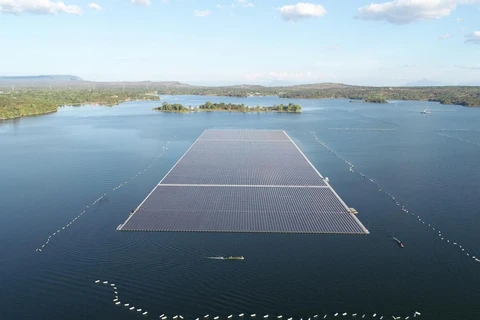
Japan, Thailand launch new energy initiative to promote decarbonisation ảnh 1Panels in a solar farm (Illustrative photo - Source: VNA)
Tokyo (VNA) - Japan and Thailand on January 13 agreed to launch a newenergy policy dialogue and implement joint projects to promote decarbonisation,as the two countries aim for net-zero greenhouse gas emissions by 2050.

According to the Japanese Ministry of Economy, Trade andIndustry, its Minister Koichi Hagiuda and his Thai counterpart SupattanapongPunmeechaow signed a memorandum for the new initiatives during their talks in Bangkok, the last stop during the Japanese minister's trip to Southeast Asia after Indonesia and Singapore.

Under the dialogue framework, a comprehensive long-termprogramme will be launched along with joint projects to be carried out throughcooperation in green technology and human resources to help promote investmentin the energy sector.

Earlier this year , Japan outlined its "Asia Energy Transition Initiative," under which itpromised to give 10 billion USD in financial support to Thailand and othermember states of the Association of Southeast Asian Nations (ASEAN) for renewableenergy, energy efficiency, LNG and other projects that are expected to createnew jobs and investment.

The Japanese government said its energy dialogue with Thailand underscoresthe importance of global energy transition, while aiming to provideopportunities for energy trade and investment in the two countries./.
VNA
See more

Thailand eyes major investment law reform

Thailand eyes major investment law reform

The Thai economy remains imbalanced, relying heavily on exports and services such as tourism, which together account for roughly 70% of GDP. Meanwhile, domestic investment aimed at strengthening the country’s production structure and keeping pace with global changes remains insufficient, said Finance Minister Ekniti Nitithanprapas.

Indonesia tightens management of forest resources

Indonesia tightens management of forest resources

The total value of recovered assets is equivalent to nearly 10% of Indonesia’s 2026 state budget, estimated at about 240 billion USD, highlighting the large scale of past violations in the forestry sector.

Thailand seeks to offset fertiliser supply shortfall

Thailand seeks to offset fertiliser supply shortfall

Thailand's Agriculture and Cooperatives Minister Suriya Juangroongruangkit reaffirmed the policy to suspend farmers' debts for three years, which was announced during his party's election campaign, though details of the measure will be finalised after consultations with state agencies, including the Finance Ministry.

 President Prabowo Subianto signs an inscription at the inauguration of PT VKTR Teknologi Mobilitas' electric commercial vehicle assembly plant in Magelang, Central Java, on Thursday, April 9, 2026. (Photo: Antara)

Indonesia targets ending fuel imports within three years

In addition to electrifying power plants, the Indonesian government is promoting electric vehicles and the utilisation of other renewable energy sources. Solutions include processing palm oil and used cooking oil into aviation fuel to further reduce reliance on fossil fuels.

A groundbreaking ceremony for Indonesia's first melamine project, invested by PT GEABH Joint Technology, is held in the Gresik Special Economic Zone, East Java Province, Indonesia, April 8 (Photo: Xinhua)

Indonesia develops strategic chemical industry

Indonesia's first melamine plant in the Gresik Special Economic Zone is seen as a strategic step to boost the development of the country’s chemical industry and enhance domestic value creation.

Illustrative image (Photo: thevibes.com)

Malaysia leads Southeast Asia in global investment appeal

The latest 2026 Global Opportunity Index (GOI) report by the Milken Institute ranked Malaysia 23rd globally, the highest among developing Southeast Asian economies, underpinned by strong institutional quality and solid economic fundamentals.

YouTube logo on a cellphone (Photo: ANTARA)

Indonesia warns Google over non-compliance with child protection rules

According to the results of an inspection conducted on April 7, YouTube has not fully fulfilled its obligations under Indonesian Government Regulation No. 17/2025 (PP Tunas), which took effect on March 28 and requires digital platforms to implement strict governance measures to protect underage users. The platform has also shown no indication of complying with the rules in the near future.

The Strait of Hormuz is the world's most important oil transit choke-point. (Photo: Reuters)

Malaysia reliant on Hormuz Strait for oil supply

Data from the Malaysian Finance Ministry shows that domestic oil consumption stands at about 700,000 barrels per day, nearly double Malaysia’s crude oil production of around 350,000 barrels daily.