JETRO: Many Japanese firms want to expand investment in Vietnam

More and more Japanese firms want to expand investment in Vietnam, Chairman of the Japan External Trade Organisation (JETRO) Hiroyuki Ishige has said.
JETRO: Many Japanese firms want to expand investment in Vietnam ảnh 1Chairman of the Japan External Trade Organisation (JETRO) Hiroyuki Ishige (Source: VNA)
Tokyo (VNA) -More and more Japanese firms want to expand investment in Vietnam, Chairman ofthe Japan External Trade Organisation (JETRO) Hiroyuki Ishige has said. 

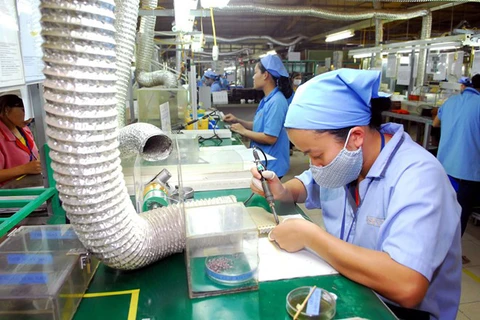
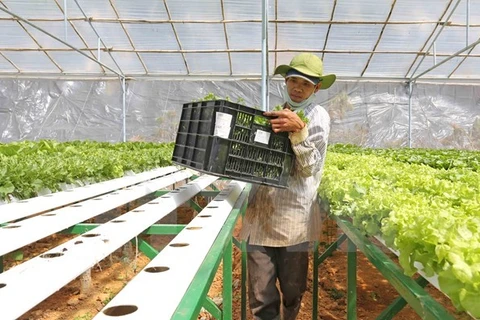
Ishige told VietnamNews Agency (VNA) reporters in Tokyo that Japanese enterprises have pointed outthree advantages when investing in Vietnam, including socio-political stability,large-scale and promising market and low-cost labour. 

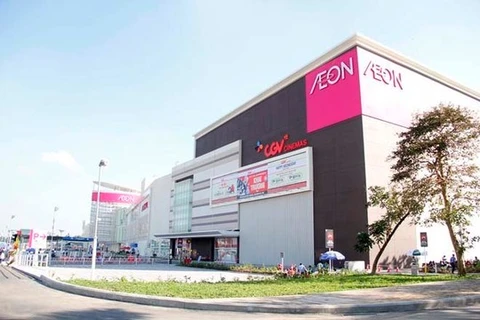
In 2015-2016, Japanesecompanies paid due attention to such fields as retail, hotels, restaurants andconstruction in Vietnam, the JETRO Chairman said. 

He noted that JETROhas organised workshops, released survey results and given advice to Japanesesmall-and medium-sized enterprises (SMEs) who want to directly invest inVietnam at JETRO offices in Hanoi and Ho Chi Minh City.

Ishige added that 399out of 4,533 Japanese businesses participating in a project launched by JETROwhich aims to assist Japanese SMEs said that they want to invest in theVietnamese market. Meanwhile, 985 Japanese firms have been interested inoperating in the Southeast Asian nation. 

According to JETRO’ssurvey on the international operations of Japanese firms in the 2016 fiscalyear which ended on March 31, 2017, Vietnam has emerged as one of Japan’s mostimportant export markets, together with the US and Western Europe.

Accordingly, 7.6percent of the surveyed Japanese businesses chose Vietnam as the most importantexport market, as compared with 3 percent recorded in 2012. China took the leadwith 19.8 percent, followed by the US with 15.5 percent. 

Among investmentdestinations cited by companies intending to expand business overseas, Vietnamranked fourth with 32.4 percent, up from 28.7 percent. China and Thailandcontinued to rank first and second place, although the rate of responses forthe two countries decreased respectively to 53.7 percent from 56.5 percent theyear before and to 41.7 percent from 44.0 percent. The US claimed the thirdplace at 33.7 percent, from 31.3 percent.

Among 70 Japanesefirms which moved their investment from other countries to ASEAN in the 2016fiscal year, up to 38 turned their attention to Vietnam.-VNA
VNA

See more

Canadian Ambassador to Vietnam Nickel James Stafford speaks at the meeting with Can Tho city on November 17, 2025. (Photo: VNA)

Can Tho looks to broaden cooperation projects with Canada

Nguyen Thi Ngoc Diep, Vice Chairwoman of the municipal People’s Committee, expressed appreciation for Canada’s support through the UN Development Programme (UNDP), which has funded the smart climate-resilient coastal community project.

An aerial view of part of Bac Ninh province (Photo published by VNA)

Bac Ninh maps long-term plan to become centrally governed city

Bac Ninh aims to become a major regional hub for high-tech industry, processing and manufacturing, and supporting industries, forming a fully developed industrial ecosystem that serves as a growth engine for both the northern region and Vietnam.

The Bank for Investment and Development of Vietnam (BIDV) and the Japan Bank for International Cooperation (JBIC) exchange their MoU on cooperation at the meetings. (Photo: VNA)

Vietnam, Japan expand cooperation in clean energy transition

To promote energy transition towards Vietnam’s goal of achieving carbon neutrality by 2050, the AZEC/GX Promotion Working Team was established within the AZEC initiative to strengthen cooperation in developing the investment environment and human resources.

Delegates at the signing ceremony (Photo: VNA)

Long An International Port and Japan’s Port of Kobe establish strategic partnership

The establishment of the strategic partnership with the Port of Kobe is expected to open new prospects for cooperation, reflecting the determination of local authorities and enterprises to boost trade, strengthen connectivity, and enhance modern, sustainable domestic industrial capacity, thereby improving supply capability and supporting deeper participation in regional value chains.

Famers harvest coffee. (Photo: VNA)

Forum seeks solutions to build brand for Vietnamese Robusta coffee

VICOFA Vice Chairman Thai Nhu Hiep stated that Vietnam is already the world’s largest producer and exporter of Robusta coffee, with an annual output exceeding 1.8 million tonnes. Vietnamese Robusta coffee has several advantages, including favourable natural conditions and large, concentrated growing areas, which provide a stable supply.

An electric vehicle charging station in Hanoi. (Photo: VNA)

Automakers race toward fierce competition as sector shifts gears

According to the latest figures from the Department of Customs, Vietnam imported 16,343 cars in October. Although this represents a 5.5% drop from the previous month, total imports over the first ten months reached 171,364 units, up 20% year on year. Import turnover neared 4 billion USD, the highest level in the past three years.

The year 2025 has seen the coffee industry form an ecosystem of responsible production, stretching from raw-material regions to processing stages, helping lay the foundation for sustainable growth in the years ahead. (Photo: VNA)

Coffee exports likely to exceed 8 billion USD this year

The Ministry of Agriculture and Environment reported that Vietnam sold 1.3 million tonnes of coffee overseas for 7.41 billion USD between January and October, up 61.8% year-on-year and marking the highest annual value increase to date. The average export price reached 5,653 USD per tonne, a surge of 42.5% from the same period last year. Several markets posted outstanding growth, particularly Mexico, where export value jumped by 34.7 times.