Land Law 2024 to lure billions of dollars of remittances to real estate market: Insiders

The Land Law 2024, which creates a smooth legal corridor for overseas Vietnamese (OV) to invest in housing in Vietnam, is expected to help Vietnam attract billions of dollars of remittances each year, contributing to promoting the growth of the real estate sector, according to insiders.

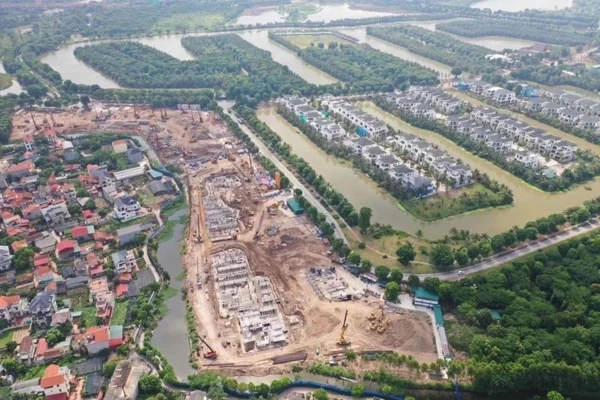
Illustrative image (Source: VNA)

Hanoi (VNA) – The Land Law 2024, which creates a smooth legal corridor for overseas Vietnamese (OV) to invest in housing in Vietnam, is expected to help Vietnam attract billions of dollars of remittances each year, contributing to promoting the growth of the real estate sector, according to insiders.

In the revised version, Vietnamese people residing abroad who are Vietnamese citizens, and those of the Vietnamese origin residing abroad are eligible to own land use rights at home.

According to the Vietnam Association of Realtors (VARS), the new legal corridor will provide a more favourable conditions for OVs to own houses in Vietnam, thus driving remittances into the real property markets.

VARS experts held that new regulations included in the Land Law 2024, which allow OVs to own land use rights in Vietnam, are suitable to international trends and have positive impact.

The amount of remittances to Vietnam, estimated at billions of dollars each year and on the rise, will be a support for the real estate market in the coming time, especially amid the sector’s current thirst of capital, they said.

Deputy Managing Director of Savills Vietnam Troy Griffiths said that changes in the revised Land Law will bring about more investment opportunities for OVs while creating high potential for the market thanks to the direct investment resources from this group.

VARS President Nguyen Van Dinh held that in the long term, remittances will lead to a strong demand helping boost the real estate sector’s growth, adding that along with effectively implementing the law, Vietnam should continue improving the transport and telecommunications infrastructure systems as well as other public services to increase the competitiveness of the domestic real estate market.

At the same time, the country should provide tax incentives for OVs to invest in the real property market, especially large-scale projects and those with high benefits to the community, while ensuring the transparency of relevant legal regulations, and learning international experience in attracting remittances to the market.

The expert also advised real estate businesses to design projects with high standards and construction quality to meet the demand of OVs, while supporting OVs in house leasing.

According to the State Committee on OV Affairs, there are currently about 6 million Vietnamese people living and working in more than 130 countries and territories, along with about 650,000 Vietnamese guest workers in 40 countries and territories.

Vietnam has been among the top 10 countries with the highest remittances in the world and the top three in Asia-Pacific. From 1993 (the first year of remittance statistics) to the end of 2022, the amount topped 190 billion USD, nearly equal to that of FDI disbursed in the same period.

In 2023 alone, the amount of remittances flowing to the country was estimated to reach about 16 billion USD, an increase of 32% compared to the previous year.

Each year, it is estimated that up to 25% of remittances are poured into the real estate market./.

VNA

See more

Ben Thanh Market in Ho Chi Minh City attracts a large numbers of domestic and international visitor.( Photo: VNA)

Vietnam targets 50 million international visitors by 2030

The Ministry of Culture, Sports and Tourism has outlined three scenarios for 2027–2030. Under the high-growth scenario, international arrivals would rise 15–18 percent annually to reach 45–50 million, while domestic tourism would reach around 160 million trips. Total tourism revenue is projected at 80–90 billion USD.

Factories and production facilities in the Chu Lai Open Economic Zone, Da Nang city, are equipped with modern production lines. (Photo: VNA)

Ready-built factories gain from new manufacturing FDI wave

Ready-built factories attracted 73% of new manufacturing FDI in northern Vietnam over the past two quarters, as foreign investment continued to surge at the region's industrial hubs during the first eight months of 2026. The trend points to growing demand for premises that can be put into operation quickly.

Vietnamese durian industry pivots from volume to value

Vietnamese durian industry pivots from volume to value

Durian has morphed from a high-value crop into a strategic Vietnamese export. But as output climbs and importing markets tighten rules on quality, food safety and traceability, the industry must pivot from volume growth to sustainable value chains, better quality and diversified markets.

A display area for Mid-Autumn Festival cakes at a supermarket (Photo: VNA)

Mid-Autumn Festival cake market heats up at affordable end

Industry insiders say competition is no longer just about the cake itself. Product quality, packaging, brand reputation, delivery services and personalisation are increasingly shaping consumer choices in a market crowded with both domestic and foreign players.

Minister of Foreign Affairs Le Hoai Trung (Photo published by VNA)

Vietnam, India set 25 billion USD trade goal

Vietnam and India agreed to make better use of complementary strengths, ease market access difficulties and facilitate business activities toward achieving the 25 billion USD bilateral trade target.

Delegates at the meeting between Vietnamese businesses operating in Cambodia and the Council for the Development of Cambodia (CDC) on September 14. (Photo: VNA)

Vietnamese businesses seek to expand investment in Cambodia

Vietnam currently has 223 investment projects in Cambodia with total registered capital of nearly 3.4 billion USD. Vietnamese companies operate in agriculture, particularly large-scale farming, finance and banking, telecommunications, aviation, processing, trade and services.

Children visit President Ho Chi Minh's hometown and learn about his childhood. (Photo: VNA)

Vietnam's tourism sector faces labour shortage

A 2026 survey by Hoteljob.vn found that nearly 90% of tourism businesses planned to recruit. In Ho Chi Minh City alone, 89.7% of businesses were hiring, while 71.8% said recruitment was difficult or very difficult. The biggest shortages were among frontline workers, particularly in housekeeping, engineering, food service, front-office operations, and kitchens.

Octopus processing for export at Huy Nam Company in An Giang province. (Photo: VNA)

New opportunities for Vietnam’s seafood exports

The Vietnam-EFTA Free Trade Agreement brings together two groups of highly complementary economies. EFTA members Switzerland, Norway, Iceland and Liechtenstein have strengths in technology, innovation, finance, clean energy and sustainable development, while Vietnam is one of Asia’s most dynamic economies and is emerging as a major regional manufacturing, trade and investment hub.