Local markets in central Vietnam, a magnet for foodies

It’s often said Con market in the central city of Da Nang is a foodie heaven.
Local markets in central Vietnam, a magnet for foodies ảnh 1Dried fish, crab, squid are specialties of Da Nang city that one can find in Con market. (Photo: VNA)

Da Nang (VNS/VNA) - It’s often said Con market in the central city of Da Nangis a foodie heaven.

Located in the centre of Da Nang city, the three-storey market faces QuangTrung and Ong Ich Khiem streets and is easy to find. It’s open from 6am tillaround 7.30pm.

Like other traditional market, this is where you find a variety of fare – freshfruit, dried seafood and clothes to name but a few.

It is not merely a place for buyers and sellers but also a favourite spot ofvisitors who want to try a local dish and learn about lives of the locals.

Life here is always bustling.

The late writer Thanh Tinh once said: “When one travels to a new place, theyshould look for the local market. It is the place that shows you not only theeconomy but also a cultural slice of the local residents.”

While Hanoi is well-known for its Dong Xuan Market, HCM City with Ben Thanh, DaNang is all about Con.

Those old enough to remember will regale you with tales of how before themarket came into existence, the area was an abandoned sand dune with wildcactus and beefwood trees.

In the wartime, it was the place where the French colonialists punishedVietnamese soldiers to warn other locals. Later, the area became a place to buyand sell. In 1950s and 1960s, the market was surrounded by fancy shops sellingjewelry, coffee as well as groceries.

With a petroleum station and two major bus stations nearby, Con Market soonbecame a busy trading place for both locals and residents of other provinces.

Van Hoa (Culture) Book Store, Xuong café house, Ong Ty’s banh mi shop,Quansh Hung Sweet Shop or Thai Ngu’s pho shop were all the familiar andnostalgic names for Da Nang people.

Nowadays, it’s the place where one can try almost all delicacies of Da Nang andother regions at affordable prices – bun thit nuong (noodle with grilledpork), bun mam (fresh rice noodle served in broth with shrimps andherbs), my quang (Quang Nam-based rice noodle), snails, banh xeo (sizzling crepe with shrimp and pork filling), banh can (little roundpancake made of rice flour, eggs and shrimp and served with dipping sauce andherbs), goi kho bo (salad with dried beef). Each dish ranges from 15,000VND to 50,000 VND.

The symbol of Hue

Like Con Market, Dong Ba is a symbolic marketof the neighbouring Hue, the land of the royal citadel.

It first opened 120 years ago, stretching from the iconic Trang Tien to Gia Hoibridge covering more than 47,000 square metres.

The market was maintained and upgraded in 1987 and that same look is howvisitors will see it today. With more than 2,500 booths and nine blocks ofhouses surrounding it, the market is the biggest in the Thua Thien-Hue province.

This place seems to offer something for everyone. There’s an area for veganswith affordable dishes and a place for those with a sweet tooth. Local womenalso come here for some of the best spices around.

If one comes to visit the market on the first day or the fifteenth day of lunarmonth, they would be in awe by the flower corners and aromas of incense forworshiping.

Visitors can also find local specialties to bring back home as souvenirs,including dried lotus seed and sweets.

Dong Ba also has some of best food of Hueincluding com hen (rice with mussel), banh bot loc (steameddumplings made of manioc flour with shrimp and pork filling), bun bo Hue (noodle soup of Hue style), banh ram it (glutinous rice pancake) or theso-called che (a dessert with various toppings of banana, lotus seed,green bean, or ginger).

Visitors can get some conical hats from the craft village Phu Cam, steel andiron farming tools from Hien Luong blacksmith village, items of Ke Monblacksmith village, pottery products from Phuong Tich or mats made of bamboofrom Bau La Village.

The booths selling fermented shrimp and shredded pork are also worth a visit.

The most colourful corner of this market is where locals sell vegetables –different types of fresh herbs, bamboo shoot, gourds and figs.

Hue is synonymous with conical hats and ao dai (traditional long dress)and Dong Ba is the best place to buy them.

Put on your ao dai, wearing a conical hat and get out your mobile phoneas there are selfie spots aplenty in Hue.

Visitors are recommended to go to the market from 3pm as that’s when many of thefood booths come alive./.
VNA
See more

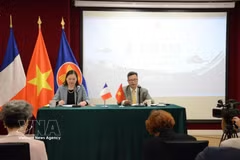
Vietnamese Ambassador to France Trinh Duc Hai (right) speaks at a press conference introducing the Vietnamese Theatre Week in France. (Photo: VNA)

Vietnamese theatre arts to take centre stage in France

Vietnamese Ambassador to France Trinh Duc Hai noted that Paris is chosen for its status as a major global cultural and artistic centre and the headquarters of UNESCO. The year 2026 also marks 50 years since Vietnam joined UNESCO.

An overview of the press conference (Photo: VNA)

Over 2,000 people to perform Thai Xoe dance in Lao Cai in October

The festival will provide an opportunity to review achievements in preserving and promoting the values of Thai Xoe, honour the cultural identities of ethnic groups in the Northwestern region, and promote the land and people of Lao Cai. It will also showcase local tourism products and destinations and strengthen linkages for tourism development.

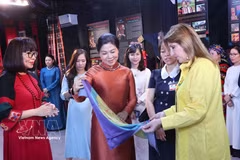
The Vietnamese and Panamanian first ladies experience cultures of Vietnam's ethnic groups. (Photo: VNA)

Vietnamese, Panamanian first ladies bond over ethnic textiles at Hanoi cultural event

The two ladies were briefed on the cultural diversity of Vietnam's ethnic groups and shown traditional costumes, along with weaving, embroidery and pattern-making techniques preserved and handed down through generations. The materials, colours and patterns of the costumes reflect aesthetic values as well as stories of history, customs, traditions and the distinct identity of each community.

Historical cinema helps foster patriotism, strengthen Vietnam’s soft power

Historical cinema helps foster patriotism, strengthen Vietnam’s soft power

When history is told through human stories, using modern cinematic language and backed by adequate investment, films can both nurture patriotism and national pride and become competitive cultural industry products. This is also a way for cinema to help turn the spirit of Politburo Resolution No. 80-NQ/TW into reality by transforming Vietnamese values into an internal resource and a source of national soft power.

Vietnamese athletes compete against Iran in the women’s team kata final in karate at ASIAD 2026 on September 22. (Photo: Xinhua/VNA)

ASIAD 20 prompts Vietnam to sharpen focus on key sports

Vietnam’s gold medals came from karate and sepak takraw, reaffirming its strengths in sports with established traditions and focused investment. Meanwhile, bronze medals in canoeing and teqball showed potential in events where Vietnamese athletes are gaining international experience.

Lieutenant General Phan Xuan Tuy, Director of the Political Academy of the People's Public Security under the Ministry of Public Security, provides information about the conference. (Photo: quochoi.vn)

National conference to promote Vietnamese cultural values

More than 200 delegates are expected to attend a national scientific conference in Hanoi on October 10 to discuss ways to promote Vietnamese cultural values as an important driving force for national development in the new era

Young girls perform a Cham dance throughout the ritual of carrying the attire of the goddess Po Sah Inu. (Photo: baolamdong.vn)

VFF leader extends Kate wishes to Brahmanist Cham community

In her letter, Hoai She praised the dignitaries and the Brahmanist Cham community for their contributions to upholding patriotic traditions, preserving cultural identity, promoting socio-economic development and strengthening great national unity.

Fireworks display at the closing ceremony of the second Cultures of the World Festival. (Photo: VNA)

Cultures of the World Festival closes, leaving impressions on visitors

The 2026 festival was particularly significant as it coincided with the 50th anniversary of Vietnam’s membership in UNESCO, marking five decades during which Vietnam has evolved from a country emerging from war into an active and responsible member, increasingly contributing initiatives to UNESCO and the international community.

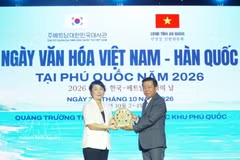
An An Giang leader presents gift to Park Chan A, First Secretary at the Republic of Korea Embassy in Vietnam and Director of the Korean Cultural Centre. (Photo: VNA)

Vietnamese, Korean cultures showcased on Phu Quoc island

Addressing the opening ceremony, Vice Chairwoman of the Phu Quoc Special Zone People’s Committee Nguyen Thi Kim Loan emphasised that the event is a chance for people from Vietnam and the RoK to meet, experience and appreciate each other’s cultural values, thereby fostering mutual understanding, respect and friendship.

Traditional costumes from around the world come together, creating a vibrant multicultural space in the heart of Hanoi. (Photo: VNA)

“Colours of Five Continents” bring cultural vibrancy to Hanoi’s Hoan Kiem Lake

Themed “Heritage Convergence – Future Creation,” the festival provided a vibrant and open platform for cultural exchange, showcasing distinctive Vietnamese cultural values through ao dai, performing arts and street activities, while giving participating countries an opportunity to share and celebrate their cultural identities.

Hanoi festival celebrates Vietnamese and global cultures (Photo: VNA)

Hanoi festival showcases Vietnamese and world cultures

Through diverse cultural experiences, the second Cultures of the World Festival in Hanoi 2026 highlights culture as a bridge connecting people, promoting mutual understanding and supporting international cooperation and sustainable development.