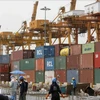
Malaysia re-imposes movement control order

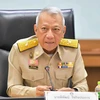
Malaysia re-applied the Movement Control Order (MCO) from January 13 to 26 in various locations as the Conditional Movement Control Order (CMCO) was no longer effective, said Noor Hisham, a high-ranking official of the Malaysian Ministry of Health.
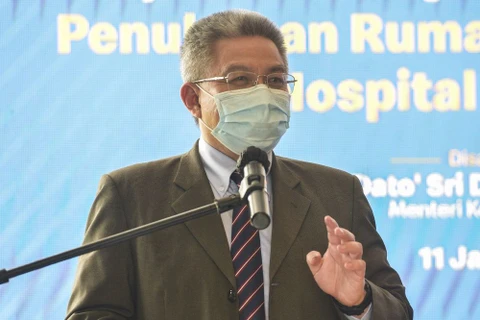
Malaysia re-imposes movement control order ảnh 1Noor Hisham, a high-ranking official of the Malaysian Ministry of Health, at the press conference (Photo: Bernama)

Kuala Lumpur (VNA) – Malaysia re-applied the Movement Control Order (MCO) from January 13to 26 in various locations as the Conditional Movement Control Order (CMCO) wasno longer effective, said Noor Hisham, a high-ranking official of the MalaysianMinistry of Health.

During a regular press conference on COVID-19 held on January 13, Hisham saidthat the MCO will last for four weeks at most.

He added that the CMCO was introduced in last October, but now a more drasticapproach has to be taken to break the infection chain of the disease.

He voiced his hopethat the number of daily cases will drop to less than 1,000 or 500 after fourweeks and the curve will be once again flattened by May.

On January 13,Malaysia logged 2,985 new COVID-19 cases, with two imported ones, raising thenational tally to 144,518./.
VNA

See more

Electric vehicles line up at charging ports in a Manila mall. (Photo: philstar.com)

Philippines moves closer to launching EV incentive programme

Secretary of Finance Frederick Go said on May 13 the EV Incentive Strategy (EVIS) may be released soon. The EVIS has already been presented to President Marcos, but the Board of Investments (BOI) is still working with other agencies in the Fiscal Incentives Review Board (FIRB) on the details of the programme.

Singaporean Prime Minister Lawrence Wong speaks at SGLaw200 Youth Forum on May 13 (Photo: channelnewsasia)

Singaporean PM calls for balance between AI safety, innovation

The PM cautioned that deeper integration of AI into sectors such as healthcare and autonomous vehicles could pose greater challenges, including wrong medical diagnoses and fatal self-driving car incidents, raising critical questions over liability for AI-related failures.

Singaporean Deputy Prime Minister Gan Kim Yong speaks at the Singapore Business Federation’s Future Economy Conference on May 13. (Photo: channelnewsasia.com)

Singapore releases new strategy to boost growth, create good jobs

The review identified major challenges, including geopolitical tensions, rapid technological advancements, global shift towards low-carbon economy, and demographic pressures. To address these issues, the ESR Committees outlined three core priorities - sharpening Singapore’s value proposition, enhancing agility and adaptability, and building resilience alongside efficiency.

Illustrative image (Photo: TASS)

Indonesia, Russia discuss nuclear power cooperation

The two sides discussed promising areas of Russian – Indonesian cooperation in the peaceful uses of nuclear energy, including the development of nuclear power projects, nuclear infrastructure, personnel training, and non-energy applications of nuclear technology.

Thai police announce biggest ivory seizure in a decade (Photo: nationthailand)

Thailand busts largest ivory smuggling ring in a decade

According to the wildlife crime suppression force, coordinated raids and seizures were carried out across seven provinces on May 7. Authorities confiscated ivory products worth an estimated 300,000 USD, including cut ivory pieces, ornaments and knife handles.

Laos faces challenges in EV transition

Laos faces challenges in EV transition

Laos currently has 14,466 EVs and 36 businesses investing in the construction of EV charging stations, with 126 charging stations in 14 provinces and cities nationwide, including 65 in the capital Vientiane.

Indonesian Minister of Energy and Mineral Resources Bahlil Lahadalia. (Photo: ANTARA)

Indonesia proposes hosting ASEAN oil storage hub in Sumatra

Indonesian Minister of Energy and Mineral Resources Bahlil Lahadalia said on May 11 that Jakarta is promoting an initiative to establish a joint ASEAN strategic oil reserve as Southeast Asia faces increasing risks of global energy supply disruptions.