Malaysia : vehicle sales fall in first month of 2016

Malaysia’s vehicle sales fell 20.5 percent in the first month of 2016 compared with December 2015’s figure, according to the country’s Automotive Association (MAA).
Malaysia : vehicle sales fall in first month of 2016 ảnh 1Illustrative Image (Source :bmiresearch.com)

Kuala Lumpur (VNA) – Malaysia’s vehicle sales fell 20.5 percent in the first month of 2016 compared with December 2015’s figure, according to the country’s Automotive Association (MAA).

The MAA’s latest report shows the number of cars sold in January reached 44,591 units, down 11.9 percent compared with 50,602 units in the same period last year.

The Malaysian Industrial Development Finance Berhad (MIDF) explained that the reduction was due to local consumers already having purchased vehicles in the last quarter of 2015 before the price rose in January 2016.

The agency also said the drop in the number of vehicles sold reflected consumers’ sentiments after Toyota and Honda adjusted their automobile prices.

The MIDF predicts vehicle sales to fall further in February due to the prolonged holiday and increase in the price of cars from Proton, the country’s second largest automobile manufacturer.

Car makers expect the situation to improve in the second half of the year when several car models such as Toyota’s Alphard, Vellfire, and Hilux, as well as Mazda’s CZ-5 CKD are introduced

The MAA forecasts that car sales in 2016 will hit 650,000 units, a year-on-year reduction of 2.5 percent. This would be first drop in six years due to falling consumer demand, weaker domestic currency and tighter lending requirements.

Plummeting oil prices and slowdowns in the global and Chinese economies are expected to contribute to the reduction.

Malaysia’s automotive industry has been growing for six consecutive years, peaking at a new all-time total industry volume (TIV) high of 666,674 units last year.

For 2017, the MAA expects sales to rise 3 percent over this year to 669,500 units.-VNA
VNA

See more

Indonesia designates 31 mln ha of waters as conservation areas

Indonesia designates 31 mln ha of waters as conservation areas

Head of the Convention and Marine Resource Balance working team at the ministry’s Directorate of Ecosystem Conservation Ahmad Sofiullah said this week that it is a strategic effort to ensure the sustainability of Indonesia’s marine ecosystems.

Thai Deputy Prime Minister and Minister of Foreign Affairs Sihasak Phuangketkeow (R) takes part in the Q&A session at the 41st ASEAN Roundtable. (Photo: VNA)

Thailand calls on ASEAN to proactively address polycrisis

Thai Deputy Prime Minister and Minister of Foreign Affairs Sihasak Phuangketkeow noted that no single member state could tackle challenges ranging from major-power competition and economic fragmentation to climate change and energy and food security on its own. Regional cooperation is therefore a strategic imperative, enabling ASEAN not only to overcome crises but also to sustain its development momentum.

Palm oil and palm oil-based products are among Indonesia’s promising export commodities. (Photo: VNA)

Indonesia to launch commodity export monitoring platform next year

DSI will draw on data from customs authorities, trade activities and the financial system, alongside contracts and documents uploaded by exporting companies. The platform will monitor the volume, quality, prices and destination markets of various commodities, as well as transactions between related parties.

Philippines increases rice imports from Cambodia

Philippines increases rice imports from Cambodia

Cambodia has contracted to supply a further 87,344 tonnes to the Philippines between September and December. If all orders are fulfilled, its rice exports to the market could reach around 209,000 tonnes in 2026.

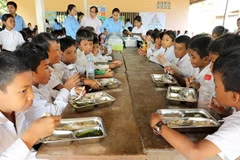
Students get free meals under the national school feeding programme at Hun Sen Svay Cek Primary School (Photo: khmertimeskh)

Cambodia expands school meal programme

Cambodian Prime Minister Hun Manet stressed that his Government would proactively allocate budget and strengthen management capacity, with the aim of expanding the school meal programme to more than 7,000 primary schools nationwide. The move is expected to improve students' nutrition and learning conditions.