Many start-ups integrate sustainable development goals into operations

Up to 85% of Vietnamese businesses under a survey reported they have fully or partially integrated the Sustainable Development Goals (SDGs) into their operations.
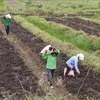
Many start-ups integrate sustainable development goals into operations ảnh 1Young startups in Da Lat join hands to open a store to introduce local OCOP products. (Photo: thuonghieutruyenthong.vn)
Hanoi (VNS/VNA) – Up to 85% of Vietnamese businessesunder a survey reported they have fully or partially integrated the SustainableDevelopment Goals (SDGs) into their operations.

In particular, the number of businesses in the fields oftechnology, communications and marketing, e-commerce or AI, blockchain,accounts for nearly 100%.

Vietnam is increasingly demonstrating its determination toassociate national development with the SDGs through integrating these goalsinto national development activities and policies.

In that context, startups and small and medium-sized enterprisesare considered indispensable.

The Project Office “Support Innovative Startup Ecosystem in VietnamUntil 2025”, of the Ministry of Science and Technology, in coordination withStart-up Vietnam Foundation, Innovation Connection Platform BambuUP, MSD Vietnamand MSD United Way Vietnam, have just conducted a survey on innovation andentrepreneurship towards sustainable development goals and lessons learned frompractice for Vietnam.

The survey was conducted on 153 businesses. The results show thatthe three most prominent goals chosen by businesses include SDG8: job creationand sustainable economic growth (57%); SDG12: sustainable consumption andproduction (39.66%) and SDG4: quality education (31.03%).

In addition, 100% of businesses expressed a desire to contributeto sustainable corporate values, 63.79% aimed to promote initiatives andpromote innovation, while half of these businesses prioritised responding tocustomer and market needs.

The above data shows the current situation of businesses that aregradually tending to be more proactive in recognising and being moreresponsible for environmental and social issues.

More than 82.76% of businesses choose to integrate SDGs into theirbusiness activities by taking concrete actions to incorporate sustainabilityinto their core strategies and adjust their products and services according toprinciples that support sustainable development.

This underlines their true dedication in contributing to a moresustainable future, demonstrating a comprehensive and deep commitment toresponsible business practices and sustainable development.

However, the implementation of these goals still faces certaindifficulties.

More than 74.14% of businesses reflected that they are experiencingfinancial problems, 36.21% of businesses have human resource problems and 37.93%of entities find it difficult to balance SDGs with profit goals.

To overcome the above problems, the survey also recommends that Vietnamcontinue to learn from international experiences like other countries in theOECD by promoting the use of industrial policy to encourage entrepreneurs tocommit to the SDGs and provide more accessible information on the regulatoryframework for businesses.

Additional recommendations include introducing a mandatorycompliance regime, requiring businesses to report information on the impact ofbusiness activities on the environment and society.

At the same time, the effort should implement supporting policies,loans or equity investments to generally support businesses' sustainableinitiatives and help start-ups and small and medium-sized enterprises have aclear direction in implementation of the SDGs./.
VNA
See more

Viettel launches the Unitel Logistics brand in Laos. (Photo: VNA)

Vietnamese firms expand global footprint

The Government recently approved the “Go Global” programme for 2026-2030, which identifies the private sector as a key driving force in Vietnam’s international expansion process. It aims to help Vietnamese private enterprises strengthen their overseas presence in a comprehensive, effective and sustainable manner through international investment, business activities and deeper integration into regional and global supply and value chains.

Vietnam and Cambodia are seeking to strengthen supply chain connectivity and promote sustainable border trade at a trade promotion conference in Vietnam's Mekong Delta province of Dong Thap on May 15. (Photo: https://thoibaonganhang.vn/)

Vietnam, Cambodia eye stronger border trade, supply chain connectivity

Vietnam–Cambodia trade ties have grown rapidly in recent years, becoming one of the major pillars of economic cooperation in the Mekong sub-region. The two countries share a 1,137-km border and an increasingly developed network of international and secondary border gates, facilitating cross-border trade, logistics and investment.

Illustrative image. (Photo: VNA)

Three proposals to connect overseas Vietnamese resources with private economy at home

There are currently many Vietnamese IT specialists working in technology corporations, banks, start-ups and innovation ecosystems across Canada. With appropriate mechanisms in place, this workforce could become a technology bridge, helping Vietnamese enterprises access management expertise, technical solutions, international standards and partnership networks in North America.

The Nguyen Van Linh–Nguyen Huu Tho intersection fully opens both underpasses to traffic, helping ease congestion in the area. (Photo: VNA)

Ho Chi Minh City pushes for full public investment disbursement

Ho Chi Minh City was allocated a record 147.599 trillion VND (5.6 billion USD) in public investment capital for 2026, up 22.6% from last year and accounting for nearly 14.6% of the nation’s total public investment budget. However, disbursement by the end of April remained below the national average.

Visitors explore Quang Tri province’s OCOP products (Photo: VNA)

Quang Tri links OCOP products with tourism to expand farm produce markets

The central province currently has 160 OCOP products developed by cooperatives, cooperative groups and businesses, including two five-star and 31 four-star products. These locally distinctive products are gradually becoming "ambassadors" showcasing Quang Tri’s culture and identity to domestic and international visitors.

Work starts on Hanoi’s Red River Landscape Boulevard Axis project on December 19, 2025. (Photo: VNA)

Hanoi approves nearly 28-bln-USD Red River landscape boulevard project

Covering more than 11,400 hectares and requiring an estimated 736.96 trillion VND (nearly 28 billion USD), the project is expected to reshape urban development along both banks of the Red River over the coming decades while improving transport connectivity and public spaces in the capital.

Deputy Prime Minister Nguyen Van Thang and delegates perform the ground-breaking ceremony for the Northwest Dien Bien Phu New Urban Area, Resort and Sports Complex project. (Photo: VNA)

Vingroup launches largest-ever urban development project in Dien Bien

Under the master plan, the project will span more than 228.5ha and accommodate around 12,000 residents. It is designed under a “city within a city” model integrating residential areas, commercial and service facilities, resorts, schools, healthcare services, public spaces and sports infrastructure.

Deputy Prime Minister Nguyen Van Thang and delegates press the button to launch construction of the Dien Bien Phu cultural-historical tourism and cable car complex project in Dien Bien province on May 10, 2026. (Photo: VNA)

Dien Bien Phu cultural-historical tourism, cable car complex project launched

The project aims to effectively tap the area’s natural landscapes, geographical advantages and distinctive historical value, while creating a high-quality tourism product with strong competitiveness. It is also intended to preserve, honour and promote the value of the Dien Bien Phu Victory special national historical relic site.

Politburo member Nguyen Duy Ngoc (third, right), who is Standing Deputy Head of the Central Steering Committee for Science-Technology Development, Innovation and Digital Transformation, holds a working session with the Colombo Port City Management Board. (Photo: VNA)

Vietnam studies Colombo smart port city model

Ngoc praised Sri Lanka’s orientations in developing seaport infrastructure, digital infrastructure, digital economy and international service centres, describing them as valuable references for Vietnam in developing strategic infrastructure, innovation centres, smart urban areas and digital economy ecosystems.